
The buyrate numbers are in and they're loud
If you spent your time last week lurking in the darkest corners of wrestling Twitter, you definitely caught the heat surrounding AEW Double or Nothing 2026. The recent reporting from Dave Meltzer confirmed that the buyrate for this year's show was nothing short of massive. For the people who spent the last six months claiming the promotion was circling the drain, these numbers are a jagged little pill to swallow.
The enthusiasm surrounding the event wasn't just limited to the bank account, though. The in-ring product matched the receipts, proving that when the booking clicks, the audience turns up with their wallets open. It’s hard to argue with growth when the industry standard for success keeps moving the goalposts in real time.
The skeptics are still screaming into the void
Naturally, the contrarians haven't gone anywhere. If you check any thread about the show, you’ll find the usual suspects insisting that these sales only account for a fraction of the market or that we need a deep dive into historical adjusted metrics. It is exhausting, honestly. Some people would watch the company sell out an arena and then argue about the structural integrity of the seats as if that changes the energy in the building.
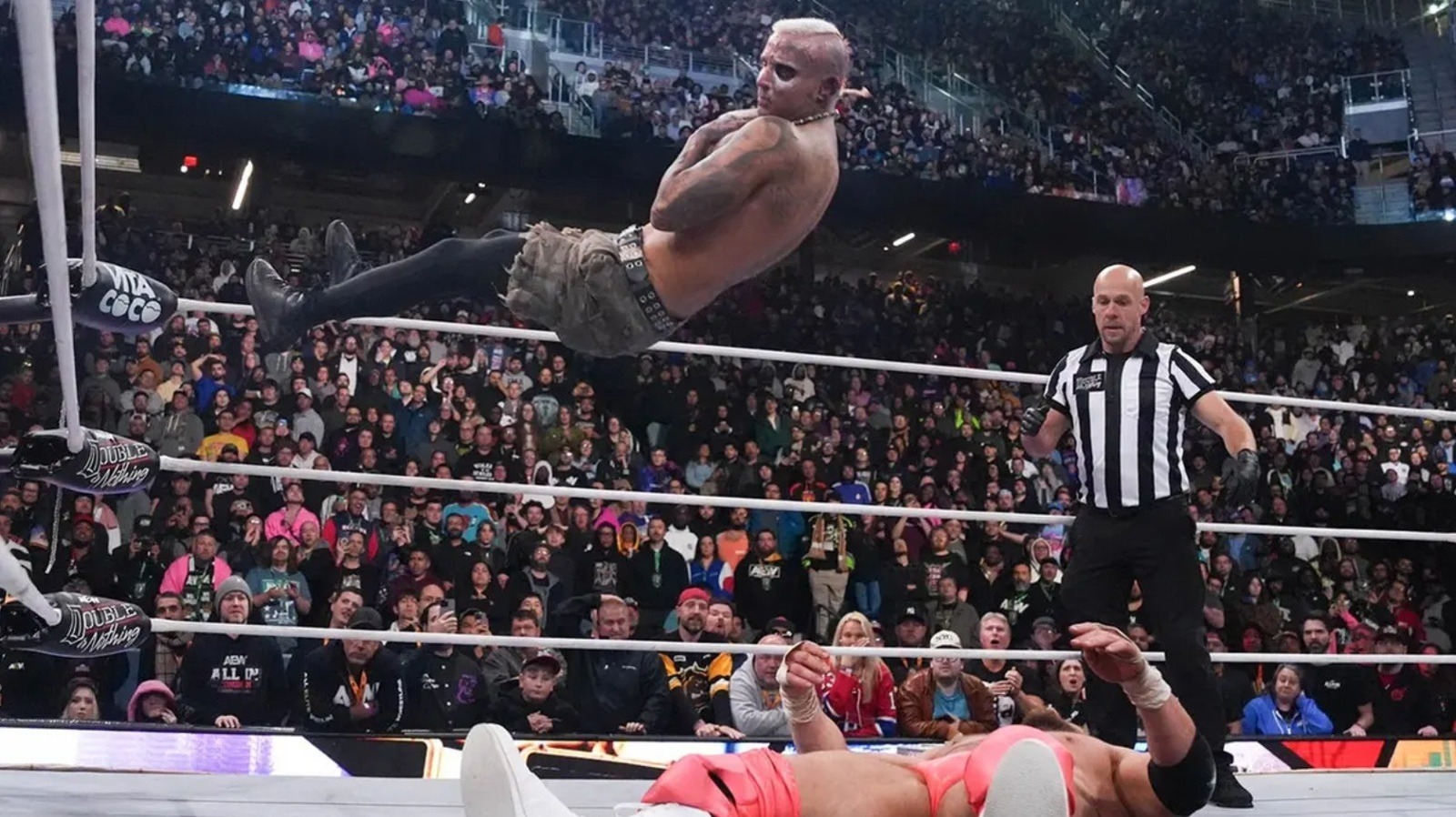
We also have the ongoing, bizarre focus on character comparisons that ignore the generational shift in how fans consume content. Seeing Charles Wright, the legend himself, talking about the eerie parallels between his Papa Shango persona and the current surge of Danhausen is worth checking out in his latest interview. Wright gets it. He understands the "voodoo guy" appeal, but the Internet hardcores are still debating whether this fits their subjective definition of what wrestling should look like in 2026.
The lens of the observer
You can read all the reports you want, but sometimes you just need to see the sweat on the mat. The high-quality gallery from Amber Nico Photo captures the moments that the spreadsheet analysts tend to overlook. There is something visceral about a front-row shot during a finisher that a buyrate spreadsheet just cannot replicate.
The criticism that the show followed a predictable rhythm in the mid-card is entirely fair, and I won't sugarcoat it. There were at least two tag team matches where the pacing felt like it was stuck in quicksand. When you have top-tier athletes, you don't need to overcomplicate the opening ten minutes with rest-hold sequences that go nowhere. It wasn't perfect, and the booking for the middle segments had a few holes that made me want to throw my drink at the screen.
Who wins the argument?
The numbers argue for themselves. When the dust settled on May 24th, 2026, the promotion proved that it still commands the attention of the hardcore base. The skeptics have valid points regarding the long-term sustainability of the current format, but they are losing the battle against current reality.
I’m putting my money on the enthusiasts this time around because they are actually watching the product rather than hoping it crashes. If your entire identity is based on waiting for a company to fold so you can be right on a forum, your life is going to be very short-lived. Double or Nothing 2026 wasn't the greatest wrestling show in the history of the universe, but it did a cool $X.X million in estimated domestic revenue depending on which analyst you trust, and that matters more than any opinion I could possibly vomit onto this page.
Ultimately, the show cemented its place in the 2026 calendar as a reminder that momentum is a fickle mistress. You either harness the energy of the crowd or you end up becoming the joke on the subreddit. AEW played their cards correctly for this PPV, and the result was loud, obnoxious, and exactly what we all tuned in to see. Now, can we go back to arguing about something truly important, like which entrance theme is the worst of the year?
