The Security of the Safe Bet
Professional wrestling is a business built on the illusion of control. Wrestlers spend decades curating their bodies, perfecting their transitions, and negotiating their positions, yet they remain at the mercy of promoters who can rewrite their careers with a single phone call. Brian Cage knows this reality better than most.
During a recent appearance on Insight with Chris Van Vliet, Cage detailed how he spent his WWE developmental run in Florida Championship Wrestling expecting a call-up to the Raw brand, only to receive his release papers on the very day he thought his life was changing, a story WrestleTalk recently detailed. He was flabbergasted.
"I was so flabbergasted when I got the call, and I'm thinking I'm getting raised. I think I'm getting called to TV. I'm thinking I'm getting both, and they're like, 'Oh, we've come to terms with your release.'"
He expected a raise and a main roster debut, but instead, he was told WWE had come to terms with his release.
That sudden exit in September 2009 shaped the trajectory of Cage's career. He built a name on the independent circuit, won world championships in TNA and AAA, and eventually signed with AEW in January 2020.
When WWE came knocking with interest in acquiring his services, Cage chose to stay under Tony Khan's banner, a decision motivated by job security and independent booking freedom. In WWE, he feared the threat of sudden, random releases. He chose safety.
But security in wrestling is a double-edged sword. While Cage enjoys the stability of a guaranteed contract, his booking has often felt like an afterthought. He has transitioned from Team Taz to the Embassy, and now to the margins of the Don Callis Family.
At 42 years old, Cage is entering the final phase of his physical prime. This Saturday, July 4, Cage faces Orange Cassidy on Collision in a match that will show whether his choice of longevity has cost him his main-event ceiling.
The Tactical Paradox of the Machine
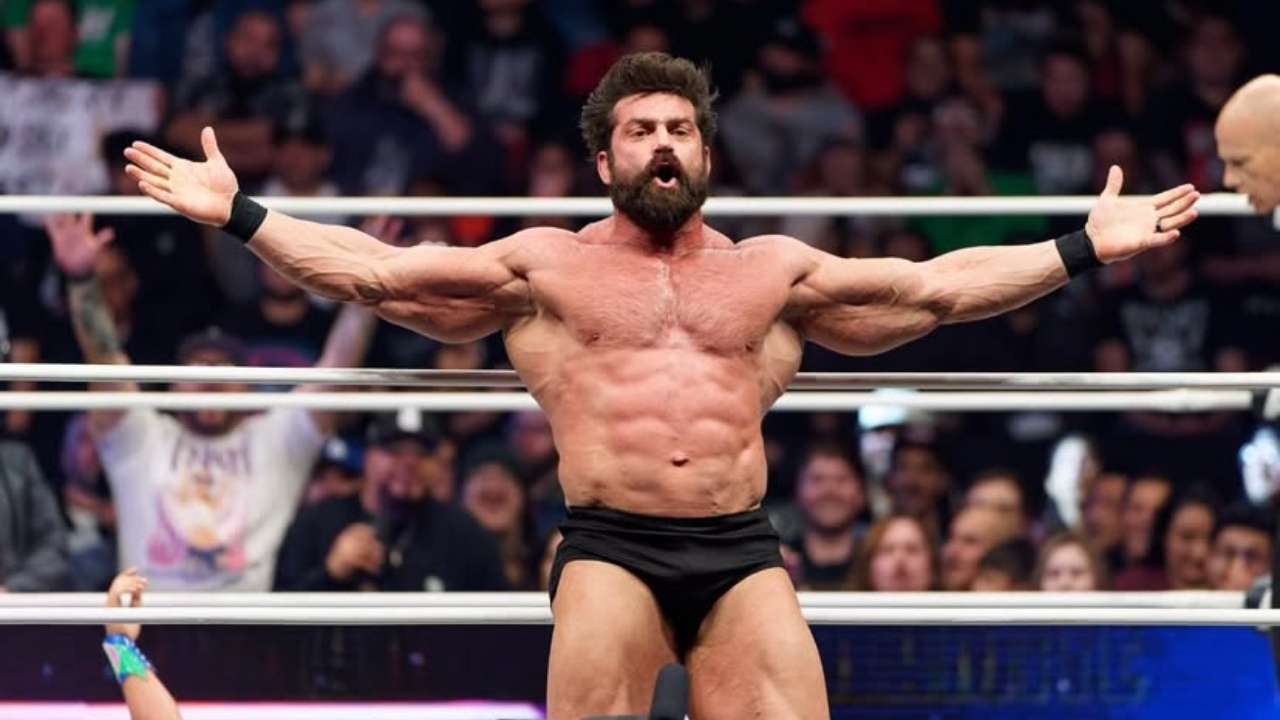
At 278 pounds, Brian Cage is a physical anomaly. He looks like a classic powerhouse, yet he frequently attempts springboard maneuvers and moonsaults that defy gravity. This hybrid style has defined his run across major promotions, but it often lacks structural coherence.
Powerhouses excel when they maintain center-ring dominance and force opponents to fight from underneath. Cage, however, frequently cedes control by trying to match the agility of smaller wrestlers. He wants to do it all.
The numbers from his recent singles outings reveal this tactical inefficiency. In his TNT Championship match against Kevin Knight on May 13, Cage controlled the center for the first six minutes. He completed 12 unanswered power moves, including a brutal overhead belly-to-belly suplex that registered a high impact.
But his insistence on climbing the turnbuckle at the nine-minute mark cost him. He missed a moonsault, giving Knight the opening to execute a DDT and secure the pinfall. A cleaner powerhouse strategy would have won the match.
This pattern repeated during the four-way match on May 27 against Rush, Lio Rush, and Orange Cassidy. Cage hit a springboard blockbuster on Lio Rush at the six-minute mark but paused to pose for the live crowd. That nine-second delay allowed Rush to recover.
A low-angle dropkick to Cage's knee quickly shifted the momentum. Cage possesses world-class physical tools, but his pacing errors prevent him from dominating the card. He prioritizes flash over victory.
The Cassidy Formula: Minimal Effort, Maximum Return
Orange Cassidy represents the exact opposite of Cage's high-octane, low-efficiency approach. Cassidy is a master of micro-efficiency. He refuses to waste energy, relying on defensive positioning and counter-punching to exhaust his opponents.
He lures larger wrestlers into lunging forward, leaving themselves open to quick roll-ups and high-speed DDTs. He wins by doing less.
Cassidy's defensive metrics are among the best in AEW. He spends an average of 68 percent of his match time defending or evading before launching his offensive bursts. In their previous encounters, Cassidy has consistently exploited Cage's aggressive tendencies.
At Beach Break in 2020, Cassidy waited out Cage's initial flurry, countered a Drill Claw into a satellite DDT, and secured a near-fall that rattled the big man. Cassidy understands that the longer a match goes, the more Cage's heavy muscle mass becomes a cardiovascular deficit. The clock favors Cassidy.
To win this Saturday, Cassidy will likely target Cage's knees early. Cage's history of knee issues is well-documented, and his high-flying style puts immense stress on his joints. Cassidy will use low-kick baits to frustrate Cage, baiting him into a wild lunge.
If Cage loses his composure, Cassidy can quickly transition into the Beach Break or the Orange Punch. It is a simple trap.
The Booking Trap and the Callis Factor
Cage's decision to stay in AEW was logical from a business standpoint. He secured a contract extension, stable income, and the freedom to act in projects like Steven Spielberg's Disclosure Day. But creatively, he has struggled to find a consistent identity.
He is currently aligned with the Don Callis Family, but he remains on the periphery of their main storylines. He is an auxiliary piece.
At Forbidden Door on June 28, the Don Callis Family lost a massive Steel Cage match to Team Briscoe. Cage was not even selected for the match, watching from the back while Jake Doyle and Kyle Fletcher took the spotlight. This omission highlights Cage's current standing.
He is used as a gatekeeper, a physical obstacle for rising stars to overcome rather than a serious title contender. The match against Cassidy is his opportunity to force Callis to take him seriously. He must make an impact.
A victory over Cassidy would immediately elevate Cage's standing within the group. It would position him for a potential singles run toward the TNT or International Championship. However, a loss would cement his role as a high-paid enhancement worker for the family's true priorities.
The stakes on Saturday are much higher than a simple television win. It is a fight for his relevance.
Tactical Blueprint and Final Prediction
The match will likely follow a familiar structural pattern. Cage will dominate the opening minutes, using his size to throw Cassidy across the ring. Expect a series of overhead belly-to-belly suplexes and powerbombs to set the tone.
Cassidy will absorb the punishment, waiting for Cage to make his first high-flying error. That error will likely occur around the eight-minute mark when Cage attempts a springboard maneuver. He always does.
If Cassidy can dodge the springboard, he will immediately target Cage's left knee with low dropkicks. He will then attempt to hit the Stundog Millionaire to disorient the big man. Cage will struggle to hit the Drill Claw as his leg gives out under the weight of his own body.
Cassidy will capitalize on this fatigue, hitting a satellite DDT followed by an Orange Punch to secure the victory. The finish is academic.
My prediction is clear. Cassidy will win the match at the 12-minute mark via pinfall after countering a powerbomb into a sunset flip. Cage will look dominant early, but his tactical pacing errors will doom him once again.
The Machine will remain trapped in his comfortable, mid-card safety net. He chose security, and this is what security looks like.