The cost of the climb
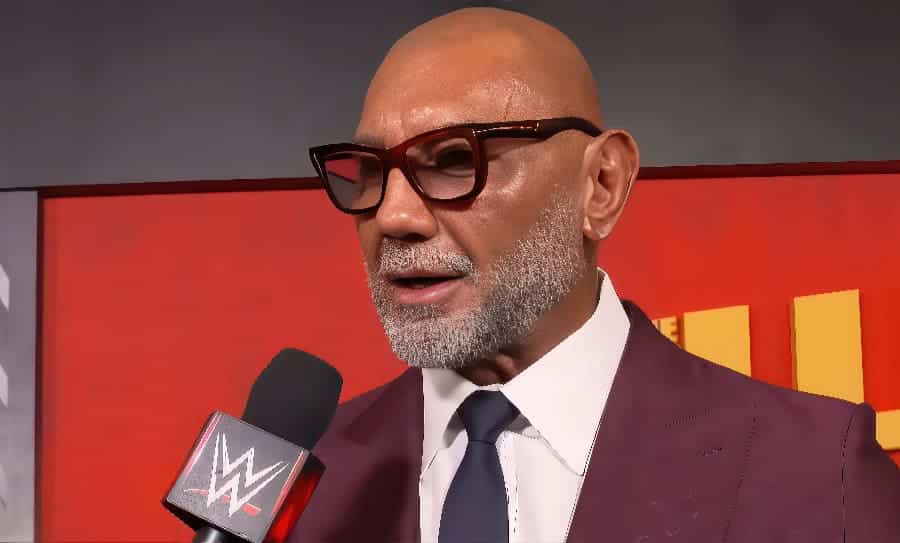
Dave Bautista recently pulled back the curtain on his formative years in the ring, offering a blunt assessment of the financial reality awaiting most talent. Long before the blockbusters and the mainstream spotlight, the former World Champion faced the same grind as every other lower-card worker. He didn't mince words about the early struggle for survival while navigating the territories and early WWE developmental systems.
My first few years of wrestling, I was broke. That changed when I became World Champion and started to make money.
The sentiment is a necessary reality check in an industry that loves to sell the dream of overnight stardom. Bautista’s transition from a bodybuilder with raw potential to a household name wasn't paved with instant royalties or massive merch guarantees. It was a grind that highlights the fragility of a wrestling career, where total body health and financial stability are often mutually exclusive until the top of the card is reached.
The Netflix question
While veterans like Bautista reflect on the old-school struggle, the company he built his name within is aggressively changing the playing field. The ongoing shift toward WWE’s complete transition to Netflix raises questions about how talent compensation will look in this new digital era. If the gate is replaced by a massive licensing check, the old logic of pay-per-view bonuses and house show cuts becomes obsolete.
The risk here is whether the mid-carders of 2026 feel the same financial pressure Bautista did two decades ago, especially as the revenue stream becomes more centralized. Consolidation is rarely friendly to the bottom of the roster. If the streaming model dictates a flat pay structure, the incentive to survive the early, broke years becomes increasingly difficult to justify for potential prospects.
Gotham's sky-high gamble
Away from the titan of the industry, smaller promotions are testing the limits of what a ring can offer to maintain relevance. The July 19 edition of Gotham Wrestling recently featured the sport’s inaugural skyscraper match. It is the type of booking decision that feels like a desperate attempt to manufacture viral highlights in a saturated market.
The execution of the skyscraper match saw talent pushed to extreme vertical limits, creating a visual spectacle that sacrificed common sense for clicks. While proponents will argue this is how to hook a modern, distraction-prone audience, it feels like an unnecessary escalation of physical risk. Watching talent work at that elevation isn't just a spectacle, it is a liability management nightmare that looks fundamentally dangerous even from behind a screen.
The booking misses
Booking a match simply because the gimmick hasn't been used yet is a shortsighted strategy. Gotham Wrestling’s production of this match lacked the narrative weight to justify the inherent danger presented to its performers. A high-concept gimmick like this requires a decade of bad blood to make sense, not just a Tuesday night slot filler.
There is also a palpable lack of depth in how these matches are sold to the viewer. When you rely solely on the novelty of the environment, you ignore the technical foundation that Bautista identified as critical to longevity. If you aren't building a story that creates a draw, you're merely performing a stunt, and stunts don't provide the long-term financial security that transforms a worker into a champion.
Looking at the horizon
The industry is split between the massive, corporate stability promised by streaming partnerships and the frantic, high-risk experimentation of the independents. These two paths are diverging under our feet. For the next generation of wrestlers, the question is whether they want the steady, regulated grind of a Netflix-backed WWE or the high-variance, high-danger world of regional promotions chasing attention.
Neither answer is particularly comforting when viewed through the lens of early-career instability. We are looking at a future where the bar for entry remains remarkably high, often necessitating years of financial sacrifice regardless of the promotion. Bautista’s honesty is a reminder that in this business, the only reliable currency is still your ability to hold the audience’s attention long enough to get that first championship belt around your waist. Every other variable is just noise.
Ultimately, the industry's success hinges on whether it can protect the people who make these shows possible. If the gap between the ultra-wealthy top-tier stars and the average independent wrestler keeps widening, the entire pipeline of talent will inevitably dry up. Talent doesn't just need a platform to perform on; they need a floor to stand on, something that wasn't guaranteed in the past and remains far from certain in the upcoming era of streaming dominance.