WWE officially confirmed that Survivor Series 2026 is heading to Houston, Texas. The promotion is partnering with the Houston First Corporation to bring its signature dual-ring cage match to the Lone Star State. As reported by BodySlam.net, the agreement secures one of WWE's primary tentpole events for the city.
The move to Houston represents a tactical shift in WWE's stadium-adjacent arena strategy. While stadium shows like SummerSlam and WrestleMania draw massive gates, the traditional arenas host the tighter, more intense structural matches. Toyota Center will likely host the event, bringing the double-cage setup back to a traditional arena environment.
Deconstructing the entry advantage
This environment is where the WarGames format thrives. The physical constraints of a standard arena ceiling and tighter seating bowl amplify the claustrophobic nature of the cage. But as we look ahead to November, the booking of the match itself requires a severe reassessment.
The current iteration of WarGames has become too comfortable. Since Triple H brought the gimmick to the main roster at Survivor Series 2022 in Boston, the matches have followed an identical, predictable script.
The heel team always wins the advantage in the lead-up. This forces the babyface team to start at a constant numerical disadvantage. A series of formulaic weapon introductions follows, leading to a high-risk spot off the top of the cage.
Let's look at the numbers. In 2022, 2023, and 2024, the heel faction won the entry advantage in every single men's WarGames match. This means the babyfaces spent exactly 15 to 18 minutes playing defense in a 2-on-1, 3-on-2, and 4-on-3 setup.
This booking pattern is dry and robs the match of its spontaneous drama. Fans know exactly when the comeback sequence will start. They know the babyface team will only gain control when the final entrant enters the cage.
The spacing of the double ring
The physical layout of the two rings is another area where WWE's creative team has grown lazy. The space between the two rings, known as the trench, is rarely used for tactical positioning. In the original NWA matches, the trench was a hazard where wrestlers were shoved headfirst into exposed steel.
Today, the trench is simply a platform for transition spots. Wrestlers stand on the steel plate waiting to catch an opponent diving from the top turnbuckle. This turns a grudge match into a choreographed stunt show.
The lack of organic violence in the transition zones makes the middle third of the match drag. The modern rule set allows each entrant to bring weapons into the cage. This has ruined the internal logic of the match.
In 2023, JD McDonagh entered the cage and immediately pulled a table from under the ring. Later in the same match, Seth Rollins did the exact same thing.
This makes no logical sense. If your teammate is being double-teamed by Drew McIntyre and Damian Priest in Ring B, you do not spend 45 seconds setting up a table on the floor. You run into the cage and save your partner.
The delay to retrieve weapons kills the momentum of the entry. It highlights the artificial nature of the match's structure.
The original NWA WarGames cage had a low roof that prevented wrestlers from climbing to the top. The cage itself was the primary weapon. Wrestlers were grated against the steel mesh, leading to immediate bleeding and a sense of physical danger.
The modern WWE cage has no roof. This modification was made to allow high-flying spots, but it has removed the sense of claustrophobia. The cage is now just a background prop until the inevitable climb-and-dive spot at the 35-minute mark.
Pacing flaws and undercard neglect
Let's analyze the pacing of the 2024 Men's WarGames match in Vancouver. The opening segment between Sami Zayn and Tama Tonga lasted five minutes. The action was crisp, focusing on ground-and-pound tactics.
But once the advantage came into play, the match slowed to a crawl. The heels systematically beat down the babyfaces while the crowd waited for the next entry buzzer.
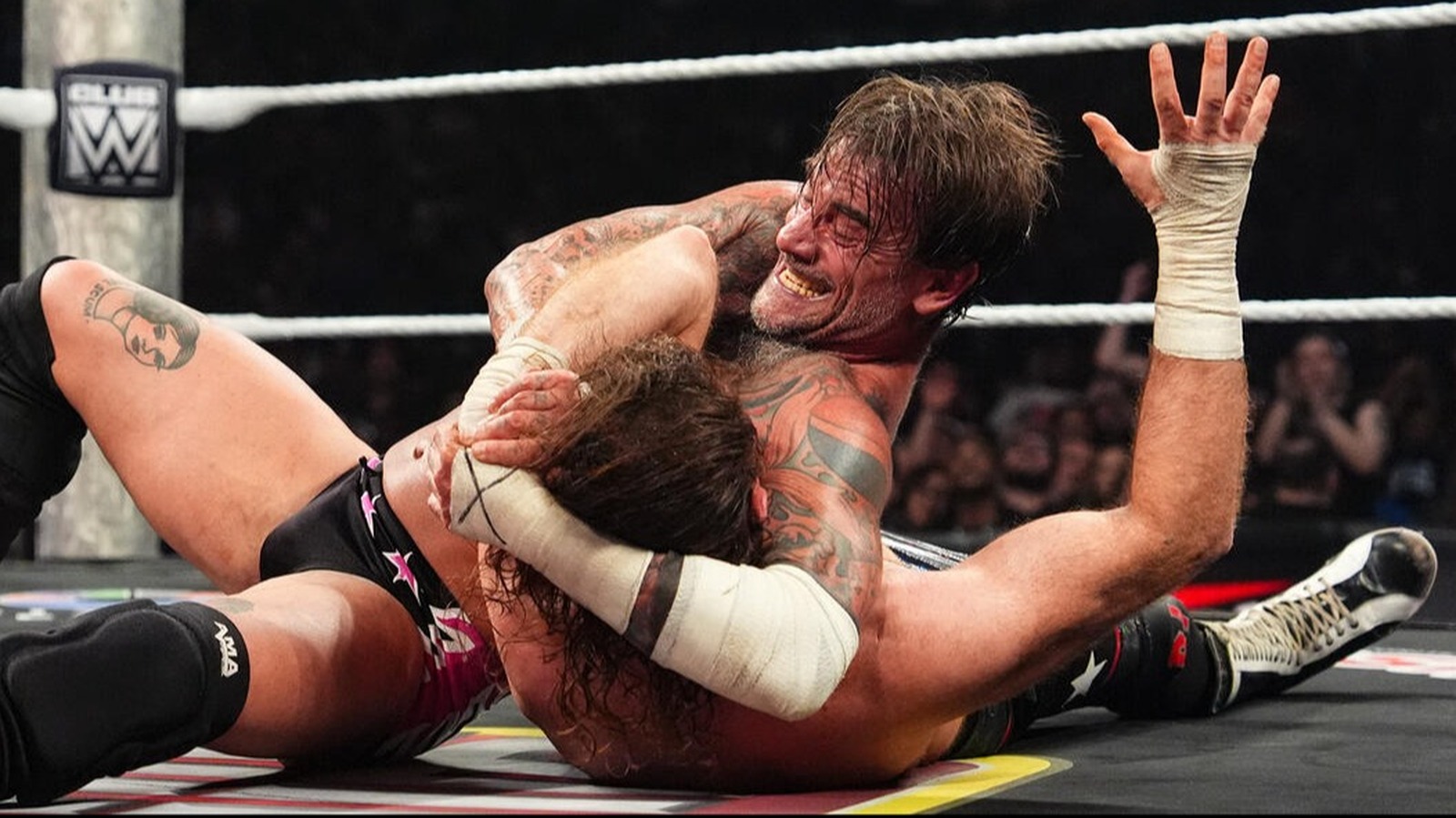
The match only found its rhythm during the Match Beyond. When CM Punk finally entered as the fifth man for the babyface team, the pacing accelerated.
The final 12 minutes featured 14 near-falls and four finisher counters. But those 12 minutes of action did not justify the 30 minutes of predictable beatdowns that preceded them.
WWE's booking team must change this formula for Houston. The simplest way to inject life into the match is to give the babyface team the entry advantage. This would force the heel team to fight from underneath.
Imagine a scenario where the babyface team has the 2-on-1 advantage. The heels would have to use dirty tactics, low blows, and cage-door distractions to survive. This would build genuine heat for the heel team.
It would make the eventual arrival of the heel reinforcements feel like a true shift in momentum. The selection of Houston also raises questions about the undercard.
Survivor Series has historically been built around brand warfare or champion versus champion matches. Under the current regime, the focus has shifted entirely to the two WarGames matches. This has left the rest of the card feeling like an afterthought.
In 2024, the non-WarGames matches received a combined total of only 38 minutes of bell-to-bell time. The mid-card titles were completely ignored on the main show. This is a mistake.
A major event needs a balanced card, not just two long cage matches and three squash matches. For the Houston show to succeed, WWE must elevate the secondary matches.
The Intercontinental and United States Championships should be defended in high-stakes matches that do not rely on cage stipulations. This would give the audience a break from the heavy metal environment of the double cage.
A projection for the Toyota Center
What should we expect from the Men's WarGames match in Houston? The current trajectory suggests a final showdown between the splintered factions of the roster. Cody Rhodes will almost certainly lead the babyface side.
His team will likely include main-event staples who have spent the summer fighting off faction interference. On the other side, the dominant heel stable of the SmackDown brand will provide the opposition. The physical mismatch will be the core story.
But the execution must be different this time. Here is the prediction: WWE will finally break the pattern in Houston. The babyface team will win the entry advantage in a qualifying match on the SmackDown before the event.
This will catch the heels off guard. The match will start with Cody Rhodes and the lead heel inside the cage. The babyfaces will dominate the early stages, utilizing Ring A to isolate the heel champion.
The heels will be forced to play defense, showing a side of their characters we rarely see. The turning point will come when the heel team's third entrant sneaks a weapon into the cage through a gap in the paneling. This will level the playing field.
The match will culminate in a submission finish in the center of Ring B. Cody Rhodes will force the heel leader to tap out to the Figure-Four Leglock. This prediction hinges on WWE's willingness to abandon its favorite booking template.
If they stick to the same formula we saw in Boston, Chicago, and Vancouver, the Houston crowd will check out by the 20-minute mark. The Toyota Center deserves a match that respects the tactical history of the stipulation. With the event officially set for Houston in November 2026, the pressure is on the creative team to deliver a match that breaks the mold.
Read Next
- Cody Rhodes and the myth of the unapproachable megastar
- Ethan Page just blew the lid off the MJF and Cody Rhodes saga
- Ethan Page just pulled the curtain back on the wildest 'what-if' in wrestling
- WWE is turning Survivor Series into the most expensive vacation of 2026
- 🎖️ WWE Survivor Series 2026 WarGames — Full Coverage Hub