When the hardwood meets the squared circle
Look, I get it. Celebrities in wrestling are usually about as welcome as a botch in a technical masterpiece. We remember the Kevin Federline era, or the time David Arquette actually won the big gold belt, a decision that essentially set the WCW offices on fire. Usually, when a professional athlete wanders into a WWE ring, we just brace for impact and hope they don't tear an ACL while trying to learn a simple headlock.
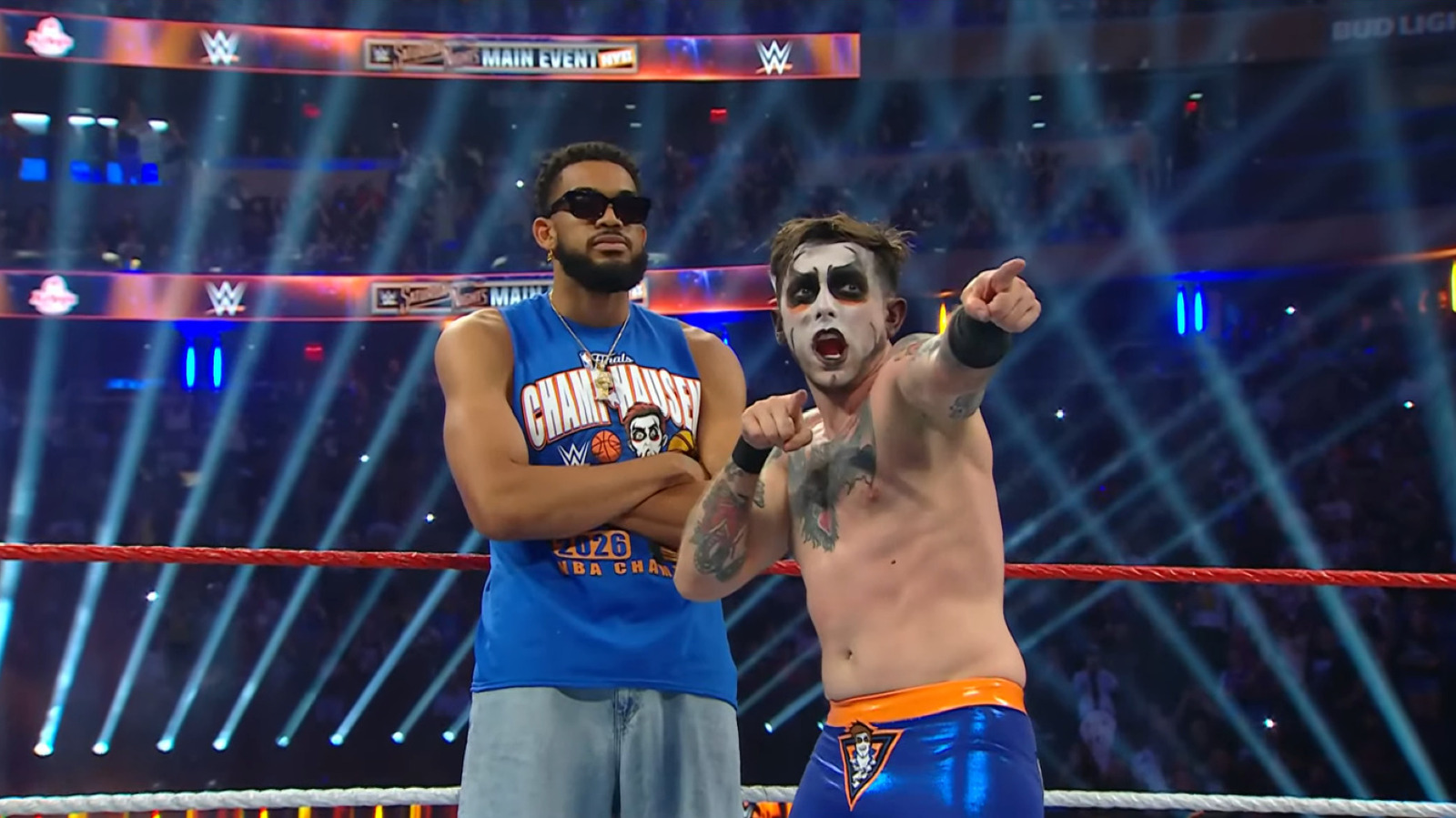
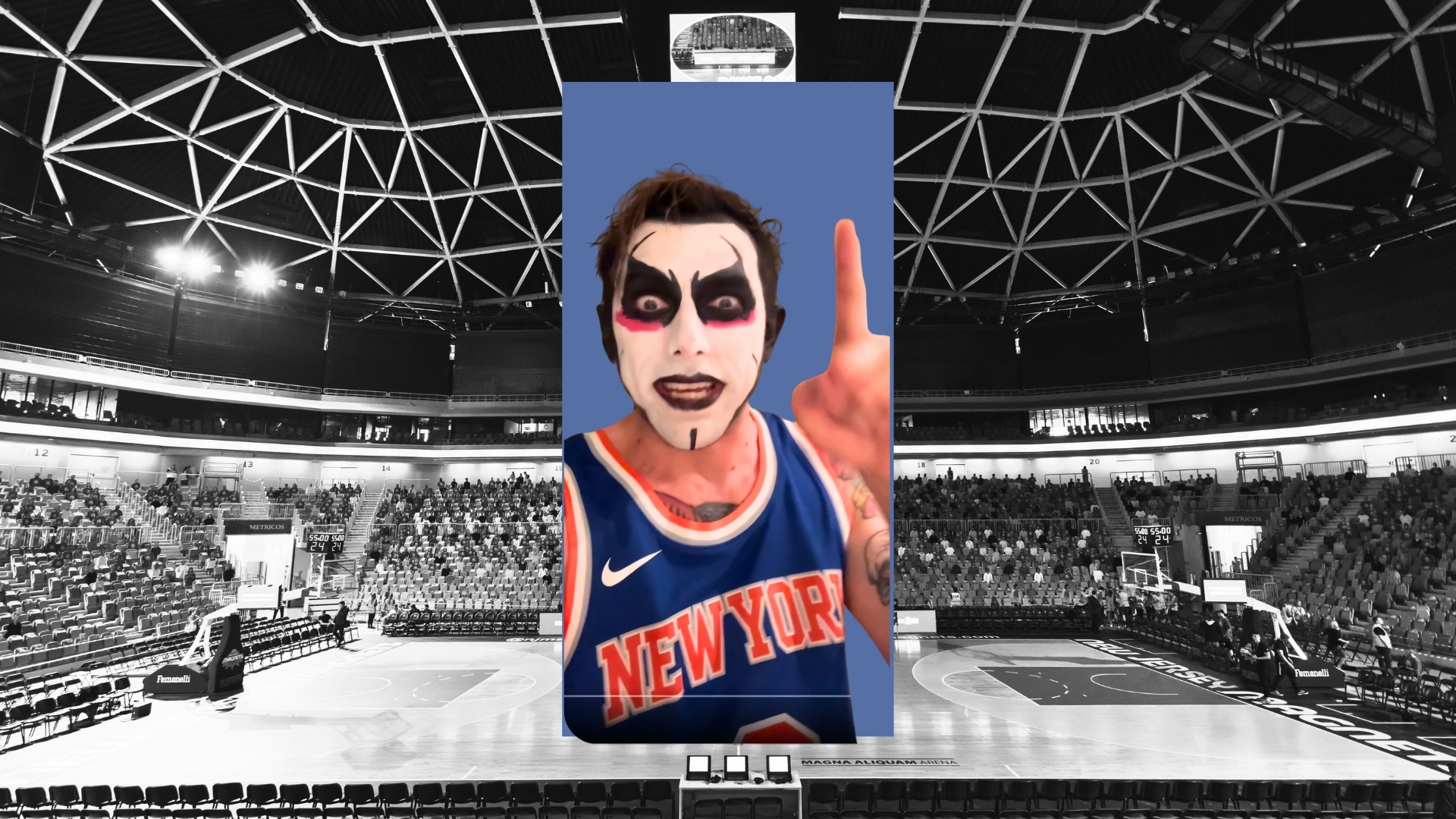
But this past weekend at Saturday Night's Main Event, we got something surreal. Karl Anthony Towns, the man who draws a massive paycheck to drain threes for the Knicks, didn't come out to dance or cut a five-minute monologue about how much he loves the city of Chicago. Instead, he stepped into the chaotic, neon-drenched world of Danhausen. When the Very Nice, Very Evil one found himself in a precarious spot, the seven-footer hopped the guardrail like he was chasing a loose ball.
It wasn't a calculated PR stunt meant to sell sneaker lines. It felt like a fever dream that wandered off a Tumblr feed and into a sold-out arena. We see far too many half-baked attempts at crossover appeal that insult the intelligence of every fan in the cheap seats. This? This was just pure, unadulterated nonsense, and I am entirely here for it.
The logic of the Very Nice, Very Evil
Let's address the elephant in the arena: Danhausen is an acquired taste. If you prefer your wrestling to be strictly shoot-style grappling or death-defying aerial acrobatics, you probably think the face-painted menace is a gimmick that ran its course during the pandemic era. Yet, here he is, getting a massive pop while being aided by a franchise NBA player. The timing of the intervention was perfect, coming exactly at the 14 minute mark of a tag match that was rapidly descending into madness.
Towns didn't try to deliver a clothesline or a dropkick. He simply stood there, an actual giant in casual wear, effectively playing heavy to a character whose primary weapon is a jar of teeth. It makes me wonder if the creative team realized how absurd this looked. We are always talking about how wrestling legends are human but sometimes these crossovers help us remember that, at its core, this is a live-action cartoon.
I have to be critical here: the pacing was a disaster leading up to this. The security team looked like they were moving through molasses, completely failing to notice a professional athlete mounting the barricade until he was already halfway to the ring. If that were a real brawl, the payoff would have been marred by a poorly timed referee bump. It saved the segment, sure, but it exposed just how flimsy our suspension of disbelief becomes when high-profile guests are involved.
Why this matters beyond the cheap pop
Sports entertainment needs these moments to keep from disappearing into its own navel. We get caught up in who held the championship for how many days or debating which company provides a better technical work rate. Then, a legitimate athlete shows up on a whim to help a guy who acts like a Victorian ghost, and suddenly the crowd is energized. It cuts through the corporate polish that has been suffocating the product lately.
NBA players have been hanging around ringside since the days of Dennis Rodman joining the nWo. Rodman actually took bumps, which was a different kind of insanity, but Towns playing the role of the bemused, helpful bodyguard felt more modern. It feels like the current generation of athletes grew up as marks, not just people trying to network. They know the lore, they respect the bit, and they aren't afraid to let the audience see them mark out for a bit of harmless, weird fun.
The issue remains that WWE often treats these cameos with the subtlety of a sledgehammer. Next week, we’ll probably see Towns getting a three-minute sit-down interview that makes everyone uncomfortable. But for those few minutes of actual television, when he stepped up to protect Danhausen from a mid-card heel, it felt like wrestling again. It felt like that chaotic, unpredictable energy that keeps us hooked despite the terrible booking decisions we routinely have to swallow.
Let’s not pretend this is high art. It is a spectacle, a flash in the pan, and the kind of thing that will be a footnote in a decade. But if you were sitting in that building, you weren't thinking about the 50/50 booking patterns or who is getting pushed for the next quarter. You were laughing because a Knicks star was basically playing real-life tag-team partner for a guy with face paint. Sometimes, that is exactly what we need, even if the execution was sloppy and the stakes were nonexistent.
Read Next