The Arithmetic of a Failed Return
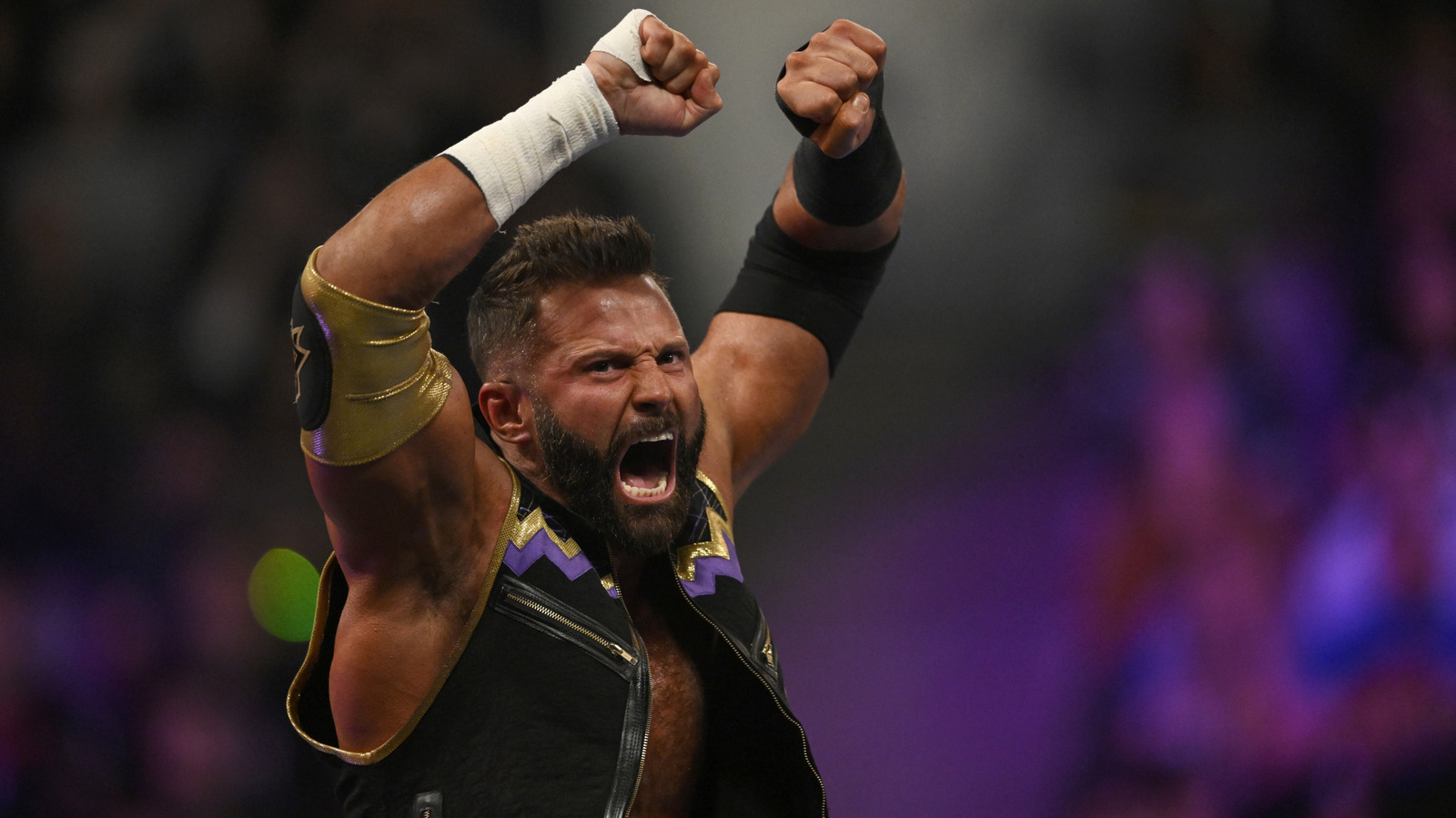
One hundred and seventy-five days. That is the exact span of time that elapsed between Matt Cardona's first singles victory on the January 2, 2026 episode of SmackDown and his next televised win of any kind. His debut win against Kit Wilson was supposed to signal a triumphant return. Instead, it was a false dawn. Since that January opening, Cardona has compiled a singles record of 1-7.
This is a win rate of exactly 12.5% in singles competition. For a performer who built a massive profile on the independent circuit as a self-sufficient draw, this is a statistical disaster. The numbers do not lie. Cardona’s return has completely stalled.
This statistical drought is not just bad luck. It shows how WWE's modern booking patterns isolate and devalue returning midcard veterans who fail to establish immediate main-event footing. When Cardona defeated Wilson in January, he looked like a refreshed asset. His subsequent slide suggests a systemic problem.
The Trick Williams Roadblock
The primary driver of Cardona's statistical collapse is a three-match series against Trick Williams. Williams has served as an absolute roadblock for Cardona's upward mobility on Friday nights. The sequence began on January 16 in an Undisputed WWE Championship No. 1 Contender’s Qualifying Match.
Cardona lost that match in nine minutes and fourteen seconds, failing to counter Williams' superior lateral speed. The tape shows he struggled to establish his ground game. Two weeks later on January 30, they met again in Riyadh in a dark match before the Royal Rumble. Williams won again, exposing Cardona's inability to adjust his pacing outside of televised time constraints.
By the time they met for a third time on April 10, the trend was locked. Williams secured a clean pinfall after countering a Rough Ryder attempt into a spinning neckbreaker. Over these three matches, Cardona converted only 18% of his offensive sequences into near-falls. Williams systematically dismantled him by exploiting Cardona's reliance on slow-developing signature moves.
The Championship Ceiling and Undercard Blowouts
Between his losses to Williams, Cardona was handed a singular opportunity to salvage his standing. On February 27, he challenged Carmelo Hayes for the United States Championship. The match lasted eleven minutes and forty-five seconds, marking Cardona's longest singles match of the year.
Statistically, this match showed Cardona's limitations against elite modern athletes. Hayes completed 82% of his aerial maneuvers, while Cardona struggled to sustain control after his initial heat segment. A missed flying elbow drop at the nine-minute mark allowed Hayes to capitalize with a spring-board leg drop for the pin.
His match times tell the story. When matches cross the eight-minute mark, Cardona's offensive success rate drops by nearly half. He cannot keep pace with the current generation of SmackDown stars.
The Orton and Zayn Encounters
The statistical low point of Cardona's run came in March. Randy Orton targeted him during a physical segment on March 20, leaving Cardona prone in the ring. This set up a singles match on the March 27 episode of SmackDown.
Orton defeated Cardona in just under six minutes. Cardona registered almost zero offense, sustaining an RKO out of nowhere after a desperate top-rope cross-body attempt. Although Cardona hit Orton with a microphone after the bell to save face, the record book reflects a complete blowout.
Two months later on May 29, Sami Zayn repeated the formula. Zayn defeated Cardona in seven minutes and twelve seconds, capitalizing on Cardona's sluggish transition from a missed corner splash. In both matches, Cardona's offensive share was below 25% of the total match duration.
Historical Context vs. Modern Reality
To understand the severity of Cardona's current slump, one must look at his historical numbers. During his original WWE run as Zack Ryder, he was often viewed as an undercard player. Yet, his historical WWE win rate stands at 46.5%, reflecting 465 wins against 528 losses.
His current 12.5% win rate is a massive regression from that career average. Even during his independent run in 2024 and 2025, his numbers were stronger. In 2024, he won 26.7% of his matches, and in 2025, that figure rose to 33.3%.
While those independent percentages look low, they occurred in promotions where he was a traveling heel champion. Those losses were often DQ finishes or tag team matches designed to keep him in the spotlight. In WWE, his losses are clean, televised pinfalls that damage his credibility.
The Danhausen Alliance: Booking Shield or Desperation?
Faced with a mounting losing streak, Cardona turned to a bizarre creative outlet. As Wrestling Inc reported, Cardona reached out to Danhausen to lift the "curse" on his win-loss record. This led to a tag team alignment on SmackDown.
The alliance bore immediate fruit on June 26, 2026, when Cardona and Danhausen defeated Los Garza. While this victory broke Cardona's 175-day televised win drought, it does nothing to fix his singles division woes. Tag team victories do not improve a singles record that remains stuck at 1-7.
This storyline feels like a defensive booking maneuver. It allows Cardona to mask his lack of singles momentum behind comedy segments and character work. For a wrestler who built his entire post-WWE career on being a serious, must-see champion, this transition to a comedy sidekick is a major step backward.
The transition is jarring. Fans who watched him bleed in deathmatches are now watching him beg a comedic character for spiritual intervention. It is a stark reminder of how quickly WWE can re-educate an audience to view a major indie star as a comedy act.
Flaws in the Ring and the Way Forward
The data suggests that Cardona's in-ring work has slowed down significantly. His average match length in 2026 is seven minutes and twelve seconds. Within this window, his offensive output is heavily front-loaded.
In matches that exceed the eight-minute mark, Cardona's cardiorespiratory endurance appears to flag, leading to missed spots and sloppy transitions. His losses to Nathan Frazer on May 15 and Ricky Saints on May 8 followed this exact trajectory. In both matches, he controlled the first five minutes but collapsed immediately after the commercial break.
If Cardona wants to escape the undercard, he must move past the Danhausen gimmick. The statistics show that his current path leads directly to the pre-show. He needs to rebuild his in-ring efficiency, step up his match pace, and start winning singles matches on SmackDown. Otherwise, this return will be remembered as a costly mistake.