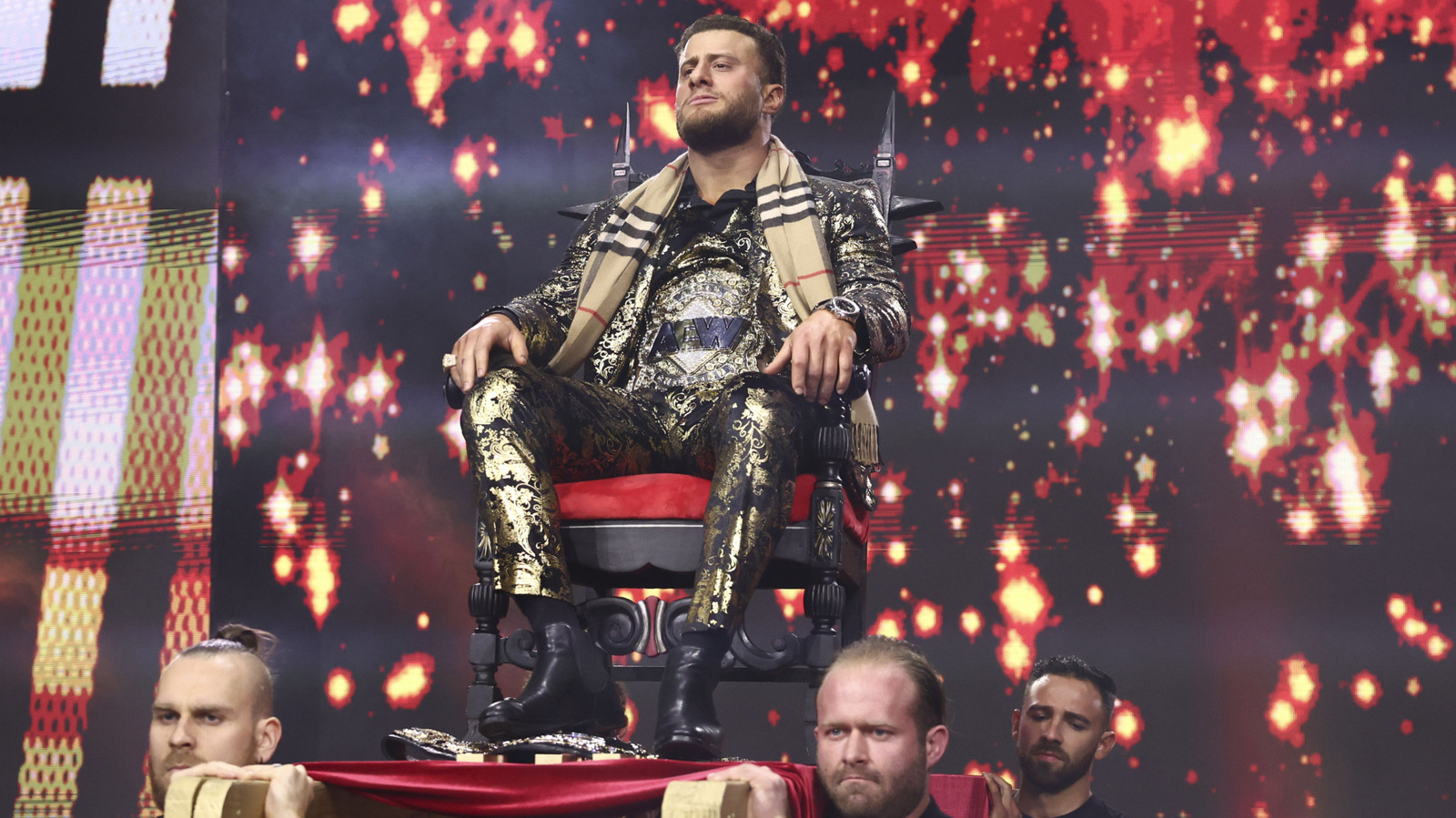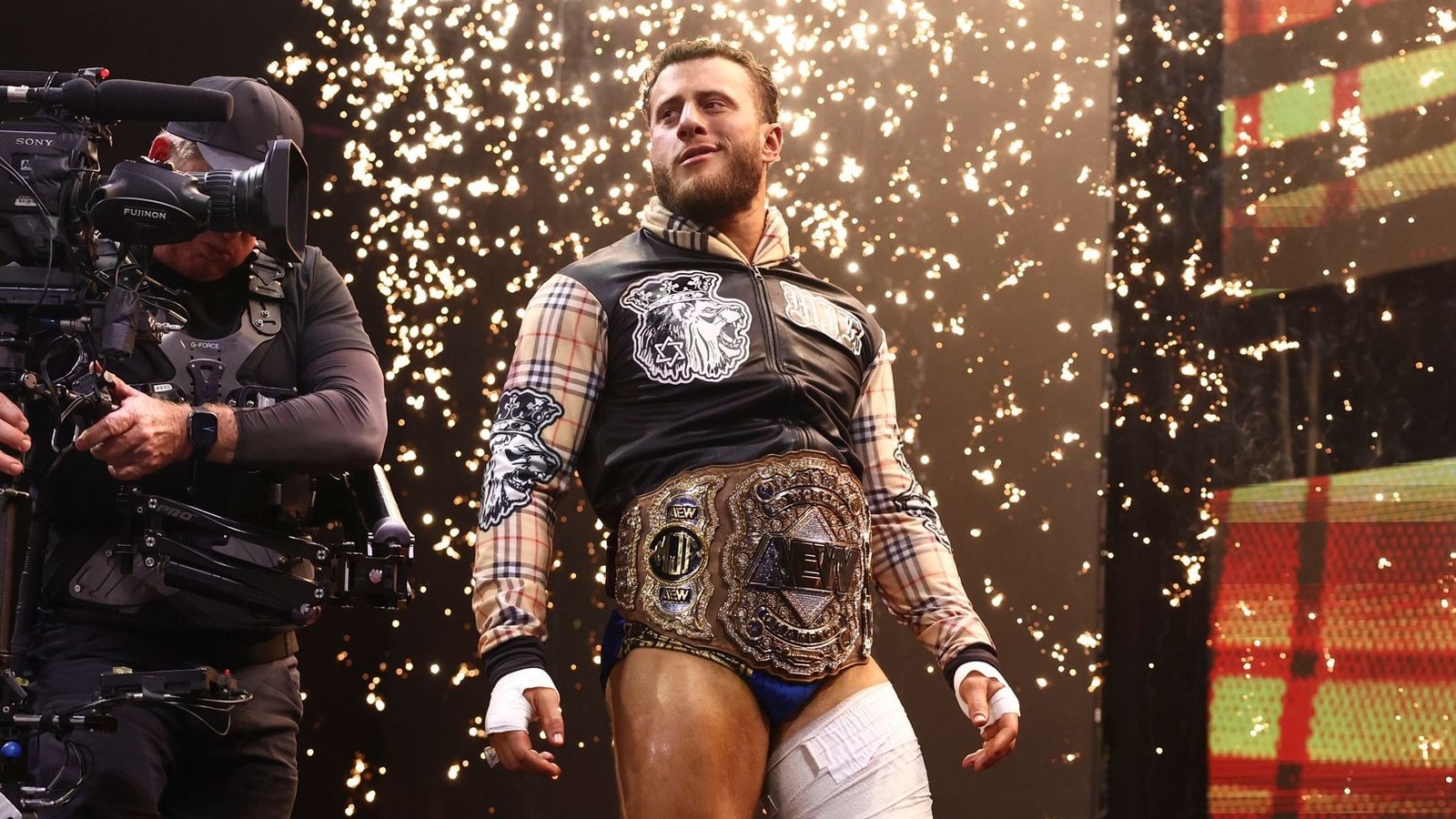
Exactly 115 days have passed since Hangman Adam Page lost a brutal Texas Death Match to Maxwell Jacob Friedman at Revolution and was barred from ever challenging for the AEW World Championship again. Last night on Dynamite, MJF offered the exact same career-altering stipulation to Kenny Omega during a segment that set up a future world title showdown. This repetition highlights a growing booking crisis at the top of the card.
When Cody Rhodes agreed to a similar title ban in 2019, the restriction lasted for 800 days until he departed the promotion. That narrative choice carried immense weight because it was treated as an absolute, isolated tragedy. By duplicating this high-stakes stipulation twice in less than four months, AEW risks turning a dramatic plot device into a routine booking gimmick.
If Omega falls next Wednesday at Beach Break, two of the company's biggest draw cards will be permanently removed from the championship picture. This mathematical shrinking of the challenger pool is counterproductive for a champion who thrives on variety. It leaves MJF with fewer top-tier opponents, forcing the booking team to rush midcard talent into main-event spots before they are ready.
The In-Ring Cost of Referee's Discretion
The July 1 episode opened with MJF defending his title against Mark Briscoe in an encounter that lasted exactly 18 minutes and 14 seconds. While the match was designed to showcase intense physical drama, it exposed a glaring logical inconsistency in AEW's rules. The referee allowed tables and steel steps to be used openly under the guise of discretionary leniency.
If championship contests are functionally no-disqualification matches, then the traditional rulebook loses all meaning. The promotion must enforce strict rules in standard matches if they want their hardcore stipulations to feel distinct. Instead, we are treated to a weekly spectacle of blood and wood that desensitizes the audience to violence.
Briscoe's offensive output was characteristically wild, featuring a Froggy Bow through a table on the floor. Yet the champion's tactical focus was far more precise, targeting Briscoe's head and neck for 84% of his offensive moves. MJF eventually secured the victory after executing a second-rope Heatseeker.
Before that final piledriver, Briscoe had MJF reeling on the concrete floor, executing a running boot off the steel steps. MJF's defensive metrics in this match were unusually poor, as he absorbed three major high-impact maneuvers outside the ring. This high rate of physical punishment represents a significant departure from his usual risk-averse defensive strategy.
This finish represents a clear statistical shift in MJF's style. During his first title reign, he won 70% of his matches via submission using the Salt of the Earth armbar. In 2026, he has ended 4 of his last 5 title defenses with the Heatseeker, indicating a transition toward high-impact neck compression.
The history between these two competitors is brief but bloody, stretching back to their tables and tacks match at All Out 2025. That match lasted over 22 minutes and left both men bleeding profusely from their backs and arms. By comparison, last night's encounter felt like a condensed version of their previous war, offering similar spots without the same level of emotional buildup.
The Midcard Logjam and the Callis Disruption
Further down the card, the TNT Championship picture is experiencing its own structural issues. Kevin Knight successfully completed the eighth defense of his title against Lio Rush in a fast-paced athletic contest. The match itself was clean, but the post-match angle immediately muddied the waters.
Knight has averaged a title defense every 14 days since winning the championship, establishing himself as a workhorse. However, his matches have consistently suffered from external interference, with 60% of his defenses ending in post-match brawls. This constant chaos prevents Knight from establishing a distinct in-ring identity, as his athletic achievements are overshadowed by booking drama.
Darby Allin emerged to challenge Knight, just 35 days after Allin's own world championship reign came to an end. This rapid demotion of a former world champion into the secondary title picture disrupts the division's hierarchy. It crowds out rising stars like Speedball Mike Bailey, who was forced to watch the segment from the crowd without taking action.
Allin's transition from the world title picture to the midcard feels rushed when looking at his recent record. He held the world title for 72 days, defending it successfully three times before losing to MJF. Dropping him immediately into a feud for the TNT Championship ignores the logical progression of a former champion seeking redemption at the top.
Meanwhile, Andrade El Idolo's transition out of the Don Callis Family was cut short by a backstage assault. The Don Callis Family has now run interference or post-match attacks in 7 of the last 10 Dynamite episodes. This 70% disruption rate has turned the group into a narrative black hole.
Andrade's departure from the group at Forbidden Door was supposed to launch him into the world title picture. Instead, the immediate retaliation by Callis's stable forces him back into a circular midcard feud. This repetitive booking structure prevents talented workers from breaking through the glass ceiling of the upper midcard.
A Rivalry Defined by Decades
The bright spot of the broadcast was the return of Switchblade Jay White, whose absence had lasted exactly 459 days. White's promo followed his surprise appearance at Forbidden Door and immediately targeted David Finlay and The Dogs. These two men have a shared history that spans more than 10 years.
They entered the NJPW Dojo in Tokyo at the same time and spent years working their way up the card. Fans with long memories will recall Wrestle Kingdom 10 in 2016, where both men carried AJ Styles from the ring. This decade-long relationship gives their current conflict a legitimacy that cannot be manufactured overnight.
When Finlay expelled White from NJPW in 2023, it was a franchise-altering move that redefined the Bullet Club. White's return allows AEW to capitalize on a pre-existing story that requires no artificial stipulations. By referencing these real-world records and dates, the promotion respects the intelligence of fans who follow the global wrestling scene.
White's return is a masterclass in how to build tension without relying on cheap stipulations. His promos are sharp because he responds directly to the crowd's energy rather than sticking to a script. By focusing on his personal history with Finlay, White creates an analytical hook that draws the audience in.
This feud should serve as a blueprint for the rest of the booking committee. Wrestling works best when the stakes are built on personal history and win-loss records. Relying on career-ending stipulations is a shortcut that yields diminishing returns.
The Road to All In
The promotion has already announced that Will Ospreay will challenge for the world title at All In on August 30. By inserting Kenny Omega into the picture next week, they have created a genuine sense of unpredictability. We do not know who will walk into London holding the gold.
Ospreay's current winning streak stands at 12 consecutive singles victories, making him the most dominant challenger in AEW history. His association with The Death Riders adds a volatile variable that could disrupt any championship match. This statistical dominance should be the focal point of the build to All In, rather than convoluted booking hoops.
However, the path to that match is needlessly complicated. If Omega loses next week, AEW will lose one of its most bankable challengers for the rest of the year. The booking team must protect its top assets rather than sacrificing them for a temporary ratings boost.
Read Next
- Why Mark Briscoe has MJF backed into a corner tonight on Dynamite
- Kevin Knight is turning the TNT Championship back into AEW's workhorse title
- Why Kris Statlander and Hikaru Shida are on a TBS Title collision course
- Top 10: Hikaru Shida's Greatest Moments
- ⚡ AEW Dynasty 2026 — Full Coverage Hub
- 🎲 AEW Double or Nothing 2026 — Full Coverage Hub