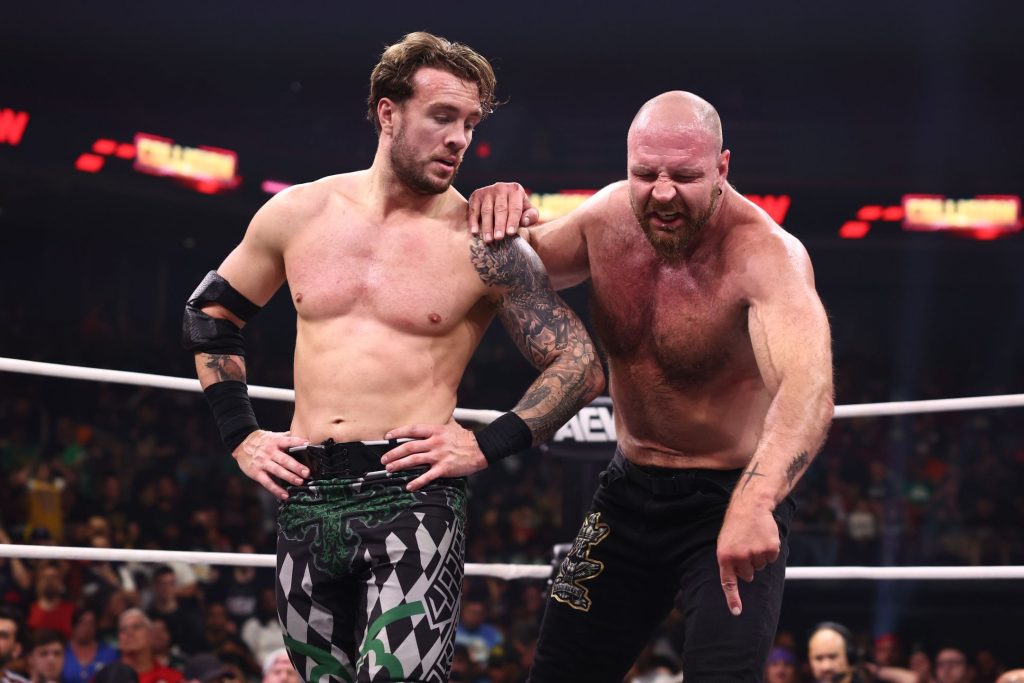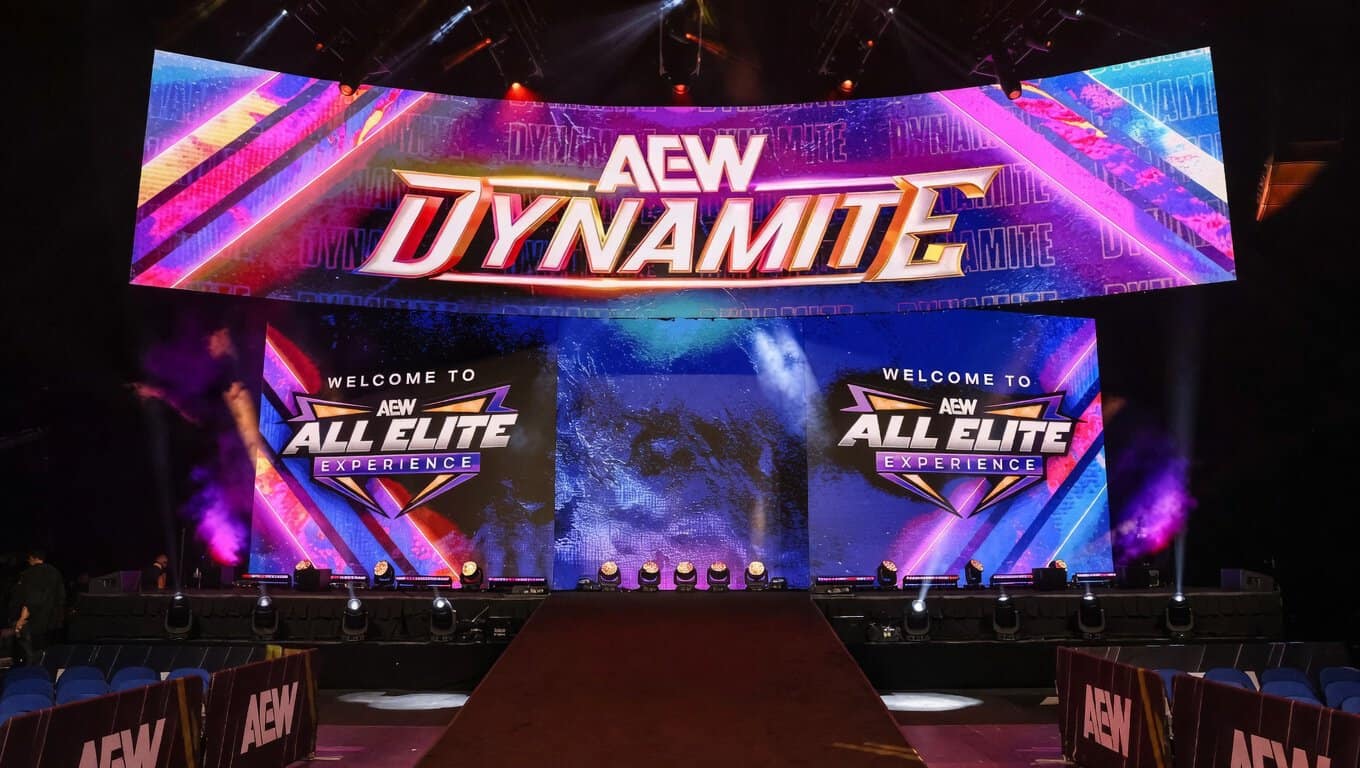
Four days out from Double or Nothing, AEW is throwing a television curveball. As noted in the Dynamite and Collision preview, Jon Moxley defending the World Championship against Kyle O'Reilly on free television is a classic Tony Khan maneuver. It guarantees a high-workrate main event to spike a quarter-hour rating. But it also risks the structural integrity of the pay-per-view build.
The television booking trap
Let us address the booking elephant in the room immediately. Hot-shotting a World Title match onto television just 96 hours before a marquee pay-per-view is a recurring AEW flaw. O'Reilly is a phenomenal technician. He is not, however, currently positioned as a legitimate threat to end Moxley's reign right now. Throwing him into this spot feels less like a culmination of a blood feud and more like a spreadsheet decision.
It cools the momentum for the actual Double or Nothing main event by distracting the champion with a standalone television exhibition. Instead of a hard sell for Sunday, we get a technical clinic that operates in a vacuum.
That criticism aside, the in-ring reality of this matchup is fascinating. It presents a stark contrast in violent philosophies. You have Moxley's volume-heavy pressure fighting against O'Reilly's joint manipulation and precise distance management.
Moxley is fundamentally a brawler who learned how to grapple. His time with the Blackpool Combat Club fundamentally altered his ring geometry. In his earlier AEW years, Moxley relied heavily on weapons and arena brawls to mask occasional pacing lulls. Now, he uses chain wrestling defensively. He neutralizes opponents by keeping his weight heavy on their hips.
Look closely at how Moxley handles shorter, technical fighters. He rarely backpedals. Instead, he steps directly into their strikes to close the distance. He takes a shot to give a shot. His objective is to initiate the clinch. Once tied up, Moxley’s dirty boxing is unmatched in North America. He throws short, snapping headbutts and forearm shivers that break an opponent's rhythm.
Dismantling the brawler
O'Reilly presents a unique mechanical problem for that approach. You cannot out-brawl Moxley, but you can dismantle his foundation. O'Reilly’s striking is heavily influenced by kickboxing and shoot-style wrestling. It is entirely built around lower-body compromise.
Moxley plants his feet notoriously wide when he throws his looping overhand rights. That wide stance leaves the lead leg hopelessly exposed. O'Reilly will undoubtedly target the inside of Moxley's left thigh from the opening bell. If he can take away Moxley's ability to drive forward, the champion's offense loses its kinetic chain. A King Kong Lariat thrown without a planted base is just a harmless arm swing.
We saw O'Reilly use this exact strategy during his Ring of Honor world title chase years ago. He dissects the base. He kicks the calf to deaden the nerve. When the opponent drops their hands to block the low kicks, O'Reilly goes high with a crescent kick to the jaw.
O'Reilly spent the prime of his career as a tag team specialist. Working alongside Bobby Fish forced him to master ring positioning. In a tag environment, you learn how to cut off the ring. You learn how to keep your opponent in their corner. That spatial awareness translates perfectly to singles competition against a brawler. O'Reilly knows how to herd his opponent away from the ropes.
But O'Reilly’s ground game is where the true danger lies. He does not try to overpower you in a static hold. He sets transition traps. He waits for you to attempt an escape and catches the limb you expose in the scramble. The cross-armbreaker is always hovering in his back pocket.
Moxley loves to throw elbows from top mount. It is a signature sequence he uses to bust opponents open. O'Reilly will likely bait that exact position, waiting for Moxley to rear back for an elbow strike. On the downswing, O'Reilly will try to catch the wrist, swing his hips, and lock in a triangle choke.
Moxley is not without glaring defensive holes. His aggression often makes him sloppy. He throws strikes with wild, looping arcs. A precise counter-striker like O'Reilly can slip inside those wide punches. Moxley also has a bad habit of leaving his neck exposed when attempting double-leg takedowns. A sloppy shot against O'Reilly is an invitation to get choked unconscious.
The deep waters of a title defense
The actual battle here is pace. Moxley thrives in chaos. He wants the referee counting, he wants the fight spilling over the guardrail. The longer the match stays a pure wrestling contest, the more the odds shift toward the challenger.
When O'Reilly is forced to fight on the outside, his technical advantages evaporate instantly. Concrete floors negate intricate submission chaining. You cannot roll for a kneebar on a rubber mat without tearing up your own back. O'Reilly needs to use his kicks to keep Moxley backing up. Moxley instinctively hates backing up.
If O'Reilly can hit a high knee as Moxley ducks in for a desperation grapple, he might stun the champion. A stunned Moxley is vulnerable to the guillotine choke. O'Reilly has the grip strength to put Moxley to sleep if he can lock his hands before Moxley drives him into the turnbuckle.
But Moxley’s pain tolerance is a tactical metric on its own. He absorbs punishment and uses it to fuel adrenaline spikes. O'Reilly cannot simply hurt Moxley. He has to physically incapacitate a joint to stop him. Pain will not be enough against a guy who genuinely enjoys bleeding.
O'Reilly's recent singles form has been quietly excellent. Away from the glare of main-event storylines, he has been wrestling a highly technical, mat-based style on weekly television. He has focused heavily on limb isolation. In his last three matches, he has actively ignored pinfall attempts in favor of forcing submission transitions. That single-minded focus on joint destruction is exactly what makes him dangerous tonight.
Moxley's cardiovascular conditioning is another massive factor. He drags opponents into deep water. Moxley boasts an absurd 82 percent win rate in title defenses that cross the twenty-minute mark. By the 15-minute mark in this match, the snap starts to leave O'Reilly's kicks. That is when Moxley usually takes over. The champion starts hitting harder as the match progresses, while his opponents begin to fade.
The Death Rider is the ultimate goal, but the setup is pure attrition. Moxley wants his opponent breathing out of their mouth. He wants their arms heavy. A tired fighter cannot bridge out of a pinfall.
Consider O'Reilly's brainbuster. He does not use it as a traditional impact finisher. He uses it to reset the nervous system. Dropping an opponent directly on their upper neck disrupts their equilibrium. If he hits it on Moxley, he will not go for the pin. He will immediately transition into a triangle choke while Moxley is seeing double.
This match also serves as a final stress test for Moxley ahead of Sunday. Double or Nothing requires the champion to be at his absolute peak. If O'Reilly manages to damage Moxley's knee or shoulder, it changes the entire complexion of the pay-per-view main event. The challenger in Las Vegas will immediately target whatever body part O'Reilly compromises tonight.
The final prediction
Expect a methodical opening. O'Reilly will secure early takedowns. He will chop away at the lead leg. Moxley will likely look sluggish initially. He will sell the cumulative damage of his brutal recent schedule. O'Reilly will dictate the first five minutes with pure mat wrestling.
The turning point will happen midway through the bout. Moxley will get frustrated on the mat. He will eat a stiff combination, shake it off, and decide to turn the wrestling match into a street fight. A desperation lariat will flip the momentum entirely.
O'Reilly will survive the initial onslaught. His defensive guard is too sharp to get caught sleeping early. He will attempt a counter-submission, perhaps catching Moxley in a kneebar as Moxley attempts a stomp.
But ultimately, Moxley's sheer force of will dictates these television main events. The champion will power out of the submission with a flurry of closed fists. He will hit a sheer-drop brainbuster to daze O'Reilly.
Moxley wins this via referee stoppage. He will lock in the bulldog choke, trapping O'Reilly in the center of the ring. O'Reilly will pass out rather than tap, protecting his technical reputation. Moxley gets his arm raised, keeping the belt secure as AEW packs the trucks for Las Vegas.
Read Next