The Brutal Physics of a Lesnar Assault
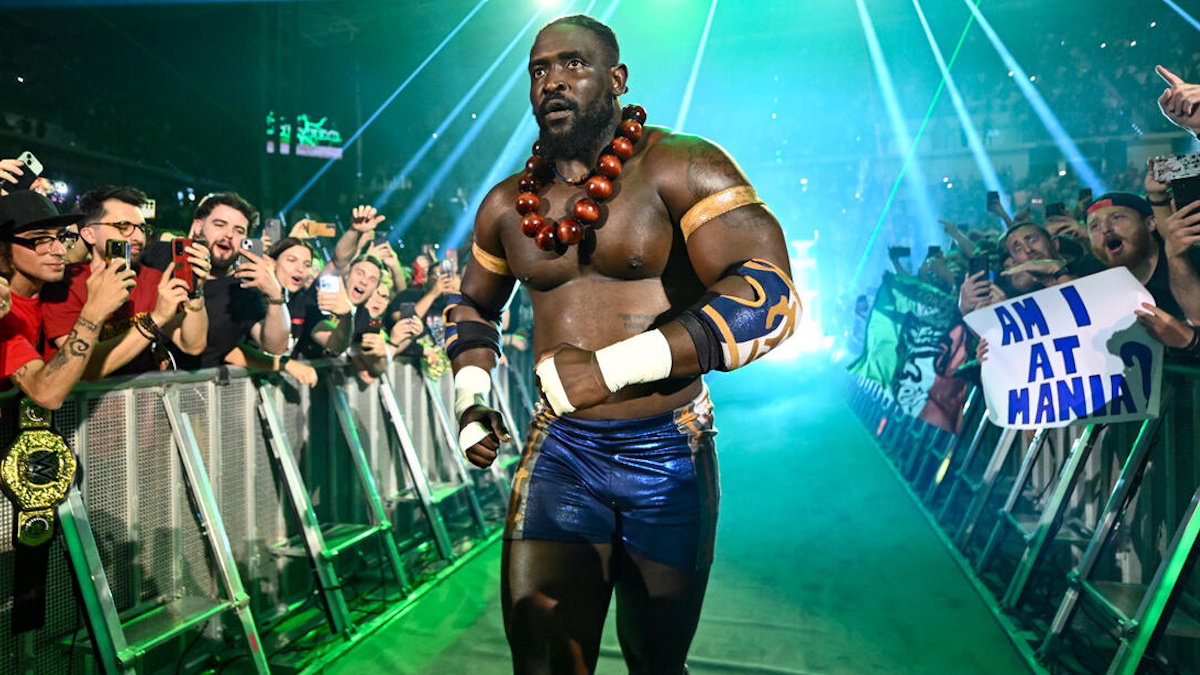
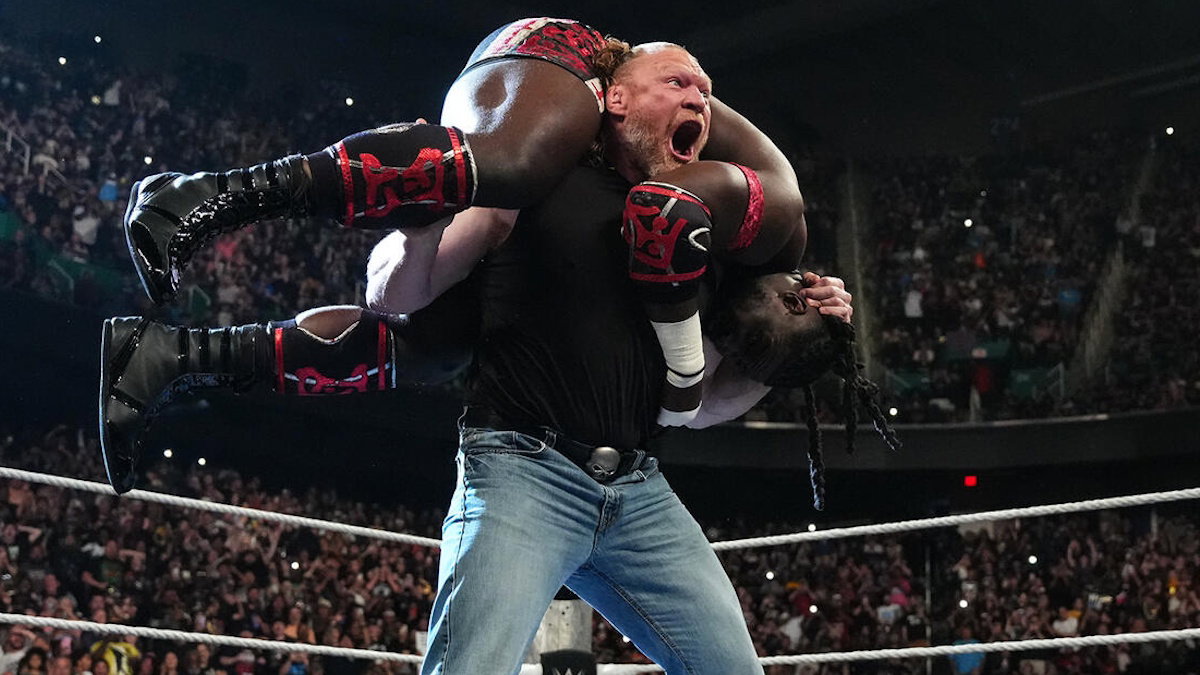
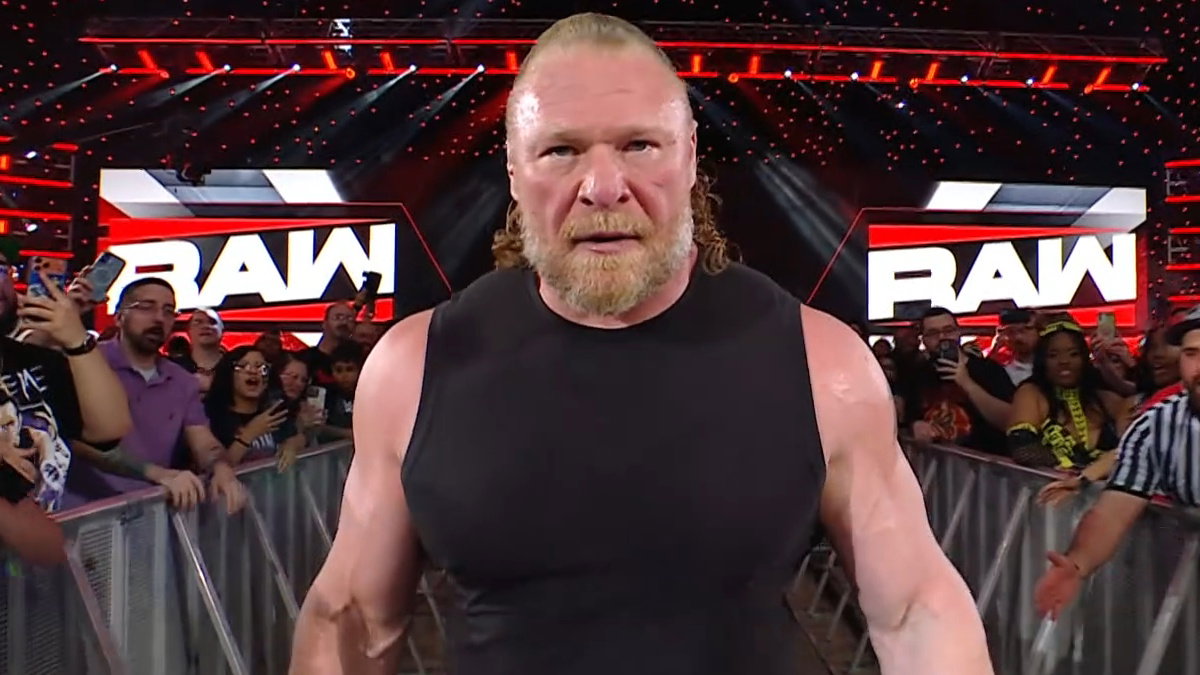
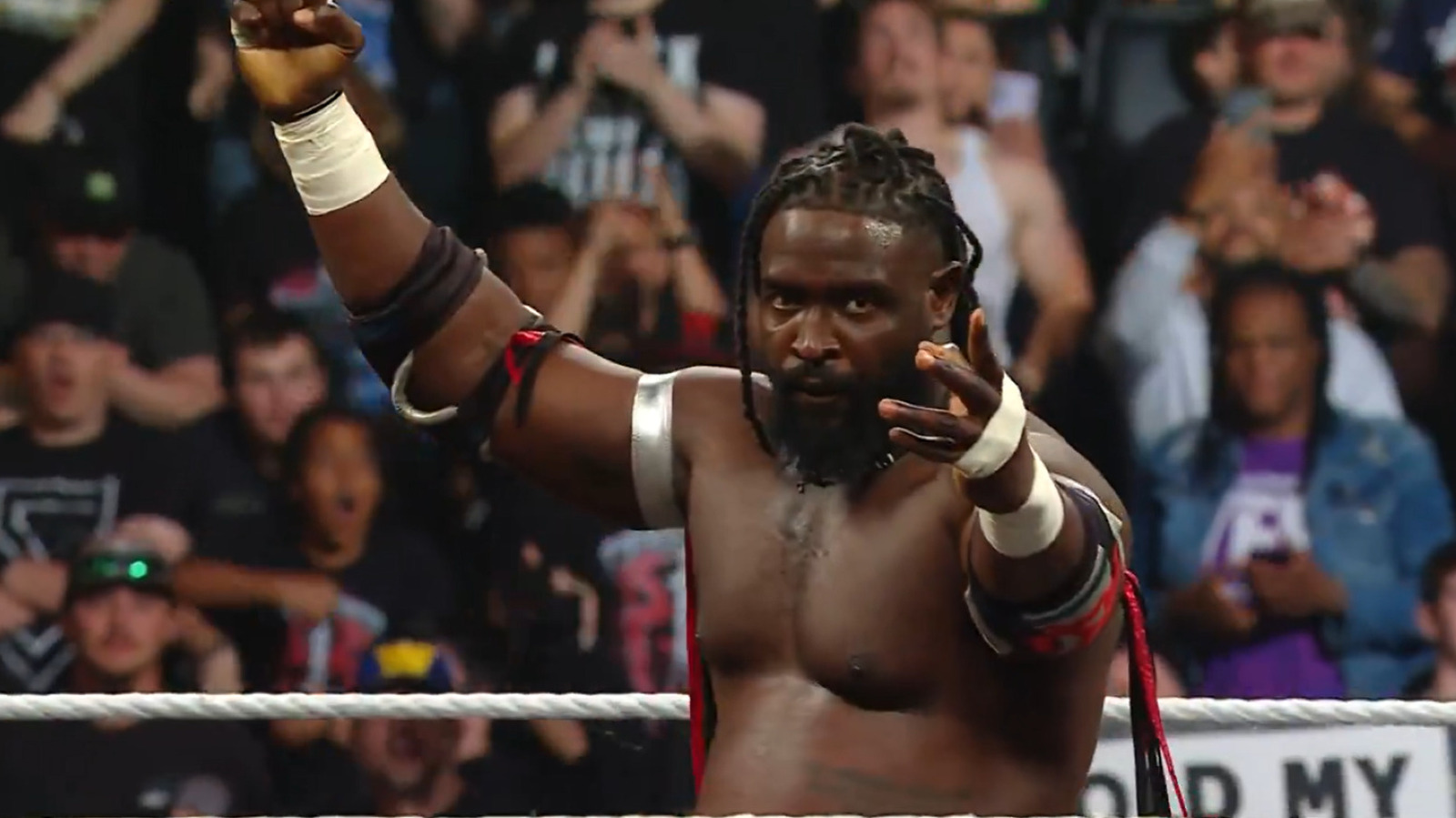
Brock Lesnar is back. Oba Femi is paying the price. The May 20 broadcast of Monday Night Raw concluded with Lesnar delivering a vicious return attack on the rising star. WWE has yet to issue a formal medical bulletin on Femi’s status, but the optics of the assault suggest significant trauma. Femi faces Lesnar at WWE Clash in Italy in just weeks. He now has a rapidly closing window to recover from an unprovoked beating.
When a 286-pound athlete like Lesnar applies high-velocity impact to another super-heavyweight, the physics alone dictate a rough recovery timeline. The human spine is simply not designed to absorb repetitive suplexes on a reinforced wooden ring mat.
During a standard German suplex, the victim's center of gravity violently shifts. The subsequent fall involves a rapid deceleration force that transfers kinetic energy straight through the trapezius, rhomboids, and latissimus dorsi.
Femi is a massive human being. Multiply his mass by the acceleration Lesnar generates. The sheer impact force causes immediate micro-tears in the muscle fascia.
Historically, we have seen the medical fallout of Lesnar's offense. When he decimated John Cena at SummerSlam 2014, the aftermath involved severe cervical strain and deep tissue bruising. Femi is younger, but youth does not make bones invincible.
The lumbar region takes the brunt of the damage. If Lesnar executed an F5, the torque applied to Femi's neck and shoulders during the rotational drop warrants an immediate ImPACT concussion test.
WWE medical staff will likely subject Femi to a battery of evaluations this week. Standard protocol requires cervical spine X-rays to rule out hairline fractures. If there is any suspected ligament damage in his neck, an MRI follows.
For now, Femi relies on cryotherapy, hyperbaric oxygen treatments, and intensive deep tissue massage to mitigate the swelling.
Veteran Perspectives on the Road to Italy
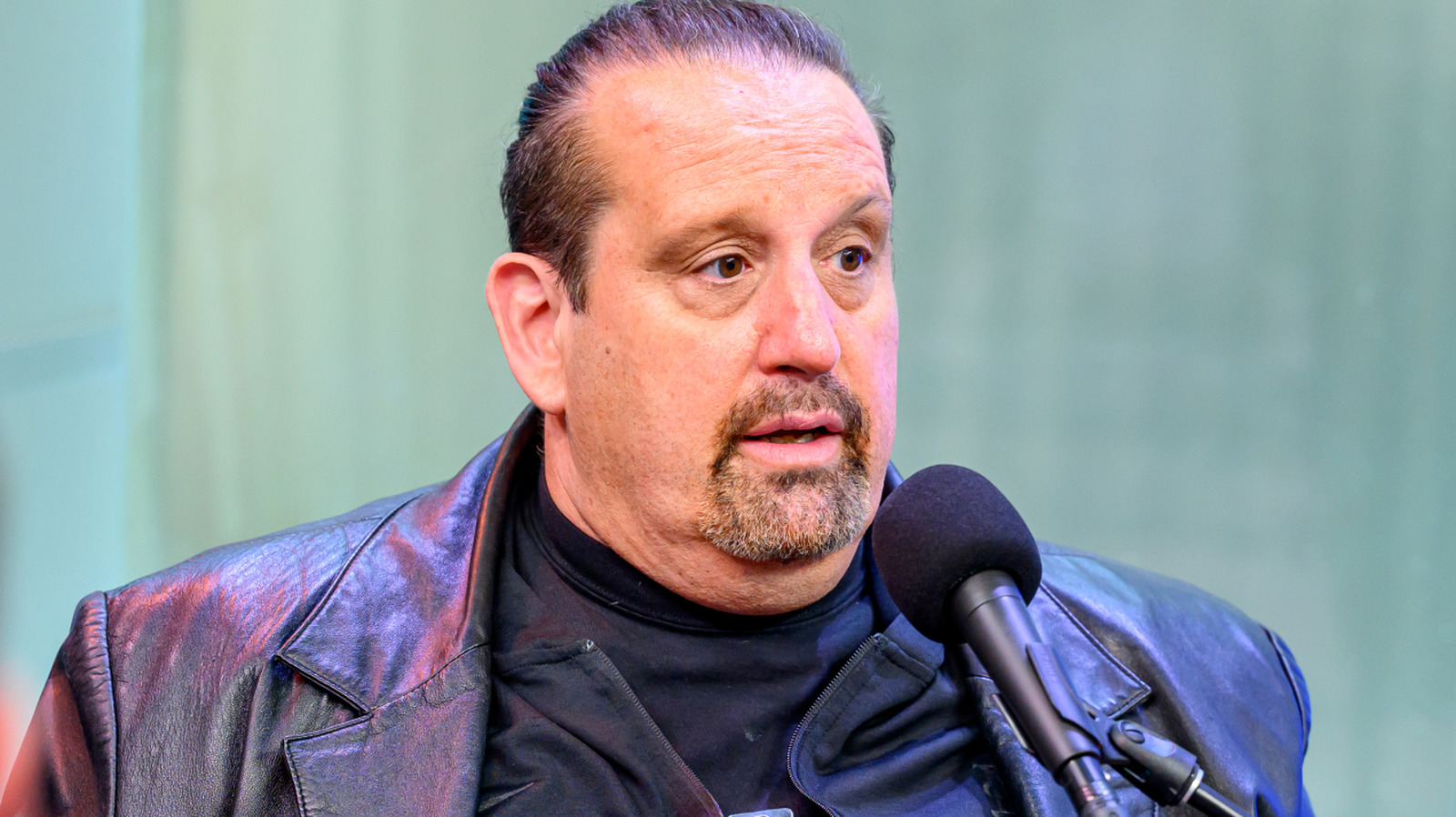
The psychological and physical toll of entering a program with Lesnar is massive. Tommy Dreamer and Bully Ray discussed exactly what this return attack means for Oba Femi ahead of their showdown at WWE Clash in Italy. As noted by Wrestling Inc, the two veterans broke down the storyline implications. The underlying truth is about physical survival.
Lesnar does not pull punches. He works incredibly stiff. Femi has to alter his entire training camp. He cannot engage in heavy Olympic lifting if his neck and upper back are compromised.
His focus must immediately shift to mobility, flexibility, and cardiovascular endurance. Stepping into the ring with Lesnar with a compromised cervical spine is dangerous. Femi will likely be forced to wrestle through acute soft tissue damage.
"Tommy Dreamer and Bully Ray have discussed how the Brock Lesnar and Oba Femi storyline could play out ahead of their match at WWE Clash in Italy."
This highlights the urgency of the situation. There is no off-season in professional wrestling to nurse these injuries.
A Disjointed Raw and Mismanaged Angles
While the main event angle delivered blunt-force trauma, the rest of the May 20 episode of Raw suffered from severe creative missteps. The opening segment was an absolute mess.
As detailed by PWTorch, the early Bloodline angle was deeply flawed. The goal of the segment was apparently to turn Roman Reigns and The Usos heel while reverting Jacob Fatu back to a babyface.
It was a spectacular failure. It felt incredibly disjointed. Creative forced a massive alignment shift without giving the audience time to process the motivations.
When booking rushes a turn that abruptly, it never resonates. The crowd was left confused. It was easily the worst part of the broadcast and a glaring miss for the writing team. The medical and physical realities of the main event felt far more grounded than the chaotic booking of the Bloodline saga.
Bad creative can be just as damaging to a wrestler's career as a physical injury. Tommy Dreamer touched on this exact type of creative fatigue regarding another ongoing angle.
According to an interview covered by Wrestling Inc, Dreamer believes the 'El Grande Americano' storyline has 'run its course' in the United States. While the angle might still draw money in Mexico, domestic crowds are entirely exhausted by it.
From a sports science perspective, working a dying gimmick takes a hidden physical toll. If the crowd goes quiet, wrestlers often push themselves harder. They take unnecessary risks to force a reaction.
The mind-body connection in wrestling is absolute. Psychological fatigue directly correlates with a higher rate of in-ring injuries.
The Missing Buffer: Where are the Managers?
This brings us to a larger issue of talent protection. In previous eras, a manager acted as a physical and political buffer for their clients.
Femi is currently flying solo. He is forced to absorb both the physical damage and the mental warfare of a Lesnar feud without any backup.
Jimmy Hart recently made waves following his appearance at the WWE Raw on Netflix debut. As reported by WrestlingNews.co, Hart stated he would return as a manager, but only if WWE specifically wants him for the role.
Hart’s comments are a sharp reminder of how the industry has changed. Managers historically extended the careers of their clients.
They took the bumps, interfered to cause disqualifications, and provided an onscreen excuse for a wrestler to avoid physical confrontation while healing from minor injuries. A manager could negotiate terms, demand medical evaluations, and stall for time.
Without an advocate, Femi is exposed. He has to take every punch and every suplex. As he heads into Clash in Italy, he carries the physical burden entirely on his own shoulders.
Historical Precedent and the Travel Nightmare
To understand the physical mountain Oba Femi has to climb, we only need to look back at recent WWE history. Five years ago, PWTorch editor Wade Keller and Cameron Hawkins reviewed a similar dynamic on their Monday Night Raw post-show.
They discussed Bobby Lashley’s open challenge and Kofi Kingston’s brief window of opportunity against a much larger, physically dominant champion. When a smaller or less experienced wrestler steps in against a freak athlete like Lashley or Lesnar, the margin for error drops to zero.
Kingston relied on speed and agility to avoid Lashley's brute force. Femi does not fight like Kingston. Femi relies on his own power.
That presents a massive physiological problem. You cannot out-muscle Brock Lesnar. If Femi attempts to match Lesnar's strength while suffering from compromised cervical and lumbar stability, his muscles will fail.
The human body has protective mechanisms. When a muscle is injured, the central nervous system limits its output to prevent a tear. If Femi tries a deadlift powerbomb on Lesnar in Italy while his lower back is inflamed from this week's attack, his body will simply shut down the movement.
This forces Femi to rewrite his entire in-ring playbook. He has to study tape. He needs to watch how guys like Seth Rollins used speed and precise strikes to dismantle heavier opponents.
The travel schedule heading into a major premium live event only exacerbates these physical issues. Flying to Italy requires spending over eight hours in a pressurized cabin. For a super-heavyweight dealing with acute lower back inflammation, transatlantic travel is a nightmare.
The cabin pressure changes alter fluid dynamics in the joints, often causing existing swelling to expand. Once he lands, the jet lag disrupts his circadian rhythm, which in turn spikes his cortisol levels.
Elevated cortisol directly inhibits muscle protein synthesis. His body literally cannot repair tissue efficiently while adjusting to the time zone.
The next few weeks are highly problematic. Femi's body is currently a bruised canvas of micro-trauma. If he fails to recover adequately, Lesnar will exploit the weakness within the first three minutes of their match. The countdown to Italy has started, and the medical clock is ticking loudly.