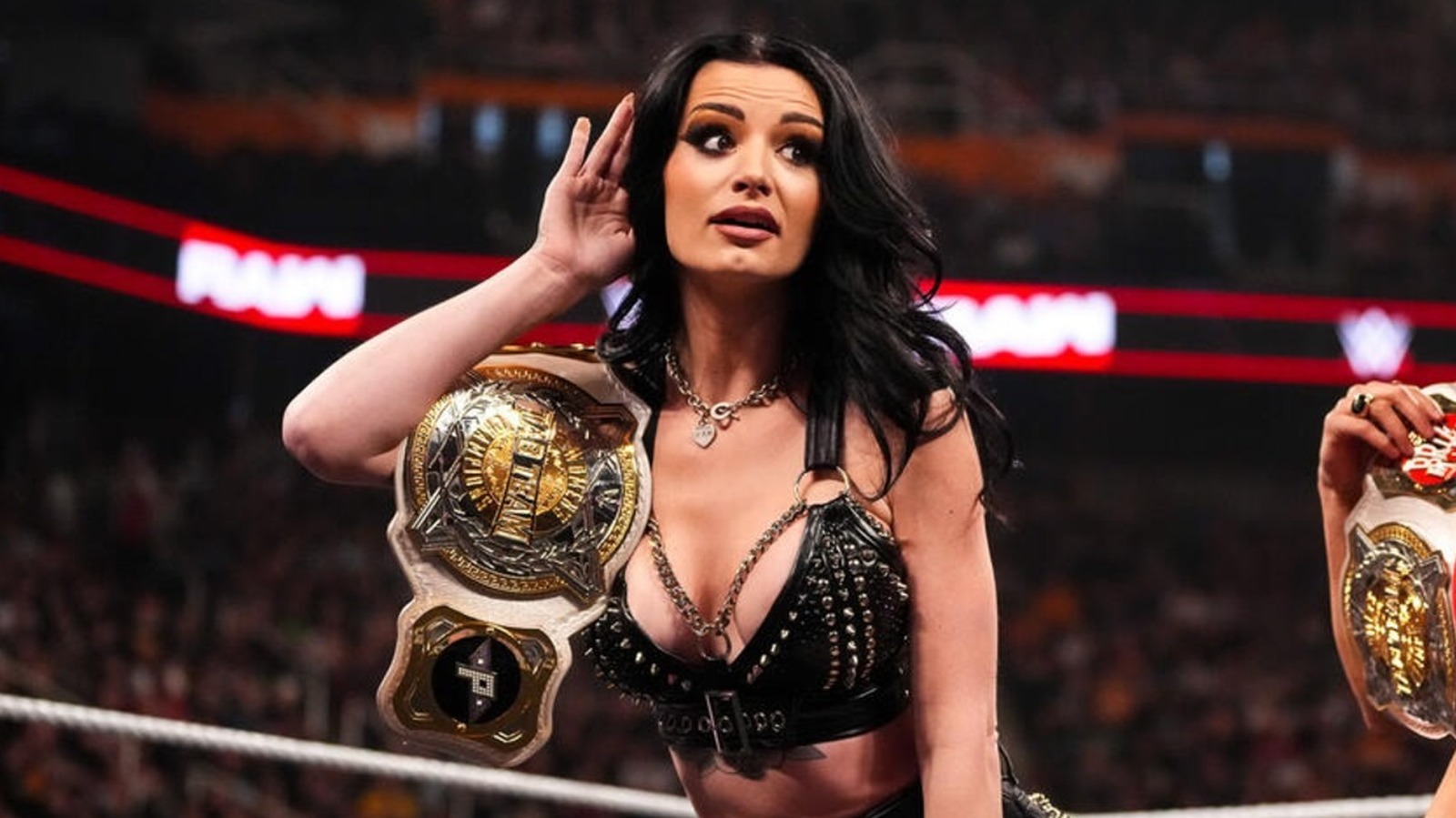
The long road back to a Stamford return
Saraya, the former WWE star known to many fans as Paige, has opened up about the improbable circumstances surrounding her return to the promotion. Years removed from her emotional retirement speech and subsequent exit, the performer admits she once viewed her WWE career as a closed chapter. The transition from active competitor to an off-screen presence serves as a rare trajectory in a business that usually demands a clean break.
Her initial departure arrived following a complex history of injuries and administrative shifts. Many onlookers assumed the bridge between the performer and company was permanently burned given the medical restrictions that hampered her final run. To see her name appearing in official media again registers as a major shift for those who followed her career trajectory from the NXT era through her main roster debut in 2014.
Defining the modern wrestling generation
Beyond her own personal history, Saraya isn't just looking in the rearview mirror. She has been vocal about her observations regarding the talent currently occupying the locker room. According to recent reports by Wrestling Inc, the performer is impressed by the technical ceiling of the new guard but cautions against the loss of narrative focus. She argues that raw athleticism must remain secondary to the ability to tell a coherent story.
I never thought I'd be back in WWE. It's a surreal feeling to see the way the business has moved forward while still maintaining that core identity that keeps the lights on.
This sentiment tracks with a broader critique regarding the current wrestling circuit. As the move sets have become more complex, the fundamental psychology required to hook a general audience has arguably thinned. Relying on high-impact spots at the 15-minute mark does not replace the slow-burn buildup that made her own early career rise so compelling to the mainstream.
The cost of the spotlight
Professional wrestling is rarely a kind business to its pioneers. Saraya survived a period of intense public scrutiny that would have derailed most performers. Her return brings a level of institutional knowledge that the younger roster lacks. However, her presence serves as a reminder of the physical toll the style demands. The shift in her role is a pragmatic necessity rather than a stylistic choice.
Critics might point out that her return feels less like a reunion and more like a calculated corporate maneuver. It is true that both parties have a history of public friction that can never be entirely erased by a handshake agreement. The challenge for the talent today is ensuring they don't hit the same physical walls that ended her in-ring run far too early. The industry move toward better health monitoring is a direct response to the kind of burnout she experienced during her tenure.
Strategic shifts and future uncertainty
The landscape of the industry dictates that no bridge remains broken forever. When the corporate bottom line aligns with talent nostalgia, reunions happen with clockwork regularity. Still, one has to wonder if this return will actually yield long-term creative fruit. Wrestling history is littered with returns that prioritized immediate pops over meaningful, sustained creative momentum.
If the promotion wants to make this count, they have to integrate her in a way that respects her history without chaining her to it. Fans have seen enough 'surprise' returns stall out in the mid-card because the creative team lacked a clear vision for the veteran. There is a distinct frustration among the fanbase when a high-profile name is treated as a prop rather than a featured storyteller.
Moving the needle vs. chasing ghosts
She is positioned now at a different stage of her life. You hear it in the way she speaks about the locker room—less as a peer in the ring, more as a cautionary observer. She brings value, sure, but the industry must answer whether that value lies in her past accolades or her ability to mentor the next wave of performers. If it is only the former, the experiment will likely fail before the end of the year.
The fans expecting a return to her peak form are setting themselves up for disappointment. That version of the performer is physically locked in the past due to recurring neck issues. Success here isn't about clearing three major hurdles to return to the squared circle; it is about finding a voice that resonates outside the ropes. Whether she can pivot to that role permanently is the defining question of her current stint.
The risk of relying on nostalgia is that it often masks a lack of current development. Wrestling promoters are repeat offenders of this habit. By leaning on established names to bridge the gap, they inadvertently slow the growth of the prospects coming up from developmental. It is a balancing act that requires a level of restraint the company has not consistently shown in recent years.
Ultimately, her return is a win for the casual fan. It is a narrative beat that feels right, even if the logistics behind it remain murky. Will it change the trajectory of the main event scene this winter? Highly unlikely. But it offers a moment of reflection for everyone watching, a brief acknowledgment that in this business, plans change fast, and even the most unlikely scenarios can manifest given enough time and corporate patience.