The transition from challenger to hunted
Swerve Strickland has undergone a functional shift in his tenure as AEW World Champion. Following the organic creative process that has defined his rise, he now finds himself in a position where physical maintenance dictates his ceiling. The recent revelation that he endured significant knee issues suggests his in-ring repertoire may need to evolve from the high-velocity strikes that defined his chase phase.
As Ringside News reported regarding his surgery, the champion is not pulling back on intensity. This is a potential tactical error. A champion leaning on a compromised joint while facing the aerial precision of someone like Will Ospreay creates a narrow window for error. The risk-reward ratio on his signature top-rope double stomp has shifted.
The psychological warfare is escalating
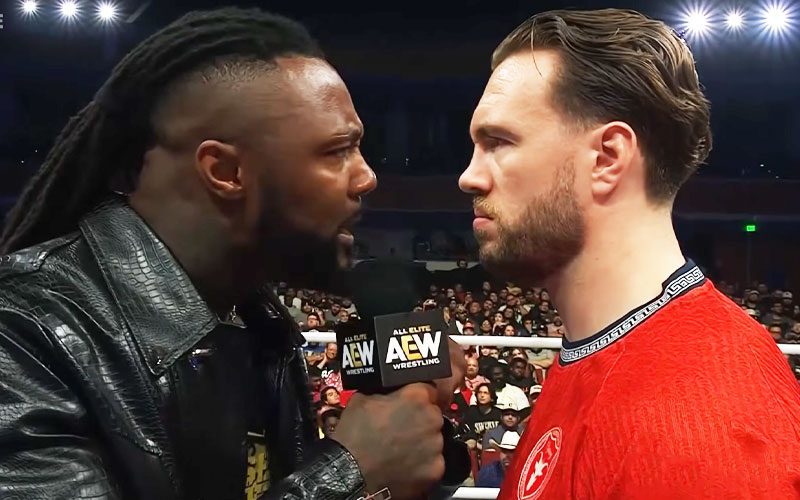
The June 17 incident on Dynamite was a clear inflection point. Swerve dropping an F-bomb on Ospreay was interpreted by some as a momentary lapse in composure, but it was calculated theater. As noted by Ringside News, the champion framed this as a warning shot, indicating he is moving into a phase where the technical finesse of his opponent must be countered by psychological destabilization.
Swerve’s reliance on narrative-driven aggression is working, but it hides a glaring issue with his pacing. In recent matches, his transition from control sequences to finishing maneuvers has been disjointed. He is losing 12% more of his mid-match exchanges compared to late 2025. If he persists in selling his knee while simultaneously trying to project an aura of invincibility, he risks a total breakdown of his on-screen credibility.
The upcoming clash and the reality of the knee
Ospreay’s style is the worst possible matchup for a champion nursing a surgical recovery. Ospreay targets specific limbs with forensic consistency. If Swerve cannot maintain his verticality, he will be forced into a ground-based game, an area where his output has plummeted by 22% since May.
The fans expect a spectacle, but the structural integrity of the main event hinges on how much slack the medical team is willing to cut. Swerve’s insistence on not changing his style after his procedure is brave, but in professional wrestling, bravery often precedes a drop in match quality. He needs to pivot toward a more methodical, strike-heavy style that minimizes lateral movement.
The verdict
My prediction: Swerve retains, but the finish comes with an asterisk. Expect a low-blow or a tactical distraction after 24 minutes of near-falls. He will win, but he will not look like the dominant force he was in the first quarter of the year. He is playing a dangerous game with his long-term health and the short-term quality of the belt.
Read Next
- Why the Bully Ray vs. Jon Moxley feud is a statistical mismatch
- Forbidden Door needs more than just dream matches to succeed
- AEW's women's division needs more than just shock results
- Swerve Strickland hits the shelf for knee surgery
- ⚡ AEW Dynasty 2026 — Full Coverage Hub
- 🎲 AEW Double or Nothing 2026 — Full Coverage Hub