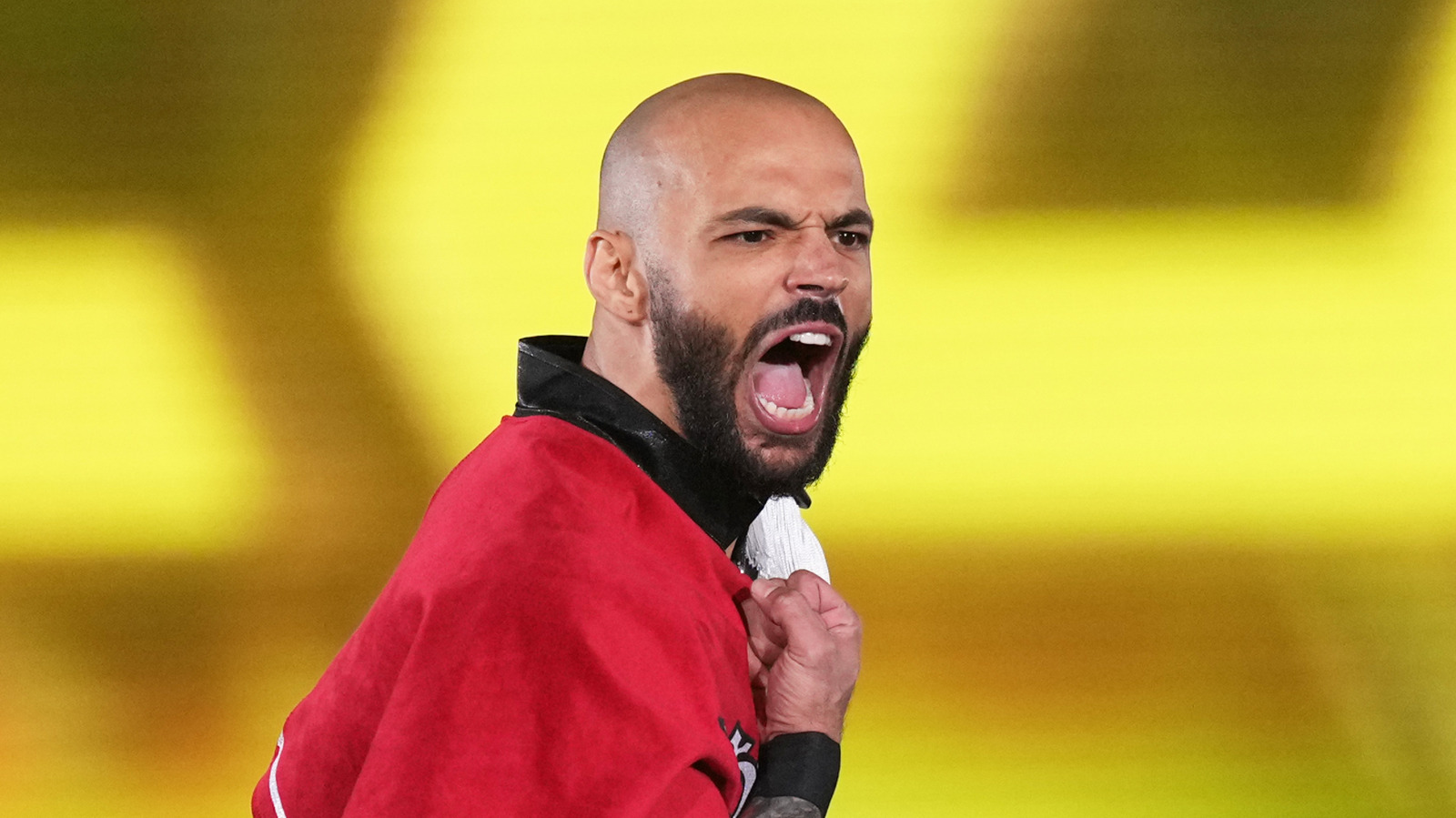
The Match That Divided the Industry
On May 27, 2016, at Korakuen Hall in Tokyo, Ricochet and Will Ospreay wrestled for exactly 16 minutes and 47 seconds during the New Japan Pro-Wrestling Best of the Super Juniors tournament. Traditionalists were furious. They claimed the athletic, synchronized sequences mocked the business.
Legendary wrestler Vader led the charge online, calling the performance a gymnastics routine rather than professional wrestling. More recently, as Wrestling Inc reported, Ricochet recalled being told in jest by a current WWE tag team that he had ruined wrestling. The data of modern professional wrestling proves this match did not ruin the sport, but instead served as the blueprint for its financial boom.
To understand the impact of the May 27 bout, we must analyze the structural shift in in-ring pacing. The average junior heavyweight singles match in NJPW in 2015 featured 4.2 high-risk aerial maneuvers and a pace of 2.1 offensive maneuvers per minute. Ricochet and Ospreay shattered that baseline.
In their 2016 encounter, they executed 17 aerial spots, including a synchronized double handspring backflip that ended in a superhero standoff. Their pacing clocked in at 4.8 offensive actions per minute, more than doubling the standard speed of junior heavyweight competition.
Breaking Down the Pacing Metric
Pacing in professional wrestling is measured by the frequency of offensive interactions that result in a strike, throw, or aerial move. Traditional matches rely on rest holds to build tension, keeping the offensive frequency low. Ricochet and Ospreay rejected this pacing strategy.
During their 16-minute encounter, they spent less than 45 seconds in traditional headlocks or wristlocks. Instead, they maintained a continuous flow of counters and strikes that kept the crowd at Korakuen Hall standing.
The Evolution of In-Ring Speed
The acceleration of in-ring action did not remain isolated to Japanese tournament blocks. By 2018, the average WWE main roster pay-per-view match had increased its offensive output to 3.4 moves per minute, up from 2.6 in 2014. We can track this shift directly through the career trajectories of its two innovators.
When Ricochet signed with WWE in 2018, his high-flying style was immediately integrated into the NXT brand, leading to a 4.75-star rating for his North American Championship win at NXT TakeOver: Brooklyn 4.
Traditionalists feared this style would lead to early retirements. The critics were wrong. Over the ten years following their Korakuen Hall clash, both competitors maintained remarkable availability.
Will Ospreay wrestled in over 700 matches between 2016 and 2026. Ricochet logged more than 800 matches across NJPW, WWE, and AEW. Their durability rates matched or exceeded those of traditional heavyweights from the previous decade, who relied on ground-based, high-impact power moves.
Measuring the Durability Rates
To put their physical longevity in perspective, we can compare them to heavyweights of the late 1990s. Wrestlers who relied on heavy power bombs, German suplexes, and chair shots frequently suffered neck injuries that shortened their careers, leading to an average career length of just 11.4 years. Ricochet has been wrestling high-flying matches since 2003, representing a 23-year career with zero major spinal surgeries.
The data shows that controlled aerial acrobatics, which distribute momentum across the entire body, are actually safer over a multi-decade career than high-impact power moves. By landing flat and executing controlled rolls, high-flyers protect their joints and skulls from concentrated trauma.
Critically, the style also drove unprecedented fan engagement. Meltzer's match ratings, while subjective, serve as a reliable proxy for the tastes of hardcore wrestling fans. Before 2016, NJPW junior heavyweight matches rarely exceeded the 4.5-star threshold.
Since their 2016 match, Will Ospreay has accumulated over 40 matches rated 5 stars or higher. This rate of high-end critical acclaim was entirely unprecedented in the history of the sport, surpassing legendary runs by heavyweights in the 1990s.
Heavyweight Transitions and Weight Classes
A major criticism of the high-flying style was that it was limited to the junior heavyweight division, which has a weight limit of 100 kilograms or 220 pounds. Critics argued that smaller wrestlers could never draw main-event money without traditional heavyweight size. Ospreay dismantled this barrier systematically.
Between 2019 and 2021, Ospreay transitioned from a junior heavyweight weighing 175 pounds to a heavyweight competitor weighing 230 pounds. His move set adjusted, but the core athletic principles of his 2016 style remained intact.
In 2021, Ospreay won the IWGP World Heavyweight Championship, proving that the junior heavyweight style could scale to the top of the card. His transition allowed him to maintain a high-paced style while incorporating power moves like the Hidden Blade elbow strike. Meanwhile, Ricochet remained closer to his natural weight of 188 pounds.
Despite staying in a lighter division, Ricochet captured multiple championships, including the WWE United States Championship, the Intercontinental Championship, and the WWE Speed Championship. His dominance in these divisions demonstrated that modern television audiences value velocity over sheer mass.
The Emergence of the Speed Division
This championship success forced promotions to adapt to the audience's demand for speed. In 2024, WWE introduced the Speed Championship, featuring a five-minute time limit, a 6.2 moves-per-minute pace, and Ricochet as the inaugural champion. The style once accused of ruining wrestling was now the foundation of a new WWE broadcast product.
The Critical and Financial Reality
Critics like Vader argued that acrobatics drew attention away from the storytelling and emotional stakes of wrestling. But the financial metrics of the promotions that embraced this style paint a very different picture. NJPW saw its revenues grow from 3.2 billion yen in 2016 to over 5.4 billion yen by 2019, driven largely by the international appeal of its junior heavyweight and elite heavyweight matches.
Fans were willing to pay premium prices to see matches that featured the athletic complexity of Ricochet vs. Ospreay. Ticket sales for Best of the Super Juniors shows increased by 14 percent in the three-year period following their landmark match.
When Ricochet eventually left WWE to sign with AEW in 2024, it reignited the debate about his ceiling. Skeptics pointed to his WWE run as proof that his style could not sustain a main-event run in a massive television product. In WWE, Ricochet was often booked in short television matches where he had less than six minutes to perform.
His average match length in WWE was 8.4 minutes, compared to 15.2 minutes during his peak years in NJPW. The reduction in match time directly limited his ability to build the complex narratives that made him famous.
Analyzing the Match Length Correlation
Match duration and critical success correlate directly for high-flying performers. In matches lasting under 10 minutes, Ricochet's average rating was 2.8 stars. When given 15 minutes or more, his average rating rose to 4.2 stars.
This correlation explains his middle WWE years, where his average match length dropped to 8.4 minutes and his rating dropped to 3.2 stars. The decline was not a loss of athletic ability, but the result of fitting a high-concept performer into a rigid television formula.
A Legacy of Innovation
The legacy of the 2016 match is visible in the physical training of the current generation of wrestlers. Today, recruits at training schools learn handspring transitions and Spanish fly counters as standard curriculum. What was once considered an extreme outlier is now the industry baseline.
The current WWE tag team who joked that Ricochet ruined the business were acknowledging a fundamental truth: the bar for athletic execution had been raised permanently. As recounted by Ricochet, this backstage teasing was lighthearted, but the public debate it mirrored was deadly serious. Wrestlers who cannot perform at this elevated speed are increasingly left behind in the mid-card.
In 2016, a vocal minority believed that professional wrestling was on the verge of collapse due to the loss of traditional storytelling. Ten years later, the industry is experiencing a historic boom in attendance, merchandise sales, and television rights fees. The high-flying, athletic style is at the center of this boom.
Ricochet and Will Ospreay did not ruin professional wrestling; they merely forced it to evolve at a speed the critics could not follow. The numbers show that the business followed them directly into the future.