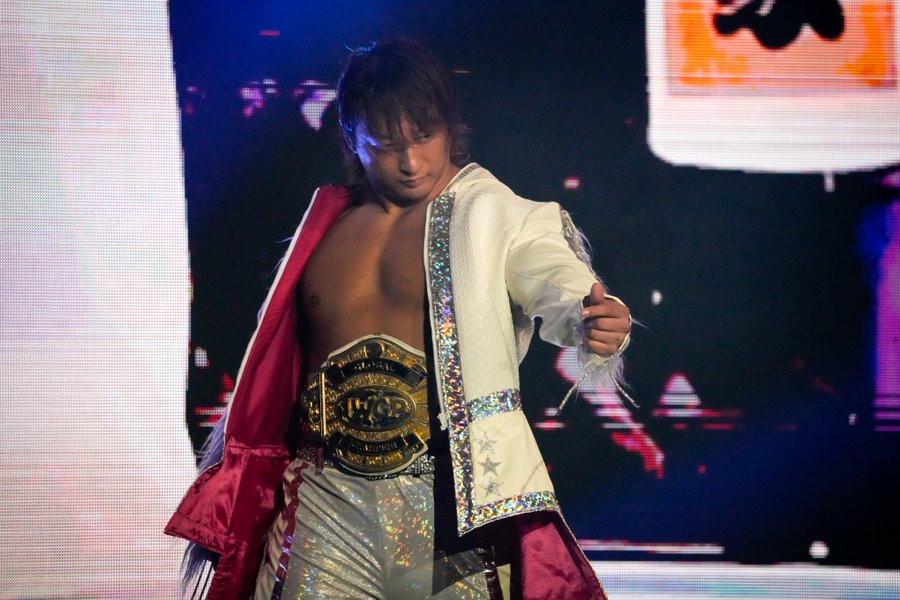
Yesterday in Yamagata, the inevitable shoreline finally appeared for one of New Japan Pro-Wrestling's most beloved underdogs. Tomoaki Honma stood before his hometown crowd at the Yamagata Big Wing on July 4, 2026, and announced his impending retirement, as Wrestling Inc. reported. The announcement came before the Road to G1 Climax event, a fittingly low-key setting for a performer who spent his career scraping for respect in the opening matches.
The decision was not voluntary. Honma, now 49, revealed that recent physical examinations of his neck returned concerning results, which Ringside News confirmed yesterday. For a man who has wrestled with a fused neck since 2018, those medical warnings are a flashing red light.
Honma admitted that his current physical condition prevents him from competing. However, he vowed to train hard to secure a proper retirement match in Yamagata in 2027, marking his 30th anniversary in the business.
"I'm happy to have been able to do pro wrestling for 30 years and love it so much, but I agonized over it and made my decision."
This announcement is a stark reminder of the physical toll of the underdog style. Honma's entire career has been a masterclass in high-friction, low-margin wrestling. His legacy is etched in the canvas, paid for with every missed headbutt and every brutal bump.
The Biomechanical Bill of the Kokeshi
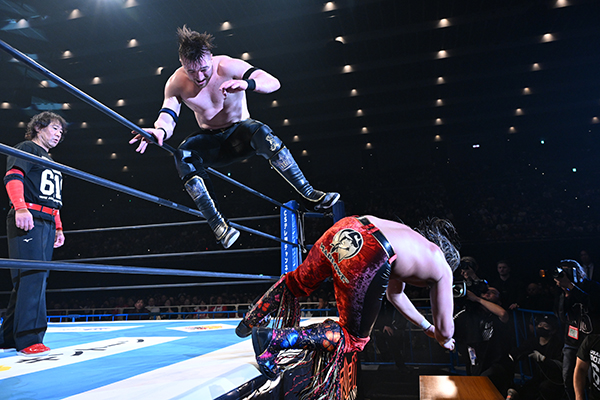
To understand Honma's physical decline, one must analyze the mechanics of his signature move. The Kokeshi is a diving headbutt that requires Honma to launch himself flat-fronted from a standing position or the top turnbuckle. The crowd loves it because the move is inherently reckless.
When the headbutt connects, the impact is shared. When it misses, which was the narrative hook of his entire career, Honma lands flat on his chest and face. The canvas absorbs the full kinetic energy of his falling body, sending a violent shockwave straight through his cervical spine.
During the 2014 G1 Climax 24, Honma went 0-10 in block matches. The crowd was louder for his defeats than for other wrestlers' victories because the struggle felt real.
His first tournament win, which occurred on August 12, 2015, against Tomohiro Ishii, was celebrated as an emotional triumph. That match was won with a top-rope Kokeshi, but the long-term cost of that victory was astronomical.
The physical bill came due on March 3, 2017. In Okinawa, during a routine tag match, Jado hit a hanging DDT off the ropes. The impact damaged Honma's cervical vertebrae, leaving him temporarily paralyzed.
His return in June 2018, again in Yamagata, was a miracle of modern medicine and personal grit. But the Honma who returned was physically compromised. The fluid movement of his early career was gone, replaced by a stiff, mechanical gait.
His latest match on May 6, 2026, at the Karatsu City Cultural Gymnasium, showed how little he has left. Teaming with Shota Umino against El Desperado and Taichi, Honma was a physical liability. The match lasted 11 minutes and 26 seconds, ending when El Desperado pinned Honma with the Pole Star.
Throughout the bout, Honma's movement was severely restricted. He took bumps with his shoulders hunched forward to protect his neck, and his offense lacked any real snap. NJPW can no longer hide his physical decline in multi-man tags.
The Contrast of the Veteran Horizon
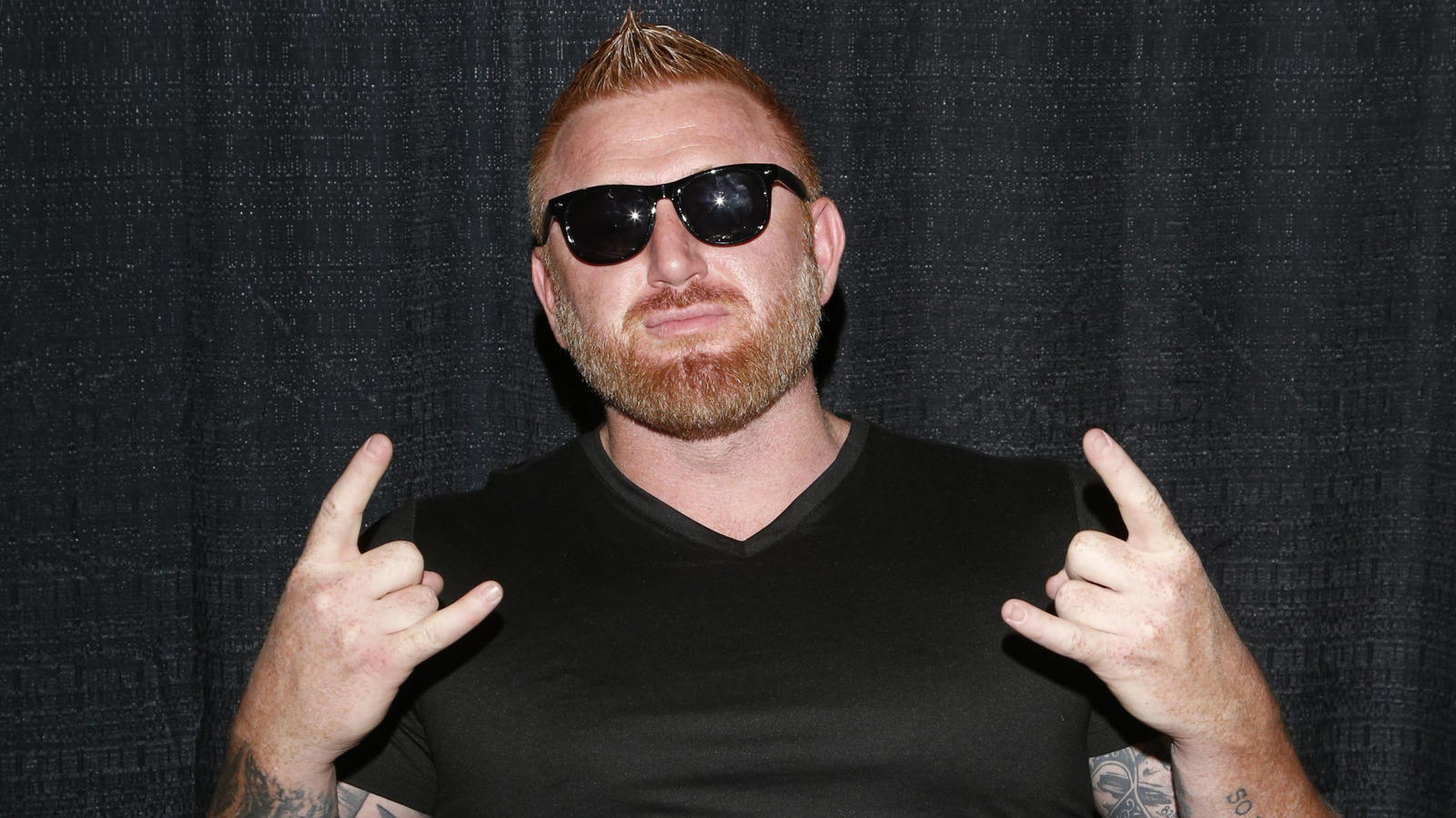
Honma's neck concerns are part of a broader discussion about how veteran wrestlers manage the end of their careers. Across the Pacific, former WWE star Heath Slater is also evaluating his timeline.
Speaking on David Otunga's YouTube channel, in an interview transcribed by Wrestling Inc., the 42-year-old Slater offered a different perspective on retirement. Slater has spent the last six years on the independent circuit, working for TNA and GCW after his WWE release in 2020.
"I have been on my wrestling pirate ship sailing the damn seven seas of wrestling for many years."
Unlike Honma, Slater's style was built on safety and athletic bumping. He was a classic workhorse, a bump machine who could protect himself and his opponent. Slater noted that he still feels strong and wise, knowing what he can and cannot do.
Yet, Slater sees the shoreline coming. He stated that he wants to retire around 46 or 47, once he starts huffing and puffing in the ring. He hopes for a final Royal Rumble appearance before transitioning to a trainer or agent role.
The contrast between Honma and Slater is striking. Slater has the luxury of choosing his exit, eyeing the shoreline from a distance. Honma, however, is being forced to shore by his own spinal column.
One has a pirate ship with the wind in his hair; the other is clinging to a life raft. Honma's career was built on taking the hard road, and his body is paying the interest on those debts.
The Dangerous Mirage of Yamagata 2027
Honma's plan to train for a final match in 2027 is a dangerous gamble. The cervical spine does not heal through weight training or sheer willpower. A fusion that has already suffered a temporary paralysis event is highly volatile.
NJPW management has a moral obligation to protect Honma from himself. Real journalism must point out that booking a retirement match next year is a questionable decision. The desire for a perfect 30-year sendoff should not override basic neurological safety.
If Honma takes one bad bump during his training or the match itself, the consequences could be catastrophic. The romanticism of the wrestling retirement match often blinds fans and promoters alike. We want the hero to walk out on his own terms.
But sometimes, the best retirement match is the one that never happens. My prediction is that NJPW will eventually scale back this farewell. They will likely book a heavily protected ten-man tag team match where Honma barely takes a bump.
Or, more wisely, they will transition him to a non-contact retirement ceremony. Honma wants to return to being a regular NJPW fan, and that is where he belongs. The shoreline is here, and it is time for Honma to step onto dry land.
The Cost of the Roar
We must also consider the sensory trademark of Honma's career: his voice. That famously raspy, gravel-pit growl is not a gimmick. It is the result of a crushed vocal cord suffered early in his career, a permanent physical alteration caused by the ring.
Every time Honma spoke to the media, his voice served as an auditory warning of the sport's reality. When he announced his retirement yesterday, that hoarse whisper carried the weight of three decades of trauma. The Yamagata crowd listened in stunned silence, understanding that the damage was finally too great.
Honma's partnership with Togi Makabe in Great Bash Heel was the peak of this physical sacrifice. Together, they won the World Tag League in 2015 and 2016, capturing the IWGP Tag Team Championship along the way.
Makabe was the brawler, the man who brought the heavy chain and the rough offense. Honma was the emotional heart, the partner who took the heat, absorbed the punishment, and set up the hot tag. It was a classic tag team formula, but it required Honma to be the anvil.
Years of playing the anvil have compressed his vertebrae. The fusion surgery in 2018 bought him time, but it did not halt the clock. The cervical spine is a finite resource, and Honma has spent his last coin.
In contrast, Slater's run in WWE was defined by durability. From his days in the Nexus in 2010 to the comedic brilliance of 3MB, Slater avoided the high-impact style. He was a master of the bump-and-feed, making his opponents look like monsters while protecting his own skeleton.
His "I Got Kids" campaign in 2016 was one of WWE's best underdog stories, built on charisma and comedic timing rather than physical self-destruction. That is why Slater can look forward to coaching the next generation, while Honma's post-retirement plan is simply to watch as a fan.
The tragedy of the underdog is that the fans' love is often proportional to the performer's suffering. We cheered Honma because he fell hard, got up, and fell again. Now, the falling must stop before the damage becomes permanent.