
Tony Khan is right about WWE's booking tactics, but complaining won't win the war
The Rosemont maneuver and the illusion of passive competition
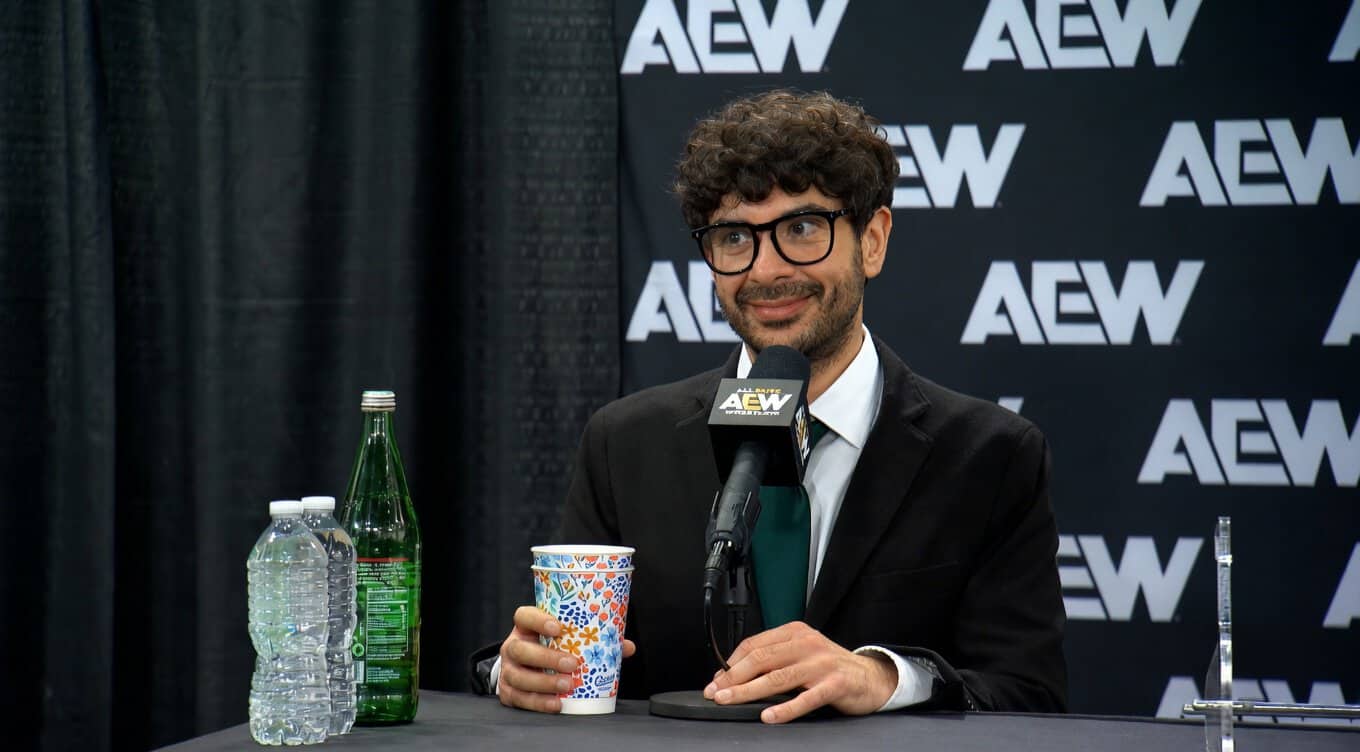
When WWE booked Worlds Collide at the Allstate Arena in Rosemont for September 26, nobody in Stamford was checking local weather forecasts. They were looking at AEW's calendar. Tony Khan had already committed the NOW Arena in Hoffman Estates for All Out on that exact evening, attempting to establish a cleaner four-week runway after Wembley Stadium.
Speaking on the Battleground podcast on July 22, Khan tagged the counter-programming as the frankly predatory nature of scheduling events. He tried to soften the blow by calling it a compliment that proves AEW is thriving. That secondary spin is defensive posture. WWE didn’t drop an event twenty miles down the Interstate to pay Khan a respect vector. They did it to drain the local ticket market, dilute digital attention, and force combat logistics onto AEW's signature fall pay-per-view.
This is classic territorial counter-programming scaled up for modern streaming infrastructure. Vince McMahon built an empire by locking out arenas and running direct interference on Jim Crockett Promotions. Nick Khan and Paul Levesque operate with sharper scalpels, but the underlying operational intent is identical. When your rival shifts All Out off Labor Day weekend to give All In room to breathe, you do not let them enjoy that oxygen. You crowd the airspace.
The strategic risk behind AEW's four-week calendar shift
Moving All Out to late September was logically sound on paper. Packaging All In and All Out across back-to-back weekends was an exhausting routine that burnt out consumer wallets and diluted pay-per-view builds. Giving the roster twenty-eight days to reset between London and Chicago offered storylines actual room to mature. Yet that operational shift created an empty weekend on the calendar, opening a flank that WWE immediately targeted.
Khan claims he welcomes the friction and won't petition for venue changes. That stoicism is necessary for public relations, but it ignores the tactical friction on the ground. Splitting a metropolitan fanbase between Rosemont and Hoffman Estates on a single Saturday night forces local wrestling fans to pick a side. It divides walk-up traffic and creates a direct battle for secondary market resale interest. WWE isn't trying to out-sell AEW outright; they are trying to cap AEW's ceiling in their most reliable domestic market.
There is a glaring flaw in Khan’s media reaction to these maneuvers. Calling out predatory tactics while insisting you welcome competition reads like an internal contradiction. If a promoter understands that the major player in the space operates with ruthless predatory intent, treating each incident as a surprise or an isolated affront is an failure of competitive foresight. WWE has spent forty years demonstrating that it does not share market territory willingly.
Tactical adjustment over media commentary
The reality facing AEW on September 26 isn't solved by media scolding. WWE using NXT or cross-branded events to blunt AEW pay-per-view momentum is now standard operational protocol. When AEW runs a major card, WWE responds with targeted counter-programming. Expecting Stamford to show restraint or adhere to unspoken promoter gentleman's agreements is naive.
AEW's leverage has always been superior workrate and big-match payoff execution. The NOW Arena has hosted some of the company's defining moments, but relying on venue nostalgia won't insulate All Out from a packed Allstate Arena card twenty miles away. Khan cannot control WWE's arena bookings, but he entirely controls his own card construction. If WWE runs a stacked inter-promotional showcase, AEW must deliver a card so dense with pay-off matches that secondary market leakage becomes impossible.
Pointing out corporate hostility makes for good podcast soundbites, but in the promoter wars, optics follow results. WWE showed its hand by dropping Worlds Collide into Rosemont the moment AEW shifted dates. Khan’s job isn't to diagnose the ethics of the scheduling clash. His job is to make sure that when both shows go live on September 26, nobody in Hoffman Estates is looking at their phone to check scores from Rosemont.
Funko Pop! WWE: Cody Rhodes #152
Finish the story on your shelf with the American Nightmare.
Frequently Asked Questions
Why did Tony Khan call WWE's Worlds Collide scheduling predatory?
Where are WWE Worlds Collide and AEW All Out scheduled to take place?
Why did AEW shift All Out off of its traditional Labor Day weekend date?
How does WWE's venue booking strategy impact local wrestling fans in Chicago?
What historical wrestling promoter tactic is WWE utilizing against AEW?
More Coverage
Cody Rhodes reveals what it was really like in the ring with John Cena
an hour ago
Top 10: WWE Moments of the Current Era
an hour ago
Santos Escobar's warning shot to Triple H and Nick Khan is a masterclass in timing
an hour ago
WWE’s injury crisis hits harder as recovery timelines stretch into August
2 hours ago
Top 10: Defining Moments of 2026 Wrestling
2 hours ago
Alexa Bliss vs. Tom Brady is the crossover nobody asked for
2 hours agoMore Analysis
Cody Rhodes reveals what it was really like in the ring with John Cena
an hour ago
Top 10: WWE Moments of the Current Era
an hour ago
Santos Escobar's warning shot to Triple H and Nick Khan is a masterclass in timing
an hour ago
WWE’s injury crisis hits harder as recovery timelines stretch into August
2 hours agoMaple Leaf Pro's TV launch is Scott D'Amore's real trial by fire
2 hours ago