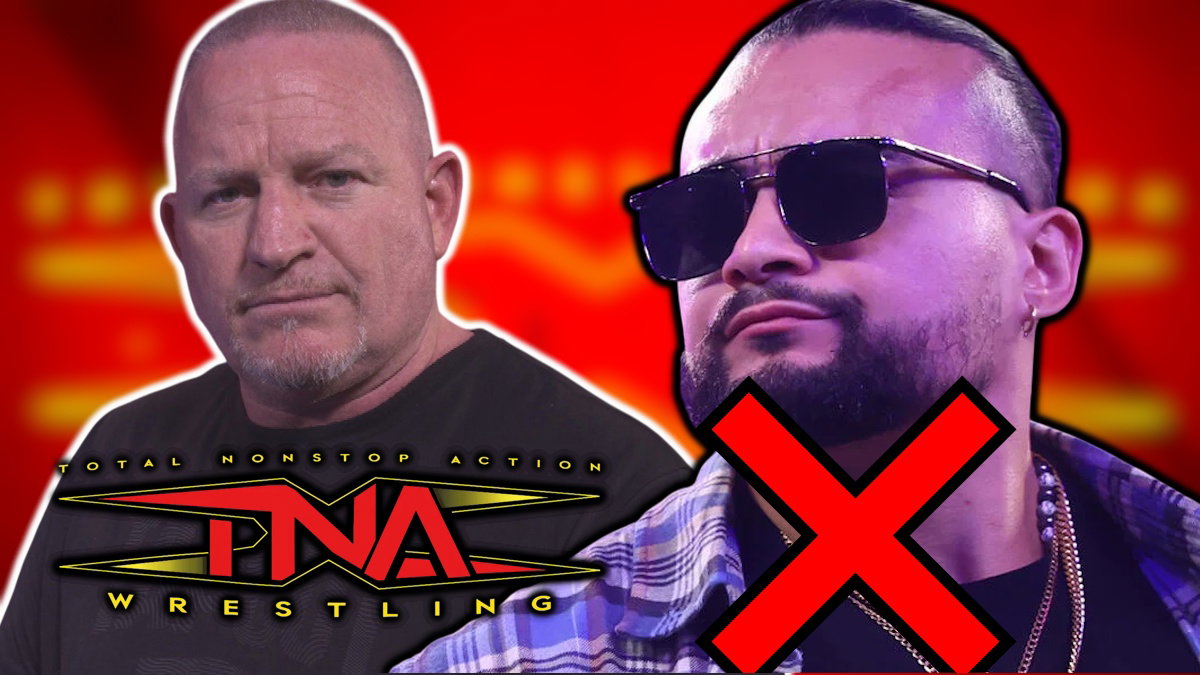
A three-part season opener, spanning exactly 180 broadcast minutes, marks the largest single-topic commitment in the seven-season history of Vice TV's Dark Side of the Ring. The documentary series returns on July 7, 2026, with a deep analysis of the corporate battles, financial crises, and creative decisions of TNA Wrestling. This runtime is a historic first for the franchise, surpassing the two-part, 120-minute slot given to the Chris Benoit tragedy in Season 2.
Originally, the TNA feature was planned as a standard two-hour program. In a recent POST Wrestling interview, producer Evan Husney revealed that the production team panicked when realizing they could not fit decades of the promotion's history into two hours. The team had to plead with the network for a third hour at the last minute, forcing a massive re-edit of the footage.
"This is crazy, but yeah, we're doing the TNA saga, trying to fit it in those three hours. I mean, hey, this was supposed to be a two-hour program, and it existed as such for a very long time until we had a panic that there was no way this was going to be...there's no way to fit it all into that."
This 50% expansion of the premiere's runtime highlights the sheer volume of controversy surrounding TNA. Across its 24 years of survival, the company has operated as a statistical anomaly in professional wrestling. It has consistently outlived its own financial projections while experiencing viewership declines that would destroy any other television property.
The decision to dedicate 30% of the entire season to TNA reflects the documentary team's realization that the company's survival is its most compelling story. Dark Side of the Ring has typically focused on individual tragedies or isolated scandals. By devoting three full episodes to TNA, the series shifts its analytical lens to a systemic study of institutional chaos.
The Six Sides of TNA: Myth vs. Reality
TNA's visual identity remains inextricably linked to its signature six-sided ring. The promotion used this unique structure to separate itself from WWE's traditional presentation. However, a chronological look at TNA's history shows that this defining feature was actually a minority phase of their operations.
The six-sided ring was introduced in June 2004 at NWA-TNA Weekly PPV 99 and lasted until Hulk Hogan and Eric Bischoff dismantled it in January 2010. This initial run lasted 67 months. The ring was later revived in June 2014, only to be retired permanently in January 2018 when Don Callis and Scott D'Amore took creative control, which lasted for 43 months.
In total, the six-sided ring was active for 110 months out of TNA's 288-month history from June 2002 to July 2026. This means the ring was used for just 38.2% of the company's existence. The remaining 61.8% of TNA's matches have taken place inside a standard four-sided ring.
Despite this statistical reality, the six-sided ring remains the primary symbol of TNA's peak years. Husney revealed that his team originally pitched a six-part spinoff series titled 'The Six Sides of TNA.' This pitch aimed to cover the various eras of ownership, showing how the physical ring itself became a metaphor for the promotion's structural divisions.
The six-sided ring was notoriously unpopular with wrestlers due to the increased stiffness of the ropes and the harder impact on the canvas. Wrestlers like AJ Styles and Samoa Joe took significantly more physical punishment during the six-sided eras. The physical toll on the roster was a silent tax that the promotion paid to maintain a distinct marketing gimmick.
The Spike TV Viewership Peak and the AXS TV Reality
To understand TNA's financial trajectory, one must analyze its historical viewership data. The peak of TNA's commercial reach occurred on January 4, 2010. The three-hour live broadcast of TNA Impact! averaged 2.2 million viewers and peaked at 2.9 million viewers during Hulk Hogan's debut.
This record broadcast pulled a 1.5 cable rating, which seemed to position TNA as a legitimate competitor to WWE. However, WWE's Monday Night Raw drew 5.6 million viewers on that exact same night. TNA's highest-rated show in history still captured less than 40% of WWE's audience during a head-to-head battle.
The decline since that 2010 peak has been severe. Since moving to AXS TV in 2019, TNA's weekly viewership has settled into a range of 80,000 to 120,000 viewers. This represents a 95.4% drop in average audience size over a 16-year period.
Some analysts attribute this decline entirely to channel distribution. Spike TV was available in approximately 90 million homes in 2010, while AXS TV is available in about 50 million homes. This represents a 44.4% drop in distribution reach.
The math reveals a deeper problem. The 95.4% drop in viewership far outpaces the 44.4% drop in television distribution. The promotion did not simply lose viewers because of a channel change; it lost the cultural relevance required to make fans seek out the new channel.
The Monday Night War Failure
The decision to move Impact! permanently to Monday nights in March 2010 remains one of the worst strategic moves in wrestling history. During this brief two-month experiment, TNA's ratings immediately dropped from a 1.0 average to a 0.5 rating. The company was forced to retreat to its Thursday night slot by May 2010.
The financial losses from this period were catastrophic. The company spent millions on high-profile contracts for aging WWE stars while losing half of its domestic television audience. The statistical legacy of the 2010 Monday Night War is a lesson in the dangers of expanding too quickly without a stable foundation.
The Modern Roster Evacuation and Leadership Instability
The corporate instability of TNA is not just historical; it is active. The promotion is currently dealing with the fallout of the ouster of Scott D'Amore in early 2024. D'Amore's firing by parent company Anthem Sports & Entertainment triggered a chain reaction of departures.
Following D'Amore's exit, the promotion saw Gail Kim's exit from her executive role, alongside a major creative shakeup. The departure of Tommy Dreamer from the creative team left a massive void in the booking department.
This executive turnover was quickly followed by a talent exodus. Key stars including Steve Maclin, Dani Luna, Myla Grace, Tessa Blanchard, Sami Callihan, and the release of veteran Eric Young have left the company.
In an active roster of approximately 40 contracted wrestlers, the loss of these 7 performers represents a 17.5% reduction in talent depth. More importantly, the simultaneous loss of D'Amore and Dreamer represents a 100% turnover in top-level creative leadership within a 12-month period.
This high level of turnover makes it impossible for TNA to build long-term storylines or establish new stars. Every new management team brings a different creative philosophy, leading to constant changes in presentation and booking style. The promotion remains trapped in a perpetual cycle of rebuilding.
Ownership Changes as a Corporate Metric
Over its 24-year history, TNA has gone through four distinct ownership and management structures. This started with the founding Jarrett era in 2002, followed by Panda Energy's acquisition later that year. The company was then sold to Anthem Sports in 2017 after a series of legal battles.
This averages out to a major corporate restructuring every six years. By comparison, WWE maintained a stable corporate structure under a single family for over four decades. TNA's frequent management shifts have prevented the company from establishing a consistent corporate identity.
These numbers paint a clear picture of a promotion that survives through sheer persistence rather than financial health. The upcoming Dark Side of the Ring episodes will likely focus on the sensational backstage drama, but the true story of TNA is found in these cold, hard percentages.