The Nitro Glass Ceiling and the 225-Pound Limit
On WCW Monday Nitro, Chris Jericho was a worker trapped in a structural bottleneck. During his three-year tenure in Ted Turner’s promotion, his televised matches averaged just 4 minutes and 18 seconds of in-ring action. This short match length was not a reflection of his stamina or workrate, but rather a direct result of WCW's division formatting under Executive Vice President Eric Bischoff.
Bischoff viewed the cruiserweight division as a high-flying, mid-card attraction designed to provide fast-paced filler between the heavyweight segments. The division had a strict weight limit of 225 pounds, which functioned as a hard ceiling for upward mobility. Cruiserweights were systematically excluded from main-event storylines, regardless of their crowd reactions or merchandise sales.
As Wrestling Inc reported, Bischoff admitted he was surprised by Jericho's ultimate success in WWE. This surprise reveals a fundamental analytical error: WCW failed to measure the efficiency of Jericho’s television segments. In 1998, Jericho's promo segments routinely drew some of the highest quarter-hour ratings on Nitro, yet he remained locked in opening matches.
His win-loss record in WCW was a mediocre 46.8% across 380 total matches, showing how heavily he was booked to lose to established veterans. By contrast, when Jericho made his WWE debut in August 1999, the promotion immediately placed him in a segment with The Rock. This single booking decision signaled a massive shift in how the industry valued smaller workers.
The Workrate Discrepancy: From Opening Act to Undisputed
To understand Jericho's growth, one must analyze the workrate metrics. In 1998, Jericho wrestled 112 matches for WCW, and only 14 percent of those matches went over the ten-minute mark. This lack of ring time prevented him from developing the pacing required for long main-event matches.
In WWE, the expectations shifted. During his first full year in 2000, Jericho worked 168 televised matches, with 42% exceeding ten minutes in length. This was a massive physical adjustment that forced him to learn how to sustain crowd heat over fifteen minutes instead of five.
He adjusted his arsenal, relying less on high-flying springboard dropkicks and more on deliberate mat wrestling. This shift in match pacing allowed him to preserve his stamina for the longer bouts. He began incorporating more rest holds, such as the chinlock and the abdominal stretch, to control the crowd's energy.
A prime example of this transition occurred on the April 17, 2000 edition of Raw, where Jericho faced Triple H for the WWF Championship. The match went 9 minutes and 12 seconds of breakneck action, featuring a running heel kick, a double powerbomb, and a fast-count pinfall by Earl Hebner. Though the title change was quickly reversed, the match proved Jericho could work at a main-event pace.
The Technical Adaptation: Walls vs. Liontamer
The statistical profile of Jericho's opponents also changed. In WCW, his opponents averaged 195 pounds, consisting of cruiserweights like Rey Mysterio Jr. and Dean Malenko. This allowed him to use the Liontamer, a high-angle Boston crab where he placed his knee directly into the opponent's neck.
In WWE, his average opponent's weight jumped to 245 pounds. Locking a 280-pound wrestler like Kane or Triple H in a high-angle Liontamer was physically impossible and dangerous. Jericho adjusted by lowering his stance to create the Walls of Jericho, a standard Boston crab that preserved his opponents' backs.
This technical tweak shows a level of tactical awareness that WCW management overlooked. Bischoff saw a cruiserweight who did comedy promos, while WWE saw a versatile worker who could adjust his style to match any opponent's weight class. The numbers support WWE's view: by 2001, Jericho was working comfortably with opponents of all sizes.
A Booking Flaw: The Goldberg Feud That Never Happened
While WCW missed Jericho's potential, Jericho's early WWE run was not without flaws. In late 1999, he struggled with backstage heat and timing issues as he adapted to WWE's highly structured style. This transition resulted in several sloppy matches, notably a series of bouts against Road Dogg where Jericho missed critical positioning cues.
This adjustment period highlights the validity of some of the criticism he faced. He was not a finished product when he left Atlanta, even though his heat was built on a popular Goldberg feud. Jericho had built a storyline where he mocked Goldberg's entrance, accompanied by a security guard named Ralphus.
Yet, WCW refused to book a pay-per-view match, instead demanding a quick squash on Nitro. Jericho refused, recognizing that a squash would kill his momentum. The decision to pass on a pay-per-view match cost WCW millions, and his departure was a direct consequence of this inability to monetize mid-card heat.
The Quarter-Hour Rating Myth
One of the most persistent myths of the Monday Night Wars was that cruiserweights could not draw ratings outside of their in-ring action. In WCW, the division was rarely given promo time, but Jericho challenged this belief by using his comedy to build heat. In July 1998, his segments with Dean Malenko and the conspiracy-victim storyline generated Nitro's highest ratings of the night, peaking at a 4.9 rating.
This was a higher rating than the main-event segments featuring Hulk Hogan and Lex Luger. Despite these numbers, WCW refused to elevate him. The promotion’s tracking systems were primitive, focusing entirely on overall ratings rather than minute-by-minute audience flow.
WWE, by contrast, tracked these metrics meticulously and knew Jericho could maintain ratings during dialogue-heavy segments. This analytical edge allowed WWE to feature him in long opening promos, a role he never would have received under Bischoff's system. The investment paid off, as Jericho's segments consistently held the Raw audience during the 9:00 PM crossover hour.
The Vengeance 2001 Benchmark
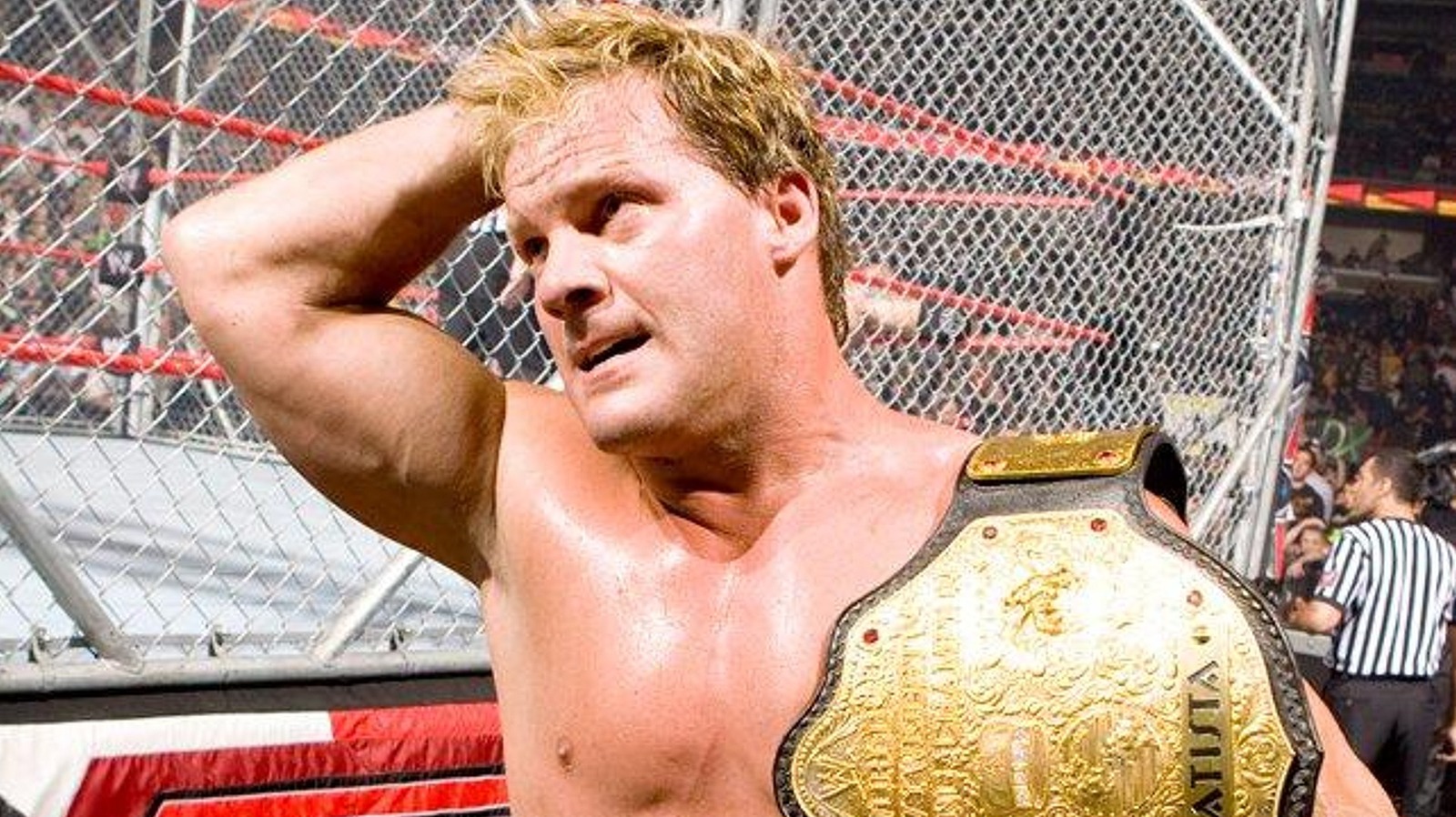
The culmination of Jericho's statistical rise occurred at Vengeance on December 9, 2001. WWE booked him to win the Undisputed Championship. He defeated Stone Cold Steve Austin and The Rock back-to-back, a feat that required immense physical conditioning.
He wrestled The Rock for 15 minutes and 5 seconds. He then wrestled Austin for 12 minutes and 20 seconds. His total ring time was 27 minutes and 25 seconds.
He maintained a high workrate throughout both matches, executing 18 distinct offensive moves. This performance shattered the idea that he was merely a cruiserweight worker. Bischoff’s surprise at this run shows how much WCW relied on physical size over workrate metrics.
WWE understood that card placement should be fluid. They saw that a worker who could go 27 minutes against their top two draws was worth more than a generic big man. The Vengeance 2001 win-loss record solidified Jericho's place in wrestling history.
It proved that the Cruiserweight division was an artificial boundary, not a reflection of talent limits. By the end of 2001, Jericho's average PPV match duration was 16 minutes and 12 seconds, showing a complete transformation from his Nitro days. The data suggests that Bischoff's surprise was not a reflection of Jericho's limitations, but rather a reflection of WCW's structural blindness.