Yesterday’s NXT Great American Bash in Orlando featured five high-stakes championship matches, but only one belt changed hands. That represents a conversion rate of just 20 percent. On a night promoted as a historic leap for developmental wrestling—the first NXT Premium Live Event to be broadcast on network television via The CW—the booking was remarkably conservative.
Of the five champions who walked into the WWE Performance Center, four walked out with their titles intact, signaling a major shift in how WWE manages its developmental gold. This high level of championship security stands in stark contrast to the historical data of this exact calendar window.
According to historical tracking from F4WOnline, June 29th has hosted over 330 major title changes in professional wrestling history. By comparing yesterday’s defensive posture to decades of historical volatility, we can see that the days of rapid title changes have been replaced by a modern philosophy of long, protective reigns.
Championship Security at the Great American Bash
The Short-Reign Eraser: Grey Dethrones Vice
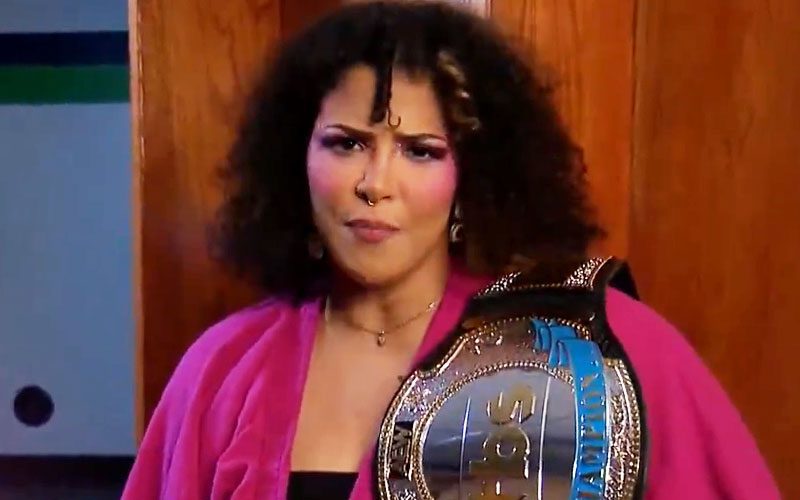
The sole title change of the evening occurred in the NXT Women’s Championship match. Kendal Grey pinned Lola Vice to capture the title, ending Vice's reign at exactly 86 days. Vice had won the championship at Stand & Deliver on April 4, 2026, in a triple threat match that also featured Jacy Jayne.
To understand what this reign means, we have to look at the history of the NXT Women's Championship. Since the title was established in 2013, WWE has recognized 27 distinct reigns. The mathematical average for a completed NXT Women's Championship reign is roughly 176 days.
Lola Vice's tenure lasted less than half of that average, representing only 48.8% of the historical norm. This brief run places Vice on the shorter end of the title's history. While she avoided the ignominy of Tatum Paxley’s record-low 24-day reign, her time at the top was dwarfed by historical standard-bearers like Asuka, who held the title for a dominant 510 days starting in 2016.
The transition from Vice to Grey was accelerated by outside interference. During the match, Kelani Jordan attempted to interfere, but Wren Sinclair cut her off with a ringside brawl, allowing Grey to hit the "Shades of Grey" from the top rope for the three-count.
Clock Depletion in the Speed Division
In the WWE Women's Speed Championship match, Wren Sinclair defended her title against Arianna Grace under a strict 5-minute time limit. Sinclair secured the victory by forcing Grace to tap out to the "Final Wrench" submission hold with only 14 seconds remaining on the clock. This means the match lasted 4 minutes and 46 seconds, representing a 95.3% depletion of the available match time.
As detailed in the PWInsider report, the bout was heavily affected by external interference. Grace was accompanied by the BirthRight stable, consisting of Channing "Stacks" Lorenzo, Charlie Dempsey, Lexis King, and Uriah Connors. This group spent the match targeting Sinclair's previously injured knee and distracting the referee.
This booking decision deserves criticism. The Speed Championship is designed to showcase high-velocity, rapid-fire action, yet this match was bogged down by typical stable interference and ringside brawls. Sinclair had to physically knock Dempsey off the apron before applying her submission.
When a five-minute match dedicates significant time to faction politics, the statistical and athletic premise of the time-limit gimmick is diluted. It turns a unique athletic concept into a standard television segment.
Historical Volatility: June 29th and the Ghost of the 24-Hour Reign
The conservative booking at the Great American Bash is a modern development when viewed against the title history of June 29th. Historically, this date has been the peak of championship volatility. In 1998, "Stone Cold" Steve Austin defeated Kane on RAW to win the WWF Championship, ending Kane's reign at a brutal 24 hours.
Four years later, on June 29, 2002, the WWE Hardcore Championship changed hands four times in a single day. Shawn Stasiak defeated Bradshaw, Spike Dudley defeated Stasiak, Steven Richards defeated Spike, and Bradshaw won it back to close the cycle. This level of rapid-fire title shifts was a hallmark of the Attitude and Ruthless Aggression eras.
Even in the PG Era, June 29th remained highly volatile. At Night of Champions on June 29, 2008, three major championships changed hands. Mark Henry won the ECW Championship, Kofi Kingston captured the Intercontinental Championship from Chris Jericho, and the team of Cody Rhodes and Ted DiBiase Jr. won the World Tag Team Championship.
In 2014, Money in the Bank fell on June 29th, where John Cena won a vacant WWE World Heavyweight Championship in an eight-man ladder match, securing his 15th world title. In 2021, Swerve Scott won the NXT North American Title on this date. Last year, on June 29, 2025, Zack Sabre Jr. won the IWGP World Heavyweight Championship.
This comparative timeline reveals how WWE's booking philosophy has evolved. Historically, titles were used as short-term episodic rating drivers. Today, they are treated as long-term branding assets, designed to build main-event credibility over months or years.
While this approach elevates the prestige of the titles, it also leads to predictable matches and stagnant divisions. The NXT Great American Bash is a prime example of this predictability.
Undercard Retentions and Predictable Patterns
The other three title matches at the Great American Bash followed this defensive pattern. In the opening match, Tony D'Angelo defended his NXT Championship against Naraku. Naraku, the competitor formerly known as EVIL in New Japan Pro-Wrestling, had blinded D'Angelo with a fireball hidden in a contract during a contract signing.
D'Angelo wrestled the match with a bandage covering his injured eye. Naraku attempted to exploit this visual impairment, but D'Angelo hit "Dead To Rights" to retain the title. This match showcased a high rate of offensive efficiency from D'Angelo despite his injury, but the narrative felt overly theatrical.
The NXT Women's North American Championship match saw Zaria retain her title against Tatum Paxley. Zaria used her powerhouse style to dominate Paxley, who was seeking to reclaim the title Zaria had taken from her. The match confirmed that Paxley's brief 24-day title reign was indeed an anomaly in the modern era of longer reigns.
Finally, Myles Borne defended the NXT North American Championship against Tavion Heights. Both competitors are former training partners in the No Quarter Catch Crew, and the match featured a grappling-heavy style. Borne won using the "Borne Again" finisher.
Critically, this match suffered from a lack of emotional stakes. Although the athletic execution was clean, the amicable split between the former partners resulted in a dry exhibition. The post-match handshake felt like a cliché that undermined the competitive tension of a secondary championship.
The Indie Contrast: Winston-Salem’s Pure Payoffs
This corporate security stands in sharp contrast to how independent promotions operate. On the same night as the Great American Bash, AML Wrestling hosted its "Giant Among Men" event at the Benton Convention Center in Winston-Salem, North Carolina. The results from the AML Wrestling results show a different approach to booking.
Clara Carter defeated Kenzie Paige, Beer City Bruiser defeated James Ellsworth, and Drew Hood won a triple threat match over BLK Mike and Zuka Kin. Independent promotions like AML cannot rely on long-term TV contracts to keep fans engaged. They must deliver immediate, live-crowd payoffs to sell tickets for the next show.
This comparison highlights the widening gap between corporate and independent wrestling. While NXT operates as a television product where titles are protected to maintain long-term narratives, independent wrestling remains focused on immediate athletic competition. For the modern fan, the statistical predictability of televised wrestling makes the volatility of the indies increasingly appealing.