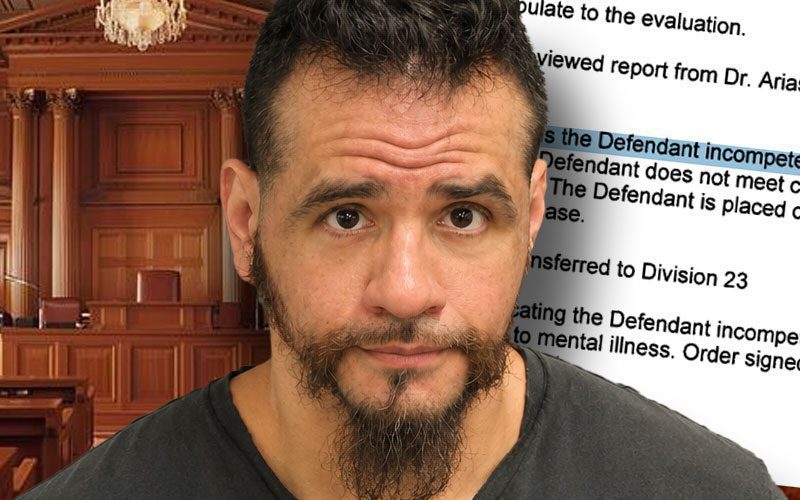
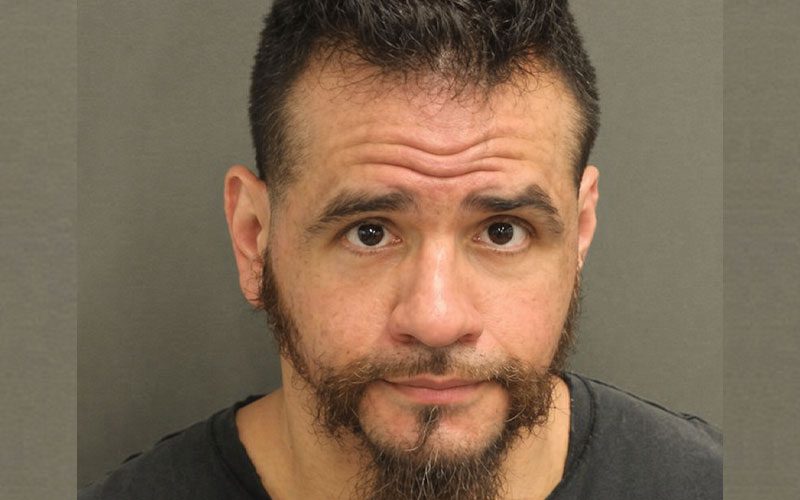
It took exactly 383 days of federal detention to resolve the case of Shawn Chan, a Canadian man who stalked WWE superstar Liv Morgan. The legal system ended his Florida intrusion with a bench trial on June 15, 2026, finding him not guilty by reason of insanity. He was immediately transferred to US Immigration and Customs Enforcement (ICE) for deportation as reported by PWInsider.
Chan's path to Florida was a calculated journey of more than 1,200 miles from Scarborough, Ontario. He did not target an arena or a public signing. He drove straight to her private residence in Pasco County.
This case is not an isolated incident. It represents a systemic geographical vulnerability that WWE has failed to address. Centralizing the training facility, NXT roster, and developmental system in Central Florida creates a highly visible target map for obsessive stalkers.
The Geography of Obsession: The Florida Corridor
On May 31, 2025, Chan arrived at Morgan’s home. Surveillance footage captured him circling the house, checking under the doormat, and waiting for 120 minutes. He was carrying a BB gun he had found on the porch.
When he failed to enter the house, Chan drove 80 miles northeast to Orlando. Three days later, he walked into the WWE Performance Center. Security recognized him from the home surveillance footage and called the police.
The Performance Center is a 26,000-square-foot facility located in a light industrial park. It has no high fences, no armed guards at the gate, and sits surrounded by office parks. This facility is their daily workplace.
Yet the physical security of the site remains remarkably light. Anyone can park in the adjacent lots or walk up to the glass doors. This open design is a legacy of WWE's desire to appear accessible to the community.
This geographic clustering creates a single target zone for obsessive individuals. An intruder can travel to Florida and target multiple performers in a single afternoon. The proximity between residential areas and training facilities is a security risk.
The numbers show how concentrated this risk is. Over 70 percent of WWE's developmental roster lives within a 30-mile radius of the Performance Center. This density makes tracking and protecting individual performers outside the workplace nearly impossible.
The Parasocial Funnel
Superstars are pushed by management to build massive online fanbases. Morgan has 2.4 million followers on Instagram alone. She is expected to post personal updates, stream games, and maintain a constant digital presence.
This constant stream of content feeds dangerous delusions in vulnerable minds. During Chan's trial, psychologists noted he believed he was in a personal relationship with Morgan. The note he left at her home claimed they were gaming companions whose privacy had been invaded.
Psychologists testified that Chan had not seen a doctor or received mental health treatment in over 20 years. He was living in a completely separate reality, fueled by digital interactions. The wrestling business model relies on these close connections, but it fails to calculate the human cost when they curdle into obsession.
Wrestlers are uniquely vulnerable to this parasocial dynamic. Unlike NBA or NFL players who play in massive arenas with secure parking garages, wrestlers interact directly with fans at ringside. They sign autographs at conventions and chat with fans on streaming platforms for hours.
This accessibility is a core selling point of the product. But the numbers show the dark side of this connection. The rate of stalking incidents involving WWE talent is disproportionately high compared to other major sports leagues.
Legal Discrepancies: State versus Federal Jurisdictions
To understand how the justice system handles these threats, we must compare Chan’s case to previous incidents. In August 2020, an obsessed fan named Phillip Thomas attempted to kidnap WWE star Sonya Deville at her home in Lutz, Florida. Thomas had stalked Deville online for eight months before breaking into her house with a knife and zip ties.
Deville's case was prosecuted under Florida state law. It took almost 1,000 days to resolve, culminating in a May 2023 plea deal that secured a 15 years prison sentence for Thomas. State prosecutors focused on the immediate physical danger and the intent to kidnap.
Chan's case went to the federal level because he crossed an international border. Federal prosecutors charged him with interstate stalking. The legal process was faster, taking just over a year, but the outcome was vastly different.
Because Chan was found not guilty by reason of insanity, the federal criminal case ended. A typical federal insanity defense results in commitment to a psychiatric facility. For Chan, his immigration status overrode that path.
This outcome highlights a significant gap between state and federal proceedings. State courts often push for long prison sentences to deter future offenders. Federal courts, constrained by international treaties and immigration law, may opt for deportation as a quick resolution.
But deportation does not address the underlying security threat. It merely shifts the geographical location of the stalker. The victim remains in Florida, while the stalker is returned to Canada, free to access the internet.
The Deportation Loophole
The court determined that Chan did not present an active danger requiring federal hospitalization. Instead of entering a psychiatric ward, he was handed to ICE as court documents later confirmed. He was sent back to Canada, free of US supervision.
This is the most alarming aspect of the ruling. A diagnosed delusional stalker, who crossed borders and carried a weapon to a performer's house, was simply returned to his home country. There is no ongoing court-mandated mental health monitoring in Canada for him.
The border is treated as a shield for the victim. But in a digital world, a border is a minor hurdle. Chan's deportation does not erase his delusion; it merely relocates it.
Furthermore, Canada and the United States share minimal information regarding civil mental health tracking. Once Chan crossed the border, he was a free citizen. The Pasco County Sheriff has no jurisdiction to monitor his activities in Ontario.
This lack of cross-border supervision is a massive failure. Morgan must live with the knowledge that her stalker is out of custody. The legal system has closed the file, but the threat remains active as ICE took custody of the Canadian national immediately after his acquittal.
Corporate Responsibility and the Security Gap
Wrestlers are classified as independent contractors. This status allows the company to avoid providing health insurance or retirement benefits. It also excuses them from funding personal security for their talent.
WWE pays for security at live events and television tapings. At a show like Raw or SmackDown, there are hundreds of security personnel, barricades, and local police. The moment a performer leaves the arena parking lot, they are on their own.
For a top star like Morgan, hiring private security is an option. For NXT talent earning developmental salaries, it is impossible. They live in suburban apartment complexes in Orlando, their addresses easily found online.
The company's security department has been reactive rather than proactive. In 2015, Armando Montalvo was shot by a deputy after repeatedly trespassing at the Performance Center. Despite the shooting, Montalvo returned to trespass at least three more times over the next five years.
WWE's response was to obtain injunctions. These court orders are mere pieces of paper. They cannot stop a person in psychiatric crisis from showing up at a facility.
The company must rethink its duty of care. The current model relies entirely on Ring cameras and local police response times. By the time deputies arrive, it is often too late.
Leagues like the NFL provide security consultations for rookies. They help players secure their homes and monitor online threats. WWE offers no such security support for its roster.
This is a booking mistake of a different kind. It is a failure of corporate compliance and basic workplace safety. The performers are the company's only asset, yet they are treated as disposable once they leave the arena.
The data shows that stalking incidents in professional wrestling are not anomalies. They are a predictable byproduct of a system that demands constant fan engagement while centralizing talent in a single geographic hub. Until WWE starts funding personal security for its roster, the burden of protection will remain on the victims.