Will Ospreay's favorite moments show the compromise of his AEW run
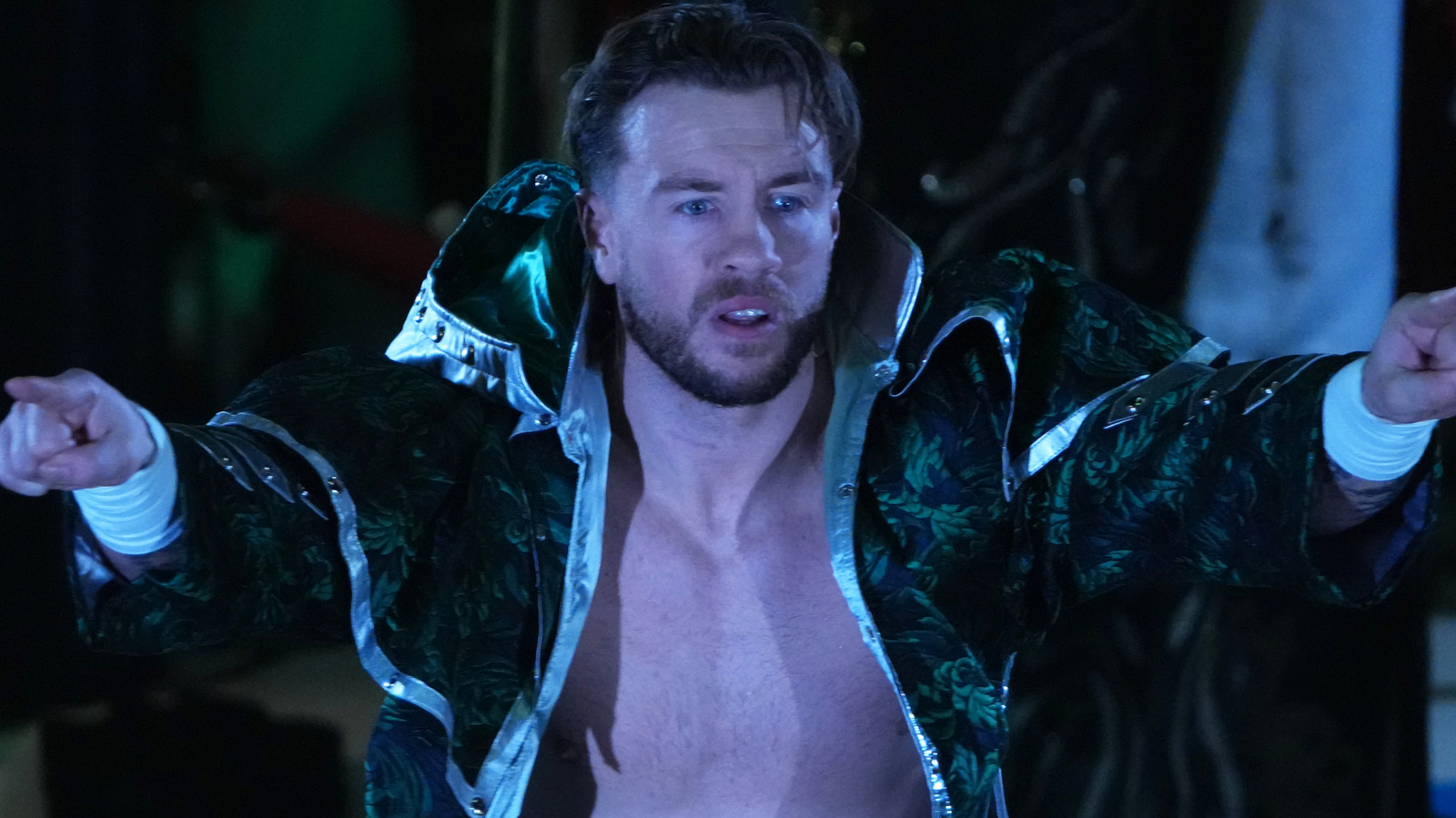
The Illusion of Progress in the Elite Era
Will Ospreay’s recent appearance on San Francisco's KRON 4 news program offered a rare, unvarnished look into the psyche of a modern wrestling virtuoso. By identifying his AEW Dynasty encounter with Bryan Danielson and his Wembley Stadium entrance as his career peaks, the Englishman revealed the conflicting forces pulling at his current run. This choice raises critical questions about how the 'Aerial Assassin' views his own craft in the American promotion.
On one hand, we have the pure, mechanical execution of a high-stakes athletic contest. On the other, we have a heavily commercialized, corporate-backed pop culture entrance designed to promote a video game. This contrast represents the central conflict of modern professional wrestling: the battle between pure sport and corporate showmanship.
This duality explains why Ospreay's AEW run has often felt like a series of magnificent individual efforts rather than a cohesive competitive narrative. The performer who once defined his career by in-ring pacing and athletic innovation now seems equally satisfied by corporate marketing partnerships. It suggests that the prestige of the championship is becoming secondary to the promotion of brand partnerships.
It is a notable shift for a wrestler who built his reputation in New Japan Pro-Wrestling on raw physical stakes and grueling tournament structures. In his new home, the priorities have broadened, sometimes to the detriment of his unique athletic identity. The gritty fighter from Essex has been polished and repackaged for a broader television audience.
As the promotion navigates its summer schedule, Ospreay remains their premier attraction, yet his focus appears divided between competitive excellence and promotional fanfare. The tension between sport and spectacle is not new to wrestling, but Ospreay's choices bring it into sharp relief. His recent comments highlight a shift in how elite performers define success in the modern era.
To understand his current trajectory, we must dissect the two moments he values most. Only by examining the mechanics of these events can we see the compromise at the heart of his American tenure. We must look past the flashy entrances and high-flying maneuvers to find the underlying patterns.
The Mechanics of the Dream Match at Dynasty
The match between Ospreay and Bryan Danielson at AEW Dynasty on April 21, 2024, was hailed as an instant classic. For 32 minutes, the two men engaged in a complex tactical battle that challenged their physical limits and match-mapping abilities. The encounter in St. Louis was designed to settle the debate over who is the best in-ring performer of this generation.
"When I wrestled Brian Danielson at Dynasty, I couldn't even imagine that match was going to happen because he got medically disqualified."
Danielson’s early strategy was clear: occupy the center of the ring and force Ospreay to operate on the periphery. This positioning effectively neutralized Ospreay’s speed, preventing him from building kinetic energy for his signature springboards. By keeping the match on the canvas, Danielson sought to expose Ospreay's technical limitations.
By isolating Ospreay's right shoulder with hammerlocks and double-wrist locks, Danielson systematically targeted the delivery system of the Hidden Blade strike. At the 12-minute mark, Ospreay’s right-arm passivity was obvious, forcing him to rely on left-handed strikes and defensive positioning. The mechanical breakdown of Ospreay's offensive tools was a masterclass in tactical dissection.
Ospreay’s tactical counter-adjustment occurred during a sequence of rapid rope runs at the 18-minute mark. Instead of engaging in a direct striking duel, he used a handspring backflip to reset his spatial orientation. This split-second decision created the separation necessary to launch a counter-offensive.
This maneuver allowed him to hit a massive OsCutter, shifting the momentum and forcing Danielson into a defensive guard. From this point, the match transitioned from a technical clinic to a physical war of attrition. The pacing accelerated rapidly as both men traded near-falls and high-impact strikes.
Yet, the match's legacy is complicated by its controversial finish. Ospreay executed a Tiger Driver '91 that left Danielson selling a severe neck injury. The immediate shift from competitive athletics to medical drama broke the suspension of disbelief.
The subsequent hesitation from Ospreay, followed by a final Hidden Blade for the pinfall, felt less like a triumph and more like a narrative detour. It launched a months-long storyline where Ospreay swore off using the move, a choice that defanged his offensive arsenal. This narrative choice compromised his standing as a dominant, uncompromising competitor.
Rather than establishing him as a ruthless champion, the victory left him booked as a remorseful protagonist. This narrative choice weakened the competitive credibility of his subsequent International Championship matches. Opponents no longer feared Ospreay's lethal capability; they merely sought to exploit his psychological guilt.
Wrestling excels when it presents athletic supremacy, not moral hand-wringing. By focusing on the emotional fallout of a simulated injury, AEW diluted the impact of Ospreay's athletic masterclass. The execution of the storyline prioritized cheap melodrama over the sport-centric presentation that AEW originally promised.
The Spectacle of the Corporate Entrance
Four months after Dynasty, Ospreay walked into Wembley Stadium for All In on August 25, 2024, surrounded by corporate marketing. The entrance featured footage of an upcoming video game and a voiceover from Roger Craig Smith, the voice actor for Ezio Auditore. The scale of the presentation was undeniable, but its purpose was commercial.
"We had a collaboration deal with Assassin's Creed and I got to do an entrance that featured Ezio... I essentially got inducted into the brotherhood."
Ospreay described this collaboration in his interview with KRON 4 as a dream come true funded directly by the company. While it satisfied his personal interests as a fan of the franchise, the presentation felt clinical and over-produced. It was a visual showcase that belonged in a corporate showroom rather than a wrestling arena.
It marked the transition of the 'Aerial Assassin' from an organic, gritty fighter into a packaged corporate asset. The raw energy of his independent run was replaced by a synchronized marketing campaign. The focus shifted from what he could do in the ring to what brands he could represent on the stage.
This is the danger of AEW’s production style, which often prioritizes grand visual statements over logical character development. The entrance was designed to capture social media clicks rather than enhance the gravity of the upcoming match. It reduced a major championship defense to a promotional background for a video game release.
Although Ospreay defeated MJF to regain the International Championship in a solid match, the victory felt secondary to the spectacle. The match’s internal logic was overshadowed by the corporate branding that preceded it. The championship belt became a prop in a larger marketing activation.
Compare this to the presentation of champions in other promotions, where the focus remains on the title itself. In New Japan, Ospreay's value was defined by his position in the G1 Climax standings, not his commercial partnerships. The sport-centric framework ensured that every match had clear competitive stakes.
This contrast is particularly relevant as IWGP Heavyweight Champion Yota Tsuji recently invited Tony Khan to the opening night of the G1 Climax 36 in Chicago. As PWTorch reported, Tsuji has raised concerns about how AEW treats foreign talent and champions. The Japanese champion is openly questioning the competitive respect shown to his home promotion.
Tsuji’s critique highlights a growing sentiment that AEW’s partnership model favors spectacle over competitive integrity. Ospreay’s embrace of corporate branding at Wembley is a prime example of this trend. It suggests that international partnerships are valued more for their marketing reach than for their athletic quality.
The Fading Edge of the Billy GOAT
The consequence of this shift is a subtle decline in Ospreay’s in-ring presentation. While his physical capabilities remain elite, his character has lost its sharp edge. He is no longer the dangerous outsider fighting to prove his worth.
This was evident on the June 24, 2026 episode of AEW Dynamite. During a high-intensity backstage segment with the Death Riders, Ospreay tripped over his own feet and fell into an ice tub. The physical comedy of the moment stood in stark contrast to his reputation for flawless agility.
While he laughed off the incident on KRON 4, the moment was symbolic of his recent booking. The untouchable athlete who once executed flawless sequences has been humanized to the point of comedy. It reveals a booking philosophy that prefers self-deprecating humor to athletic mystique.
A tactical analyst must ask whether this humanization helps or hurts Ospreay’s long-term value. In a promotion filled with high-flyers, Ospreay’s main differentiator was his lethal efficiency. By reducing him to a clumsy babyface, the booking strips away his unique competitive aura.
When he is booked to trip backstage or apologize for hitting his finisher, that aura of invincibility vanishes. It reduces him to just another member of the roster, rather than a singular force. The elite competitor is slowly being replaced by a standard television protagonist.
This booking pattern has also affected his match structures, which have become increasingly formulaic. Many of his recent matches follow a predictable sequence of hope spots, kickouts at two and a half, and late-match desperation. The mechanical creativity that defined his early work has been standardized for weekly television.
The athletic variance that made his early AEW work so compelling has been replaced by a standardized main-event style. It is a style that guarantees a five-star rating from certain critics but fails to tell a new story. The repetition of high-impact spots has diminished their individual value.
Wrestling needs stakes, and stakes require consequences. If every match is a 30-minute epic filled with near-falls, the individual moves lose their meaning. The audience becomes desensitized to the physical toll being presented.
The Tiger Driver ban was an attempt to introduce stakes, but it was abandoned too quickly to have a lasting impact. It showed a lack of commitment to long-term storytelling, opting instead for immediate gratification. The resolution of the story was rushed to accommodate the next big event.
Ospreay’s physical toll must also be considered. The style he wrestles is unsustainable, and without a disciplined narrative structure, he is taking unnecessary risks. Every high-flying maneuver carries a cost that should only be paid for meaningful stories.
Every spot must serve a purpose in the larger story of the match. When Ospreay prioritizes corporate entrances and comedy spots, he is wasting the physical capital he has left. The athlete is burning through his prime years for the sake of temporary pop culture buzz.
Wrestling fans want to see the best version of Will Ospreay. That version is not a corporate spokesperson or a remorseful babyface. It is the focused competitor who lets his work in the ring speak for itself.
It is the lethal, precise athlete who dismantled opponents with surgical precision in Tokyo and London. The KRON 4 interview suggests that Ospreay may not see the difference between the two. That lack of distinction points to a deeper issue in his creative direction.
For a performer of his caliber, that is the most concerning revelation of all. If he cannot distinguish between a marketing activation and an athletic masterpiece, his creative peak may already be behind him. The priority has shifted from building a legacy to maintaining a corporate relationship.
AEW has the assets to rebuild Ospreay’s presentation, but it requires a change in philosophy. The promotion must move away from the over-produced spectacle and return to the sports-centric presentation that first attracted fans. It must prioritize the athletic competition over the entertainment brand.
Only then can Ospreay truly fulfill the promise of his 'All Elite' signing. Until that shift occurs, his run will remain a collection of impressive but compromised moments. The potential is vast, but the execution remains flawed.
WWE Men's Stone Cold Steve Austin 3:16 Vintage T-Shirt
The classic 'Austin 3:16' tee that helped define the Attitude Era.
Frequently Asked Questions
What career peaks did Will Ospreay identify on KRON 4 news?
When and where did the AEW Dynasty match between Ospreay and Danielson occur?
Why was Ospreay surprised his Dynasty match with Bryan Danielson happened?
How does Will Ospreay's AEW run differ from his time in NJPW?
What was Bryan Danielson's strategy at the start of the Dynasty match?
More Coverage
Top 10: Top Moments
7 hours ago
Top 10: Defining Explanations That Shook Pro Wrestling
10 hours ago
Top 10: Top Moments
10 hours ago
Sami Zayn is WWE Champion but the booking is already giving me a headache
16 hours ago
Will Ospreay is wrestling on borrowed time after neck surgery
18 hours ago
Top 10: Top Moments
23 hours agoMore Analysis
Wrestling's summer injury crisis is forcing WWE and AEW to pivot their plans
an hour ago
Why Jade Cargill's bloody SmackDown disaster was actually a blessing in disguise
an hour agoMLW Fusion just pulled off the wildest tag team title swap of the year
an hour agoSheamus is leaving WWE and the internet is in a complete meltdown
an hour ago
Wrestling's summer injury crisis is forcing WWE and AEW to pivot their plans
an hour ago