
WWE is finally trading raw size for territory logic
The Giant-Size Obsession That Defined Stamford
Professional wrestling has always struggled to separate size from skill. For decades, the promoter's primary instinct was simple: locate the largest human in the room, put boots on them, and point them toward the ring. Vince McMahon built an empire on this formula, turning bodybuilders and powerlifters into national television attractions.
Yet, as WWE moves deeper into the era of Paul "Triple H" Levesque, that old recruitment philosophy is showing its age. A fascinating glimpse into this transition emerged recently as former strongman competitor Hafþór Júlíus Björnsson spoke about his past brush with the company. The Icelandic colossus, famous for playing "The Mountain" in Game of Thrones, revealed in an interview that he met with Triple H to discuss a wrestling career.
The meeting occurred in Tampa back in 2015, when WWE was still actively searching for physical marvels to anchor its developmental pipeline. Björnsson stood at nearly 7 feet tall and carried over 400 pounds of muscle. He was the ultimate McMahon project, a ready-made monster who could be booked to tear through the roster.
“At one point in my life, it crossed my mind, and I flew to Tampa, met up with Triple H and the team and went to the office and spoke to them... I think they saw that my mind was more into Strongman and yeah, we spoke, but nothing of all of it.”
Yet, the initial talks went nowhere because Björnsson was focused on his strongman career. He chose to chase heavy iron, eventually winning the World’s Strongest Man title in 2018. But the fact that this meeting took place, and the reason it stalled, reveals a deeper shift in WWE's structural priorities.
Under McMahon, a giant was a shortcut to the main event. If a performer was over 300 pounds, they did not need to know how to execute a vertical suplex or pace a match. They simply needed to stand in the corner, growl, and let the smaller babyface bump around them.
McMahon's recruitment of giants was driven by the old television format. A brief, dominant squash match was enough to get a monster over with the audience. Today, the weekly television show is the primary product, requiring hours of competitive action.
This approach created memorable attractions but often led to terrible matches. The company frequently found itself stuck with high-priced stars who could not work a five-minute television segment without exposing their limitations. The modern product has no room for such liabilities.
The Crockett Connection and the Death of the Monster Era
Triple H did not pursue Björnsson with the desperation of his predecessor. Under the old regime, a man of Björnsson's proportions would have been offered a massive contract and immediate television time. McMahon's booking was built on the visual shock of giant bodies, even if those giants could barely run the ropes.
“Much respect, and I think both ways... He would have been perfect for the last half of the ’80s, with his style of work. He wasn’t a guy that just did a bunch of high spots.”
Levesque’s vision for WWE is rooted in a different school of thought. He is a student of the NWA-style territory booking that dominated the mid-Atlantic region in the eighties. This style values ring psychology, stamina, and work-rate over cheap visual spectacles.
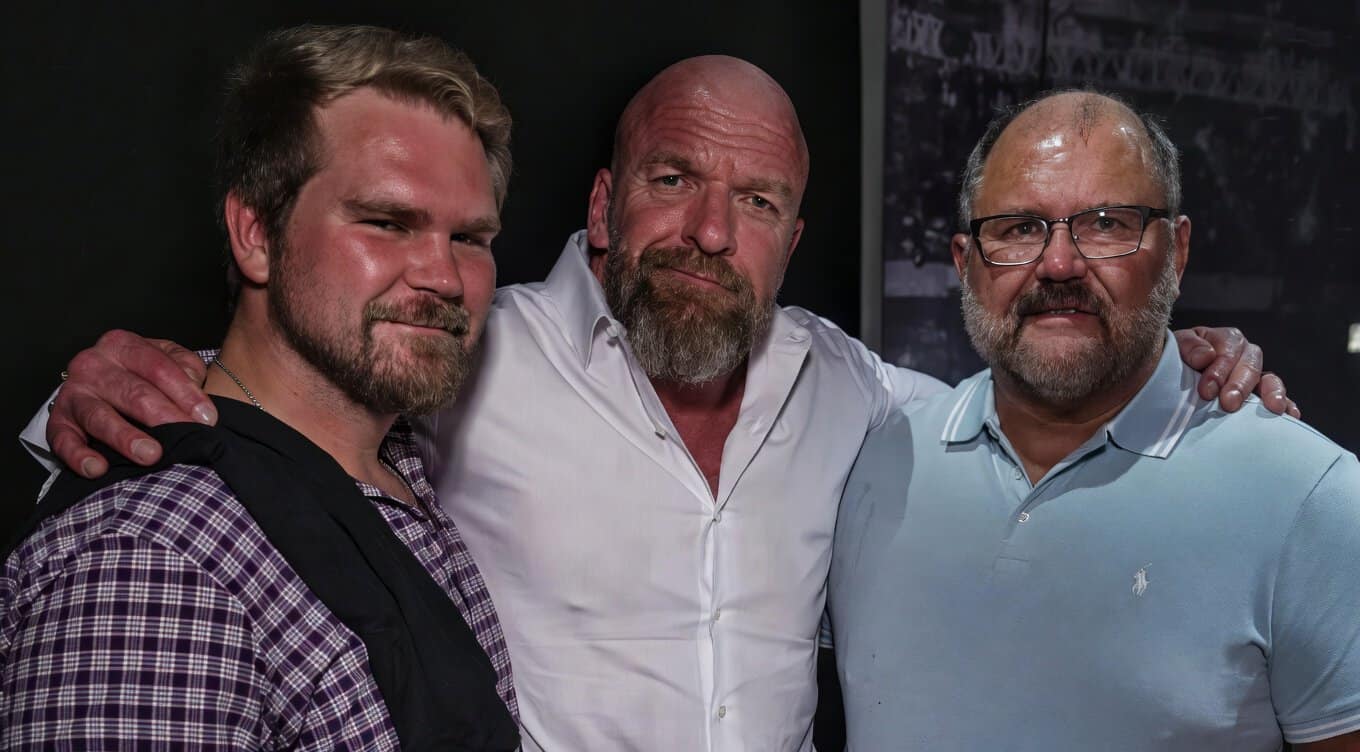
As legendary performer Arn Anderson recalled on his podcast, Triple H was always a throwback. Anderson worked closely with Levesque during his time as a road agent in 2005 and 2006. The Hall of Famer described a relationship built on mutual respect and shared traditional values.
“He would have been perfect for the last half of the ’80s, with his style of work,” Anderson said. “He wasn’t a guy that just did a bunch of high spots.” This comment explains why WWE is no longer hoarding giants who cannot work. Under Levesque, the priority is structure and pacing, not raw size.
The territory model was built on regional turf wars, hard-hitting action, and long-term storytelling. Wrestlers like Ric Flair, Arn Anderson, and Tully Blanchard did not rely on physical size to draw money. They drew because they could convince the audience that the struggle in the ring was real.
Triple H has spent his executive career trying to recreate this atmosphere. From the early days of NXT to the current main roster, he has revived territory-style tournaments and classic match concepts. He wants the product to feel like a sport rather than a variety show.
This focus on athletic logic has changed the nature of the babyface chase. In the territory days, the babyface was a fighting champion who defended the title against a rotating cast of monsters. Under Triple H, the babyface is often the underdog who must overcome a numbers game or a corrupt faction rather than a giant physical obstacle.
The Mechanics of Triple H’s Ring Style
To understand why Triple H let Björnsson walk away, one must examine how he constructs matches. Levesque’s own career was defined by a methodical, heel-heavy style. He relied on vintage NWA tropes like the slow heat segment, targeted limb work, and high-knee strikes modeled after Harley Race.
Anderson recalled their collaborative relationship over those two years of close work. He praised Levesque’s deep understanding of the industry's mechanics. “I imagine he could probably go out and have a hell of a match right now,” Anderson noted. “He was very, very talented, had a great grasp of the business.”
This mechanical discipline is what Anderson appreciated most during their time together. In the mid-2000s, Levesque was one of the few main event stars who insisted on keeping matches grounded in logical storytelling. His influence on the younger talent during this period laid the groundwork for the current developmental system.
In Levesque's view, a wrestler must be able to tell a logical story in the ring. A giant who cannot take a bump or pace a match is a creative dead end. Under his leadership, the modern WWE main event scene has been rebuilt around wrestlers who can work twenty-minute matches without losing the crowd.
The focus is on the small details that make a match work. This means selling the effects of a move for several minutes rather than immediately jumping back to your feet. It means working a hold to build tension rather than just waiting for the next big stunt.
We see this in the push of athletes like Gunther, whose style is built on physical realism and classic pacing. Under McMahon, Gunther would likely have been packaged as a foreign monster and fed to a top babyface within six months. Under Levesque, he is the centerpiece of the midcard, trusted to deliver high-quality athletic contests every week.
The Risk of the Clean-Cut Product
However, this transition to territory logic is not without its flaws. While the booking is logical and the matches are technically sound, the weekly television show can feel sterile. By prioritizing work-rate, WWE risks losing the unpredictable, circus-like energy that made it a global phenomenon.
Without raw, unpolished spectacles, the roster can start to look uniform. Every wrestler is highly trained, athletic, and capable of working a solid fifteen-minute match. But when everyone works the same methodical style, the show can become monotonous.
A three-hour episode of Raw can feel like a grueling test of endurance. A live crowd that sits through three consecutive matches built around slow armbars and methodical heat segments will eventually lose its energy. Sometimes, a promotion needs the raw chaos of a monster who simply throws people around without worrying about match psychology.
By closing the door on the era of the raw giant, Triple H has made the product more respectable, but occasionally less exciting. The lack of variety on the card is a clear negative. In his quest to replicate the Jim Crockett Promotions era, Levesque may be ignoring the fact that Crockett eventually went out of business because the product became too predictable.
The lack of variety extends to the promos as well. Under the current regime, wrestlers are given more freedom, but many choose to cut the same serious, sports-oriented promo. The colorful, bizarre characters of the past have been replaced by athletes who just want to talk about how hard they train.
The danger of this approach is that it can alienate the casual viewer. A fan who tunes in occasionally wants to see larger-than-life personalities and dramatic, easy-to-understand storylines. If the product becomes too inward-looking, it may struggle to attract new fans.
Scouting for Pacing Over Power
This philosophical shift has also changed WWE’s talent development pipeline. Instead of recruiting strongmen and giant athletes who require years of individual coaching, the company now targets college athletes with high baseline mobility. The focus is on coachability and physical coordination.
The modern Performance Center is designed to produce wrestlers who can quickly master the fundamentals of selling and pacing. They want athletes who can fit into a structured training system. A giant like Björnsson, with his massive frame and established strongman career, did not fit into this model.
He would have required a specialized training program just to learn how to move safely in a wrestling ring. In the modern WWE, that is seen as an inefficient use of resources. The preference is for mid-sized, highly mobile athletes who can execute complex sequences without injury.
This corporate approach to talent development is highly efficient, but it creates a cookie-cutter roster. When everyone is trained in the same facility by the same coaches, they start to move the same way, sell the same way, and cut the same promos. The unique, weird characters of the past—who often came from the independent scene or unusual backgrounds—are weeded out.
This system leaves little room for the happy accident. Many of the greatest stars in wrestling history were people who did not fit the corporate mold but succeeded because of their unique charisma. By standardizing the developmental process, WWE risks missing out on the next breakout star who does not fit the athletic profile.
Wrestling is at its best when it balances sport and spectacle. A roster needs technical brilliance, but it also needs the raw, terrifying presence of a monster. Finding that balance is the true test of a booker's skill, and the current product occasionally lacks the magic that made the company a global brand.
The Verdict on the Territory Gamble
Ultimately, WWE's current direction is a gamble that logic and athletic work-rate can sustain a multi-billion-dollar media property. Arn Anderson believes the company has the right leadership. “They got the right guy in charge, my opinion,” Anderson said on his show.
Anderson even suggested that Levesque would have fit perfectly into the legendary Four Horsemen faction alongside himself, Ric Flair, and Tully Blanchard. It is high praise from a man who helped define the gold standard of group psychology in the eighties. But the modern television audience has different expectations than the fans in Greensboro in 1986.
The challenge for Triple H is to balance territory psychology with the demands of modern television. He must prove that a product built on logical storytelling can maintain the mass appeal of the McMahon era. If he fails, WWE may find itself wishing they had signed the giants when they had the chance.
Cody Rhodes "American Nightmare" Adult Weight Belt
The ultimate signature accessory for the American Nightmare's biggest fans.
Frequently Asked Questions
Why did Hafthor Bjornsson not join WWE after meeting with Triple H?
When did Hafthor Bjornsson meet with WWE to discuss a wrestling career?
How did Vince McMahon use giant wrestlers in WWE main events?
How does Triple H's recruitment style differ from Vince McMahon's?
Why did Vince McMahon's recruitment of giants become a liability for WWE?
More Coverage
Big E's retirement shows the brutal physical cost of the ring
an hour agoWhy Braun Strowman's road back to the ring just got more complicated
an hour ago
Sami Zayn makes history while WWE doubles down on Seth Rollins
an hour ago
WWE's Edinburg doubleheader is a fascinating tactical gamble
an hour ago
WWE's Texas doubleheader is a direct strike on AEW's Wembley ambition
an hour agoBetween Moana and octopi, the WWE media machine has officially lost its mind
an hour agoMore Analysis
The numbers behind wrestling's sudden summer championship scramble
an hour ago
Big E's retirement shows the brutal physical cost of the ring
an hour agoWhy Braun Strowman's road back to the ring just got more complicated
an hour ago
Sami Zayn makes history while WWE doubles down on Seth Rollins
an hour ago
Road Dogg in TNA and Danhausen in WWE is the simulation breaking in real time
an hour ago