Glancing at the rearview mirror of the dub
Scanning the recent archives for that AEW Dynamite recap from half a decade ago feels like flipping through a high school yearbook. You recognize the faces, but the haircuts are tragic and you have no idea why you were so obsessed with the drama of that particular Tuesday. Five years ago, we were still deciding if this promotion was going to be the genuine alternative or just the loudest indie show to ever hit cable television.
The buzz surrounding that specific 2021 roundtable is proof that we were all just trying to keep up. We had a Friday night special that felt like it was booked on a dare, followed by a Saturday episode featuring Kenny Omega against Jungle Boy. Looking back, that feels like a lifetime ago. It was a time when the roster was still finding its identity in the aftermath of the pandemic, trying to balance elite-level work with the chaotic, wide-open feel of early Dynamite.
The Omega vs. Jungle Boy experiment
Let's address the elephant in the middle of the ring. Putting Jack Perry, then known as Jungle Boy, in the main event against the Cleaner in 2021 was a massive swing. It was the classic booking philosophy of the era: throw a hot prospect into the deep end with a legend like Omega and see if they drown or grow gills. Sometimes it worked. Sometimes you got a 20-minute window that felt like it was trying to justify its own existence.
Was it a success? In terms of pure athletic output, sure. Omega was at the absolute peak of his presentation, doing the belt collector gimmick, while Jack Perry was still the wide-eyed kid getting the rocket strapped to his back. But there was a fragility to it. There’s a distinct difference between building a star and forcing a match that the crowd isn't quite ready to swallow whole. That Saturday night special had that exact energy—the feeling of a company trying to cram ten pounds of content into a five-pound bag.
The flaws in the early booking logic
I’m not saying it wasn't fun, but let's drop the nostalgia goggles for a second. That period of AEW was defined by a frantic need to prove it could do everything at once. We saw some incredible high-ceiling matches, but we also got questionable pacing and storylines that felt like they were written on the back of a napkin five minutes before soundcheck. You can see it in how they handled that weekend of programming.
They were running Friday shows, Saturday specials, and weekly episodes, and sometimes the quality control hit a wall. When you look at the current state of Forbidden Door, you realize how much the company has matured. Back then, it felt like a group of friends trying to pull off an epic backyard show with a million-dollar budget. Now, the stakes actually feel attached to something tangible.
The evolution of the product
Comparing the 2021 era to today is like comparing a nervous first date to a marriage that’s hitting the seven-year itch. AEW forced the industry to wake up, but they also had to grow up fast. The booking for that 2021 match—that blend of high-octane sequences followed by confusing interference patterns—is exactly what they had to refine to get where they are now. We were all watching for the train wrecks as much as the clinics.
If you listen to those old podcasts, the tone is one of constant excitement and slight exhaustion. We were hooked on the chaos because there was nothing else like it. The 108-minute roundtable review is basically a time capsule of that raw energy. But let’s be real, we were watching a work-in-progress that somehow got over enough to change the game. That’s probably the most impressive thing about the sport: the ability to turn a messy, chaotic idea into a legitimate staple on the calendar that people are still dissecting years later.
The reality check
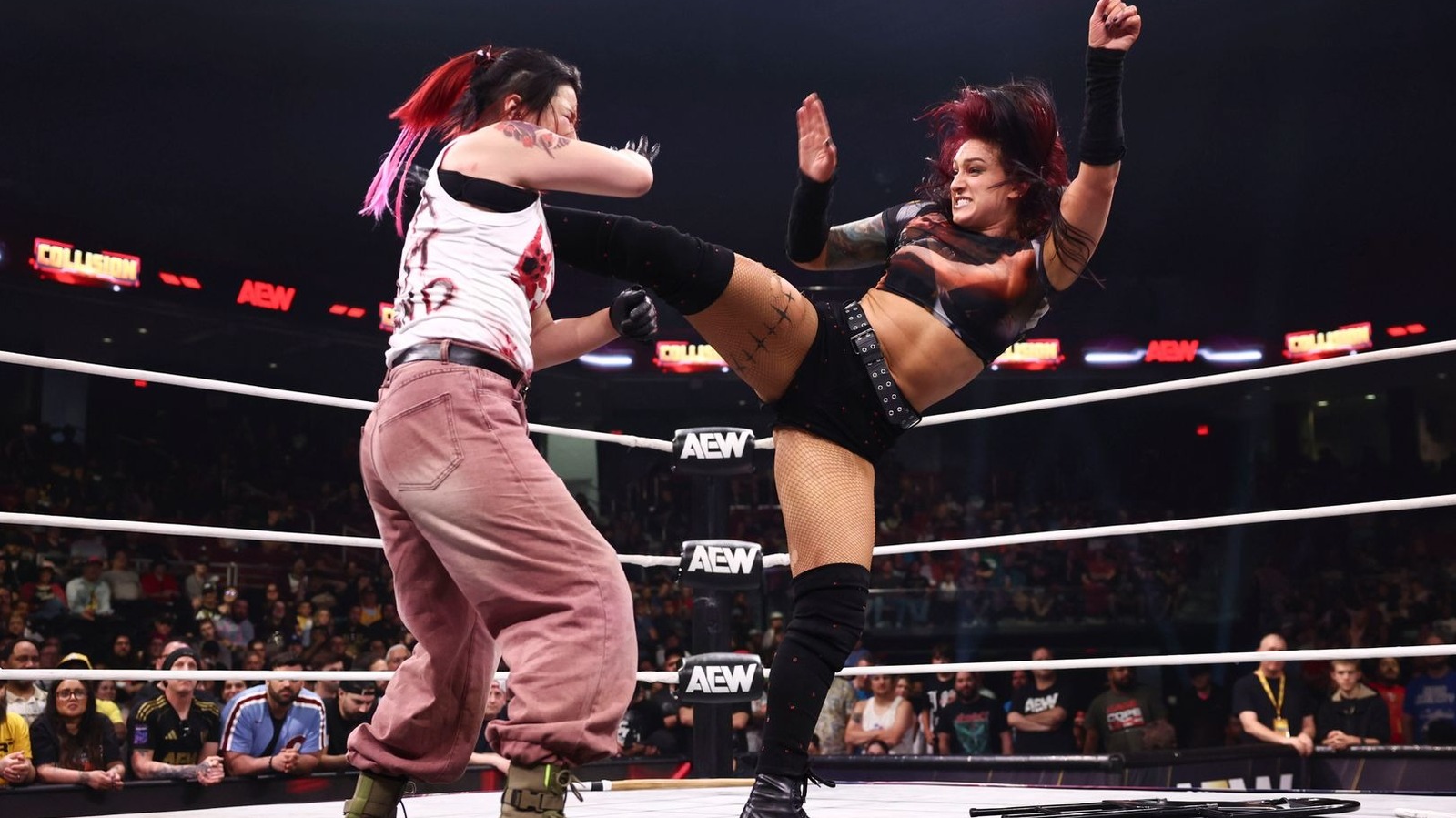
Of course, not everything was gold. The reliance on surprise debuts could be exhausting, and sometimes it felt like the women’s division was being treated as an afterthought in those chaotic schedules. It was messy, occasionally reckless, and deeply flawed. But in the middle of all that noise, gems were made. That is the AEW legacy in a nutshell: a product that demands your attention because you're genuinely terrified of what might happen next, for better or for worse.