San Diego hosted an episode of AEW Dynamite on July 1, 2026, that highlighted the growing structural tension within the promotion's weekly booking. Across a standard two-hour television window, viewers were presented with four matches that combined for exactly 54:00 of active in-ring competition. This means that out of 120 minutes of broadcast time, only 45.0% was spent on wrestling.
The remaining 66 minutes of the broadcast were filled with backstage promos, video packages, entrances, and commercial breaks. This ratio represents a significant shift from the product's historical norms, where Dynamite regularly cleared 60 minutes of active wrestling per episode. By comparison, this show indicates a clear pivot toward television drama and promotional segments as the company builds toward Redemption 2026.
Why long main events are squeezing secondary champions
To understand where the show's wrestling time went, one must look at the distribution of the match lengths. The card was heavily weighted at the top and bottom, creating a barbell shape in terms of duration. The opening match and the main event combined for 35 minutes and 55 seconds of action, which represents 66.5% of the entire night's wrestling.
The show opened with AEW World Champion MJF defending his title against Mark Briscoe. The match lasted 18 minutes and 25 seconds, making it the longest bout of the evening. MJF controlled the pace, slowing down the action to methodically wear down Briscoe with chinlocks and heavy ground work before securing the pinfall.
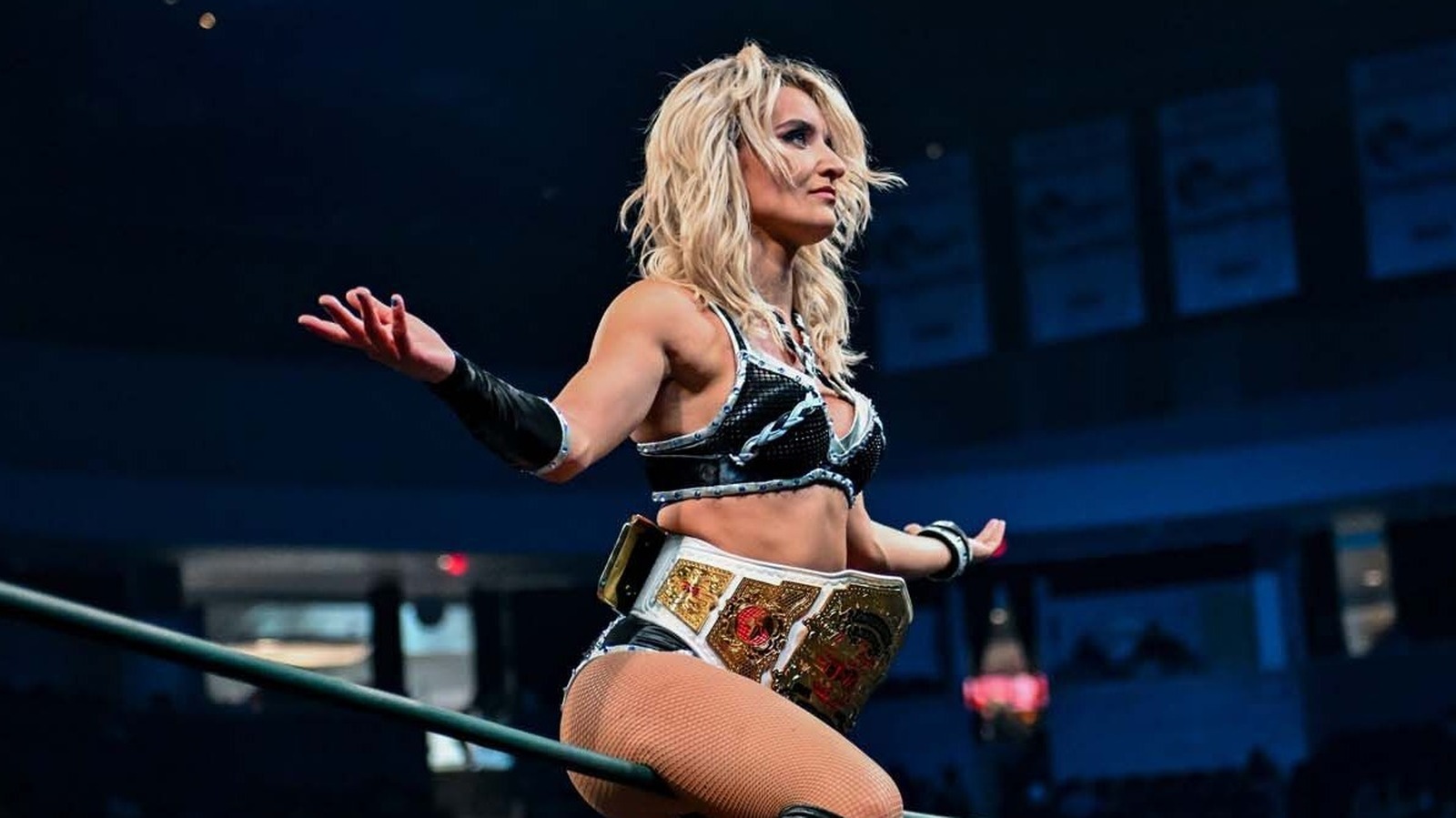
At the other end of the show, the main event featured a six-way Survival of the Fittest match for the vacant TBS Championship. This match went 17:30, ending with Hikaru Shida defeating Harley Cameron, Kris Statlander, Maika, Persephone, and Queen Aminata, as reported by Wrestling Inc. While the match featured rapid action, the six-way format made it difficult for any single performer to tell a coherent story.
How Kevin Knight and Lio Rush lost their second gear
With the opening and closing matches taking up two-thirds of the wrestling time, the middle of the show was extremely rushed. The TNT Championship match between Kevin Knight and Lio Rush lasted just 8 minutes and 50 seconds. While Knight secured his eight successful title defense, according to Wrestling Inc, the brief run-time hurt the presentation of both men.
The challenger, Lio Rush, barely had time to establish his speed-based offense. Instead, the match had to rush through its spots, moving from high-risk maneuvers like handspring elbows to the finish without any transition. The TNT Championship has historically been a workhorse title, but matches under nine minutes turn these defenses into simple television showcases rather than competitive athletic contests.
Following the TNT Title match, Jon Moxley and Will Ospreay teamed up to face The Lethal Twist, consisting of Blake Christian and Lee Johnson. This tag team match went 9:15, another short showcase designed to keep the promotion's top stars on television. While Ospreay's athleticism and Moxley's raw brawling got the crowd excited, Christian and Johnson were treated as minor obstacles rather than a credible threat.
Combined, these two middle matches accounted for only 18 minutes and 5 seconds of wrestling. This is twenty seconds less than the opening match alone. This uneven distribution of time hurts the overall card structure, creating a system where secondary titles and tag teams are marginalized as quick filler between the longer, main-event segments.
AEW's roster is getting older and more crowded
A deeper look at the statistics reveals a surprising demographic trend on this episode. The average age of the fourteen wrestlers who competed on the show was 32.2 years, according to data compiled by F4WOnline. This is a high average for a company that built its brand on youth, energy, and the future of the industry.
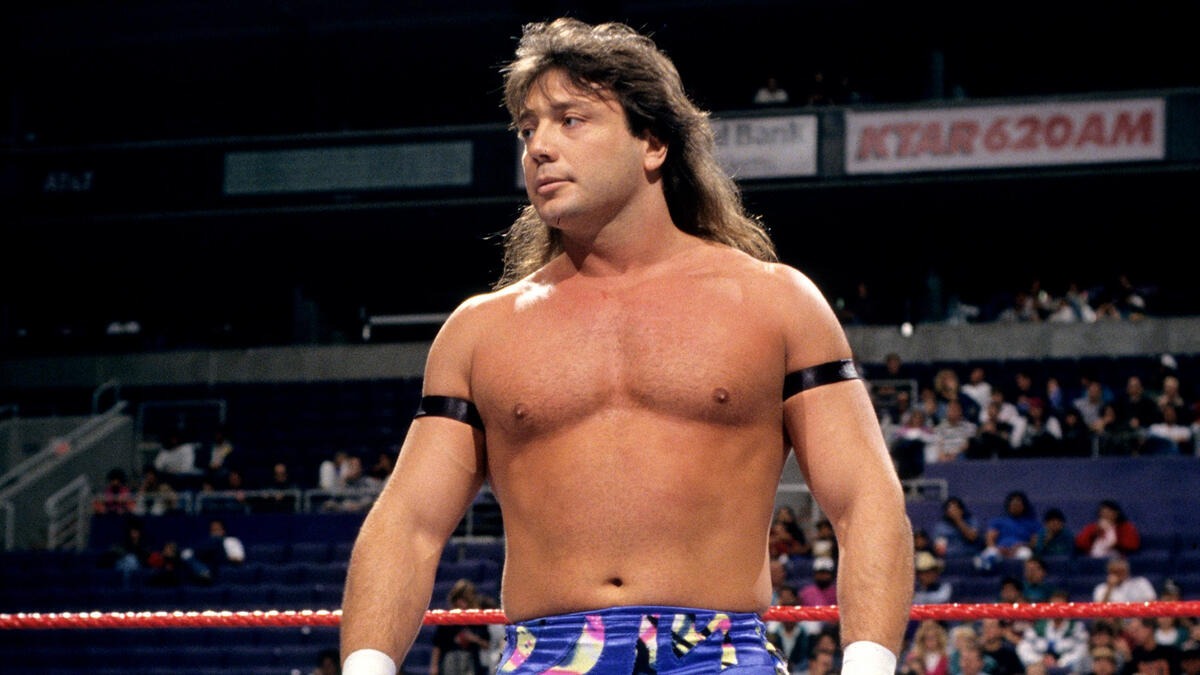
The television time was dominated by older, established veterans like Mark Briscoe (41), Jon Moxley (40), and the new TBS Champion Hikaru Shida (38). These three performers played central roles in matches that ran for a combined 45 minutes and 10 seconds. In contrast, the younger talent on the show was given very little opportunity to shine.
Blake Christian and Lee Johnson, both 28, were defeated in under ten minutes, while younger women in the TBS title match were eliminated before the final sequence. This reliance on veterans points to a broader booking philosophy. Instead of developing younger talent on television, the promotion is relying on established names to carry its high-profile matches.
The free agent impact on the roster math
This demographic trend is set to become more pronounced in the coming weeks. Since the beginning of 2026, AEW has signed several high-profile free agents, including Tommaso Ciampa, The IInspiration, and The Rascalz, as reported by WrestleTalk. While these names bring immediate star power, they also add to an already bloated roster.
Tommaso Ciampa is 41 years old, Cassie Lee is 33, and Cassie's tag partner Jessica McKay is 36. Adding these performers to the roster will push the average age of the active talent even higher. Furthermore, their upcoming debuts before Redemption 2026 will place even more pressure on the limited television time available on Dynamite.
When a two-hour show only features 54 minutes of active wrestling, there are very few spots available for the roster. Introducing three new acts means that existing champions like Kevin Knight will likely see their television time cut even further. The promotion is faced with a difficult math problem: how to feature dozens of signed wrestlers on a show that only allocates 45% of its time to active wrestling.
The booking shortcuts on the road to Redemption
The booking of the TBS Championship on July 1 illustrates the consequences of these roster and pacing constraints. The title was vacated after Willow Nightingale suffered an injury, as reported by WrestleTalk. Instead of running a tournament to build up a new contender, the promotion opted for a six-way Survival of the Fittest match.
Putting the title on Hikaru Shida is a safe booking decision. Shida is a reliable champion who can be trusted to deliver good matches. However, it represents a missed opportunity to elevate a rising star like Queen Aminata or Maika. In a chaotic six-way match, these younger wrestlers were used as bodies to fill the ring rather than being given a platform to build their own stories.
As the company prepares for Redemption 2026, these statistical trends should serve as a warning. Adding more pay-per-views to the schedule requires a television product that can build multiple compelling stories. Ultimately, the numbers from July 1 show a promotion with immense talent but a clear struggle to allocate its television time in a way that builds for the future.