Marty Jannetty's amputation shows the true cost of the Rockers style
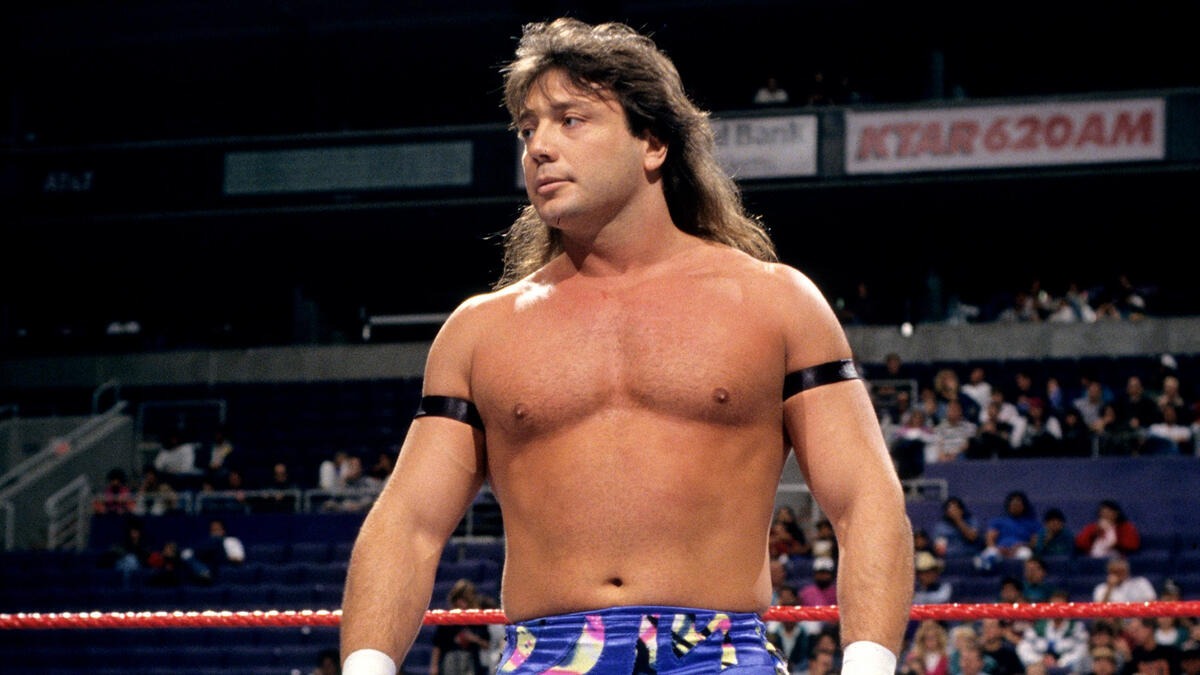
A photograph posted on Facebook this week shows Marty Jannetty standing upright, supported by a prosthetic limb during a physical rehabilitation session. It is a stark, jarring image for anyone who watched the WWF in the late 1980s. Jannetty, now 66, underwent a below-the-knee amputation on April 1, 2026.
The surgery, performed by orthopedic surgeon Dr. Leland McCluskey, successfully cleared infected bone that had plagued Jannetty for years. For a performer who once defined aerial grace in professional wrestling, the physical decline has been long and public. According to reports from Wrestling News, Jannetty's leg issues stem from chronic ankle decay that worsened over decades of high-impact ring work.
This amputation is not a sudden medical anomaly. It represents the final, logical cost of a wrestling style that Jannetty and Shawn Michaels popularized when they arrived in the WWF in 1988.
The high-flying, rapid-tempo tag team offense they brought from the American Wrestling Association changed the visual presentation of mainstream wrestling. But it also established a physical debt that Jannetty has spent the last thirty years paying off.
The Stiff Ring and the Physics of the Rockers Style
To understand Jannetty's physical decline, one must analyze the physical environment of 1980s WWF rings. During that era, Vince McMahon's rings were famously built for durability rather than safety.
The construction featured thick steel beams under heavy wooden planks, covered by a thin layer of foam and a canvas sheet. Wrestlers who bumped on these rings compared the experience to landing on concrete with a thin rug.
This rigid construction offered no shock absorption. For heavyweights like Hulk Hogan or the Ultimate Warrior, the impact was absorbed by sheer mass and limited movement.
But The Rockers did not work a heavyweight style. They flew, bounced, and landed with high velocity.
Consider their signature double dropkick. Jannetty would launch his 225-pound frame five feet into the air, strike the opponent, and land flat on his back or hip.
Without ring give, the deceleration force was transferred directly to his joints, knees, and ankles. The constant repetition of this landing across 250 shows a year created micro-fractures in the bone.
The team's double fist drop from the top turnbuckle presented similar structural dangers. Jannetty had to absorb the landing on his knees and hips to maintain the visual flow of the move.
Over time, these impacts stripped the articular cartilage from his ankles. The joint space narrowed, forcing bone to rub against bone with every step.
A prime example of this mechanical strain occurred during their famous tag match on October 30, 1990, in Fort Wayne, Indiana. Wrestling Bret Hart and Jim Neidhart for the tag team championship, the top ring rope snapped early in the match.
Deprived of the rope's tension for balance and deceleration, Jannetty and Michaels had to execute their high-tempo offense on a compromised platform. The landing angles became steeper, the impact on their lower joints heavier.
They won the match, but the title change was never broadcast or officially recognized.
While Michaels eventually adapted his style after a severe back injury in 1998, Jannetty continued to work the same high-risk pace. His work rate required constant movement, quick tags, and rapid directional changes.
These relentless movement patterns meant his ankles never had time to heal. The joints became chronically unstable, leading to a series of reconstructive surgeries.
The Raw Title Run and the Manhattan Center Floor
The pinnacle of Jannetty's singles career came on May 17, 1993, in a surprise match against Shawn Michaels for the Intercontinental Championship. The venue was the Manhattan Center in New York City, a tight ballroom with a ring set directly on a hard floor.
The match was a masterclass in athletic pacing, featuring rapid-fire sequences that were years ahead of their time. Jannetty won the title after Mr. Perfect prevented Michaels from leaving the ringside area, leading to an inside cradle pin.
But the tactical brilliance of the match masked the physical toll it extracted. The sequences required Jannetty to perform top-rope crossbodies, a suicide dive to the outside floor, and multiple backdrops.
Each landing on the hard Manhattan Center mat sent shockwaves through his feet and ankles. The match won the Pro Wrestling Illustrated Match of the Year, but it pushed Jannetty's lower joints closer to collapse.
To keep up with Michaels' unmatched athleticism, Jannetty had to push his body past its structural limits. In the early 1990s, pain management was primitive, and wrestlers routinely worked through severe joint damage.
Jannetty's performance that night was spectacular, but it was also a form of physical self-sabotage. The immediate glory of the championship victory was paid for with the long-term integrity of his ankles.
The Quebecers and the Tower of Quebec
In January 1994, Jannetty found himself in another high-impact tag team partnership, this time with the 1-2-3 Kid. On the January 10 episode of Monday Night Raw, they defeated The Quebecers to win the WWF Tag Team Championship.
The Quebecers, Jacques and Pierre, worked an extremely physical, bruising style that contrasted with Jannetty's aerial movement. Their signature finisher, the Tower of Quebec, involved Pierre diving off Jacques' shoulders directly onto the opponent.
Taking this move required Jannetty to absorb the full weight of a 250-pound opponent while lying flat on a ring canvas with minimal padding. The impact compressed his spine and put immense pressure on his lower limbs.
To make the match look convincing, Jannetty took multiple high-angle back body drops and hard whips into the turnbuckles. Each bump was a blow to a skeletal structure that was already showing signs of chronic wear.
The partnership with the 1-2-3 Kid was short-lived, but it represented another chapter of intense physical punishment. The speed of their matches meant that Jannetty could not protect his body.
He was forced to bump hard and fast, sacrificing his long-term health for short-term television ratings. The victory was a highlight for fans, but it accelerated the decay of his lower joints.
The Systemic Failure of the Industry's Safety Net
The tragedy of Jannetty's amputation highlights a systemic failure within professional wrestling. Promotions have historically classified wrestlers as independent contractors.
This legal classification allows billion-dollar companies to avoid providing long-term health insurance or retirement plans. Wrestlers are responsible for their own medical costs once their active careers end.
Jannetty's ankle reconstruction surgery in 2020 was followed by a series of complications. He developed a staph infection after multiple procedures, which eventually turned into chronic sepsis.
By January 2024, Jannetty revealed that doctors had informed him that amputation was the only viable path. As his medical bills mounted, his personal insurance coverage proved insufficient.
Jannetty wrote on Facebook that "insurance only covers so much" during his prolonged recovery. To survive, he had to rely on the Cauliflower Alley Club, a nonprofit organization that assists retired wrestlers.
The club, presided over by former WWF star Brian Blair, paid for critical components of Jannetty's rehabilitation. Blair, who wrestled as one-half of the Killer Bees, understood the physical toll of that era.
Jannetty expressed his gratitude to the organization in his public post.
They’ve showed me quite a lot of love and compassion for my situation. Without their help I don’t think I would’ve gotten through this very tough time in my life.
He added that if there is ever anything he can do for the club, "I'm there."
While the Cauliflower Alley Club's work is noble, its existence is an indictment of the industry. A multi-billion dollar promotion like WWE should not rely on a charity to care for its former champions.
Jannetty was a key draw during the company's boom period. His work helped establish the fast-paced style that modern wrestling relies on to draw viewers.
Yet, when his leg decayed, he was left to rely on donations from his peers.
Self-Inflicted Acceleration and the Indie Grind
It is necessary to acknowledge that Jannetty's physical decline was accelerated by his own choices. His career was marred by substance abuse and legal issues that made him unreliable to major promotions.
WWE fired him in 1992 following an arrest, and his subsequent runs in 1993, 1995, and 2005 ended abruptly. His inability to maintain a stable position in a major company forced him onto the independent circuit.
Rather than resting his damaged joints, Jannetty spent two decades chasing small paydays on the indie scene. He wrestled his last recorded match on June 16, 2018, at a Battle On The Border event in Harrison, Ohio.
By that point, his ankles were already structurally ruined. He was teaming with local wrestlers to hide his lack of mobility, but he was still taking bumps.
Independent wrestling rings are notoriously poorly maintained. Many feature rusted steel frames, warped plywood boards, and insufficient padding.
Taking bumps on these substandard rings with pre-existing joint damage is a form of physical self-destruction. The staph infection that led to his amputation was a direct consequence of performing multiple surgeries on a body that was never allowed to heal.
Jannetty's refusal to stop wrestling, combined with his chaotic lifestyle, turned a manageable injury into a life-threatening infection. His orthopedic surgeon had to remove all infected bone to prevent the sepsis from spreading.
While fans remember his spectacular leap over the top rope, the reality is a slow decay in high school gyms. His career shows the danger of a performer who cannot let go of the ring, even as the ring destroys him.
The Legacy of a Broken Style
The style that Marty Jannetty helped pioneer is now the dominant style in professional wrestling. Modern wrestlers perform moves that make The Rockers' offense look conservative.
But modern rings are engineered with spring systems and high-density foam to absorb impact. Modern promotions also provide better medical screening and rehabilitation services.
Jannetty did not have those advantages. He was a pioneer who worked on concrete-stiff rings during an era of minimal medical oversight.
His prosthetic leg is a physical reminder of the transition from the heavyweight era to the athletic era. The price of that transition was paid in bone, cartilage, and flesh.
As Jannetty continues his rehabilitation, the wrestling industry must look at his situation as a warning. The visual excitement of high-impact wrestling will always draw fans.
But the performers who create those moments deserve structural protection. Charity should not be the final safety net for the people who built the business.
RDX Weight Lifting Belt for Gym Workout
Train like a champion with heavy-duty lumbar support.
Frequently Asked Questions
Why did Marty Jannetty need a leg amputation?
When did Marty Jannetty have his leg amputated?
Who performed Marty Jannetty's amputation surgery?
How did WWF ring construction in the 1980s affect wrestlers?
What caused Marty Jannetty's chronic ankle decay?
More Coverage

Top 10: Top Moments
an hour agoSami Zayn's Undisputed Championship reign can't just be a feel-good fluke
an hour ago
Will Ospreay is Wembley bound and the internet is having a meltdown
3 hours ago
Vikingo debuted on SmackDown but his WWE future is already in question
3 hours ago
WWE's move to a two-night SummerSlam is exposing a massive roster crisis
4 hours ago
SummerSlam 2026 is cooking but WWE has some serious questions to answer
4 hours agoMore Analysis
Top 10: Top Moments
an hour ago
TNA is rushing Xia Brookside and Lei Ying Lee into a No DQ rematch
an hour agoSami Zayn's Undisputed Championship reign can't just be a feel-good fluke
an hour ago