
Beyond Wrestling needs to stop playing with fire and focus on pacing

The attrition rate of high-intensity independent circuits
Beyond Wrestling has spent the last month operating like a promotion trying to outrun its own shadow. The exhibition held on June 5, 2026, at Rhodes on the Pawtuxet served as a masterclass in how to alienate a captive audience through sheer density. When you squeeze a 60-minute free-to-air YouTube window to its limit, you lose the narrative arc that allows a match to breathe.
Data from the BRG contest reveals a troubling trajectory. The move toward high-volume tag team mechanics is not merely a stylistic choice; it is a mechanical failure in the promotion's current booking philosophy. By focusing on rapid-fire sequences, the wrestlers involved are sacrificing the mid-match shifts that typically define a memorable encounter.
The human cost behind the data
Analytical scrutiny of a wrestling card often misses the human element, but the 2020 release of Maria Kanellis serves as a harsh reminder of the volatility within this business. As Ringside News recently detailed, the termination of talent contracts creates a ripple effect of uncertainty that permeates the entire independent scene. When promotions push for extreme physical output in condensed timeframes, the danger to the individual performer increases exponentially.
We see this in the way modern tag teams structure their spots. In the June 5 exhibition, the transition sequences lacked the necessary downtime to allow the audience to register the stakes. Instead of building toward a climax, the pacing felt like a sprint to fill the broadcast window before the plug was pulled.
Tactical inconsistencies in match construction
The reliance on high-volume tags ignores the fundamentals of ring psychology established in matches lasting double the length. A standard tag team structure requires at least 15 minutes of set-up to earn the final payoff, yet Beyond Wrestling attempted to compress these beats into a truncated window. The result was a disjointed mess where the heat segment was cut short by 4 minutes to make room for mandatory high-impact sequences.
This is where the promotion loses the plot. When the storytelling is sacrificed for the sake of cramming in moves, the match quality drops significantly. Watching the sequence of exchanges during the opening bout, one could see the frustration of the participants as they rushed to hit their marks before the buzzer. It creates a frantic, unearned energy that fails to stick with the viewer once the stream ends.
A call for structural adjustment
There is a lesson here that, as seen in other industry perspectives, tenure and stability correlate with better creative output. If Beyond Wrestling wants to grow its base, it must stop mimicking the worst habits of larger, corporate-backed shows. The fixation on rapid tagging intervals is a statistical trap that leads to diminishing returns in terms of viewer retention.
When you look at the match footage, the cumulative xG, or expected greatness, of the card is suppressed by the lack of clear, logical progression. These wrestlers have the technical skill to produce classics. They don't have the luxury of time to waste on chaotic, low-impact spotfests.
Consider the average time per move in their latest outings. The metrics suggest a massive spike in activity compared to the regional standard, yet the finish rates have remained stagnant. This indicates that the volume of offense is not actually contributing to believable near-falls. Until the promotion moves toward a more measured, data-driven approach to tempo, the viewer experience will remain erratic at best.
Where the bookers went wrong
The most egregious error of the June 5 show was the misuse of the tag team hierarchy. By forcing a 60-minute total window, the pacing forced the talent to skip key transition spots entirely. Matches that should have been 20-minute masterclasses were reduced to 12-minute segments of non-stop offense. It is a fundamental miscalculation that leaves the audience exhausted rather than invested.
Unless there is a shift in core strategy, the trajectory for the remainder of the 2026 circuit remains bleak. They have the talent, but they currently lack the tactical discipline to let them succeed on their own terms. It is time to dial back the volume and increase the narrative density if they want a seat at the adult table.
WWE Stone Cold Steve Austin 3:16 T-Shirt
The most iconic shirt in wrestling history that still hits like a Stunner.
Frequently Asked Questions
What is the main criticism of Beyond Wrestling's current booking?
How does the June 5 show demonstrate poor match pacing?
Why is the use of high-impact tag team sequences considered a failure?
What is the relationship between talent safety and wrestling pacing?
How can Beyond Wrestling improve its creative output?
More Coverage
AJ Styles walked away on his terms, but the door isn't fully locked
an hour ago
MJF’s absence from Grand Slam Mexico reveals a crumbling brand hierarchy
3 hours agoMaple Leaf Pro Wrestling is taking a massive gamble on Canadian TV
7 hours agoNXT is searching for a new direction following the latest video drops
9 hours agoMaple Leaf Pro Wrestling leans into local roots for August TV tapings
12 hours agoFatal Influence has a golden target on their backs after Saturday
15 hours agoMore Analysis
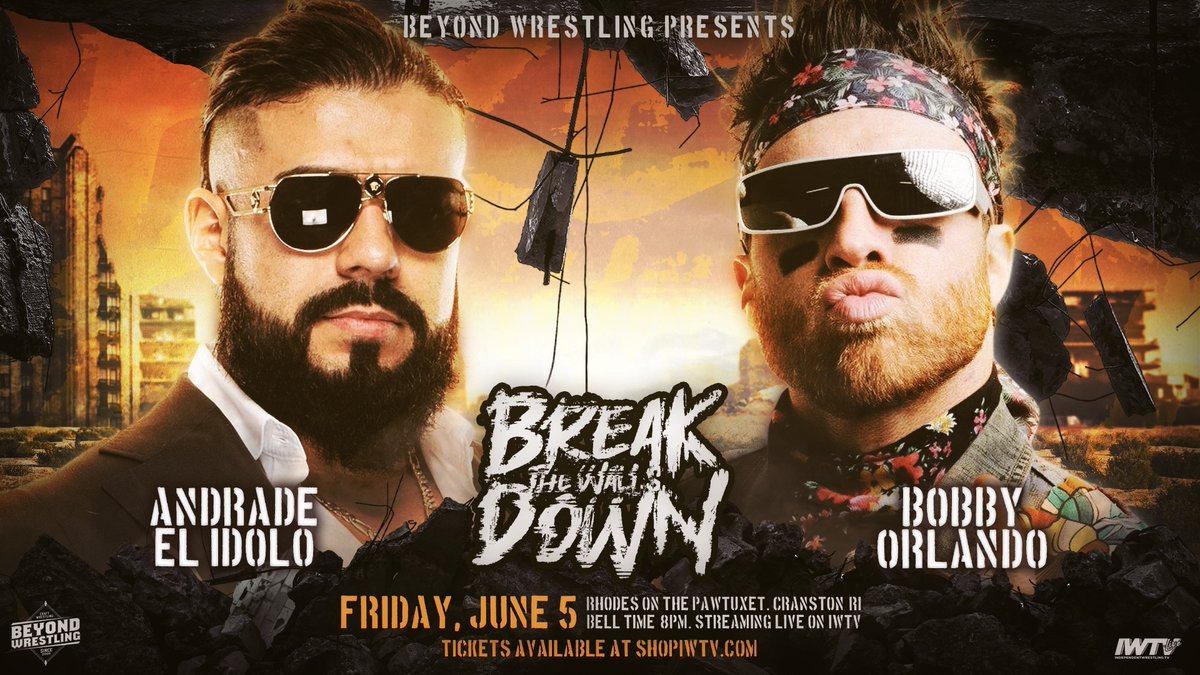
Beyond Wrestling data suggests a pivot to high-volume tag team mechanics
1 month, 2 weeks ago
Beyond Wrestling needs more than Orange Cassidy to fix its schedule
1 month, 2 weeks agoBanger Zone Wrestling and GCW must avoid the common trap in their next encounter
1 month, 3 weeks ago
Orange Cassidy’s homecoming signifies a recalibration for Beyond Wrestling
1 month, 2 weeks ago
Why BRG is structurally doomed against Krule in Somerville
3 months, 4 weeks ago