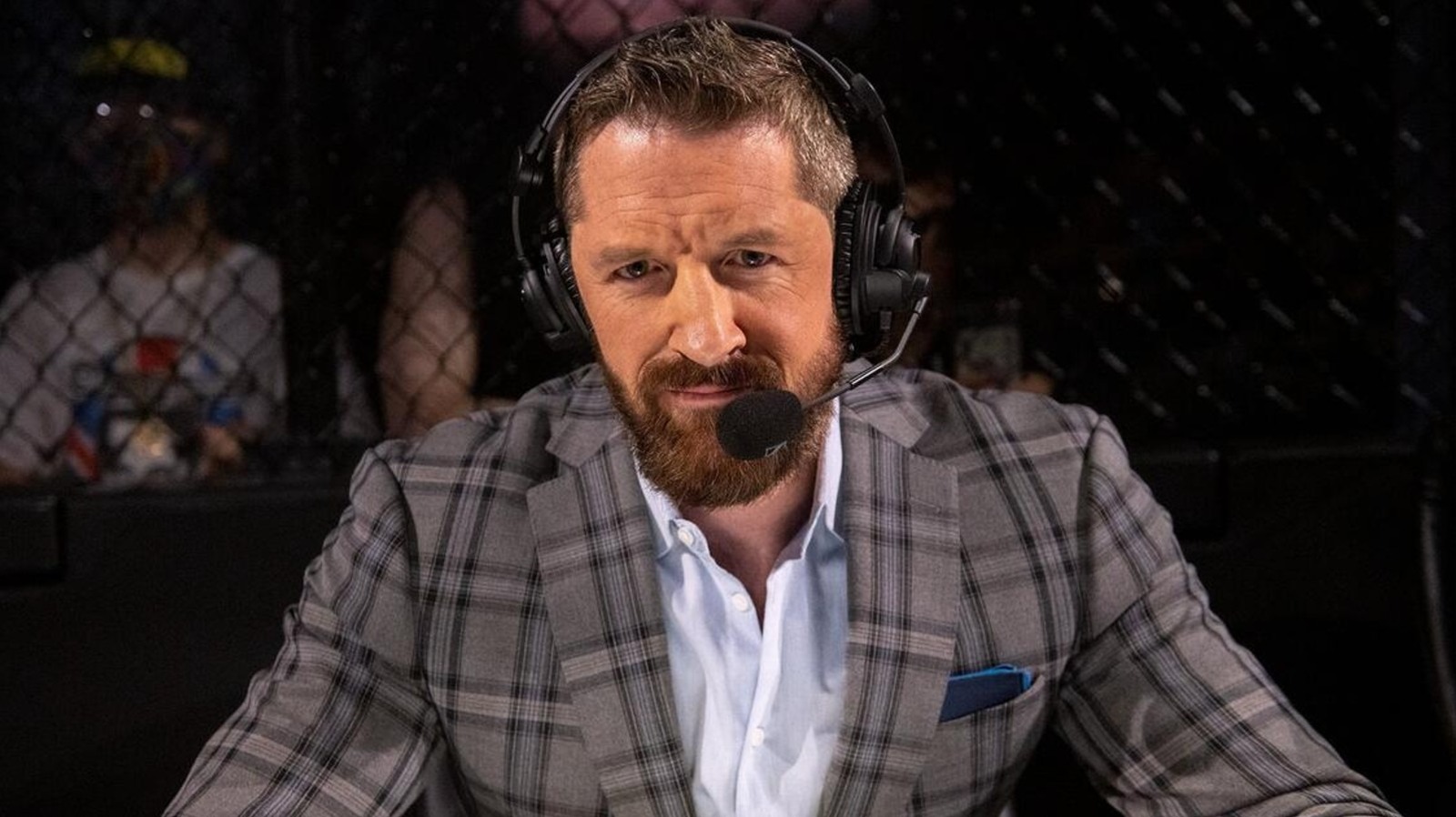
Booker T's raw emotion on NXT exposes the sterile state of wrestling TV
The crack in the armor
Professional wrestling is an industry built on guarded emotions and calloused exteriors. Performers spend their entire careers constructing indestructible personas, projecting invincibility, and weaponising their personalities to sell tickets. For decades, Booker T was a master of this exact craft. Whether he was a five-time WCW Champion carrying a dying brand on his back, a royal monarch demanding fealty on SmackDown, or a wildly energetic commentator screaming catchphrases, he was always "on." The character was a shield.
That is precisely what made last week's episode of NXT so jarring.
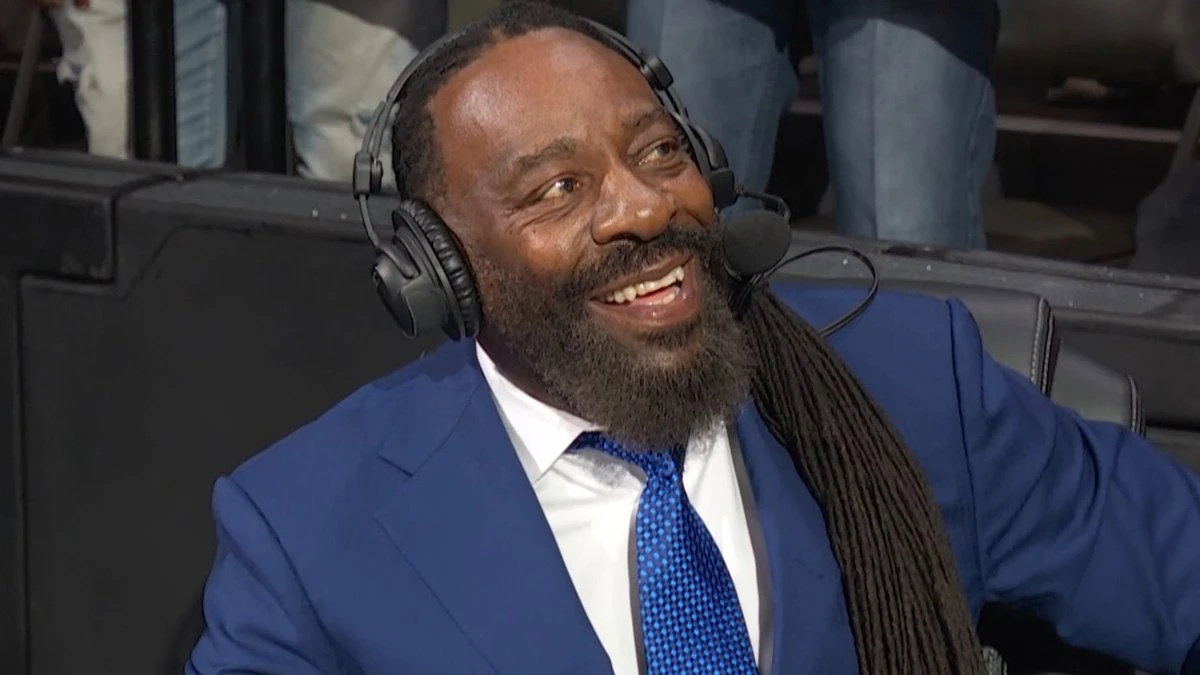
During the broadcast on March 17, WWE paused the developmental chaos to throw a Booker T Appreciation Night. The transition from the high-octane in-ring action to a moment of genuine reflection caught everyone off guard, both in the arena and watching at home. As Wrestling Inc reported, the Hall of Famer broke down at the desk when confronted with his own legacy.
He wept.
It was not a scripted angle designed to set up a cheap heat attack by a rising heel. Nobody blindsided him with a steel chair. It was just a 59-year-old man, sitting beside his broadcast partner Vic Joseph, realizing the weight of his own existence in real-time. In an era where wrestling programming is polished to a blinding sheen, that unscripted vulnerability was the most compelling television WWE produced all week. It stripped away the artifice and left bare the human cost of a 30-year career.
The chaotic soundtrack of Tuesday nights
To understand the weight of that moment, you have to look at what Booker T actually does for NXT. He is not a traditional color commentator in the vein of a Jesse Ventura or a modern-day Corey Graves. He does not break down the biomechanics of a wrist-lock or provide historical context for a specific pinning combination.
Instead, Booker acts as the emotional barometer for the broadcast. When Trick Williams hits a running knee, Booker does not call the move. He loses his mind. He shrieks, he stammers, he hypes the action through sheer auditory force.
It is a style that divides audiences. And frankly, it deserves harsh criticism.
From an analytical standpoint, Booker T can be a deeply frustrating listen. He frequently talks over Vic Joseph during vital play-by-play sequences, steamrolling the narrative structure of a match. He relies on a stale rotation of catchphrases that can pull focus away from the talent in the ring. There are matches where he seems entirely disconnected from the story the wrestlers are trying to tell, choosing instead to riff on inside jokes or bizarre tangents that leave the home audience completely baffled.
If you are watching an intricate, 20-minute technical clinic between Axiom and Nathan Frazer, Booker's tendency to shout random interjections is not just distracting. It actively damages the match psychology. He often fails to register the subtle shifts in momentum, ignoring the limb-work a heel has spent ten minutes establishing just to shout about his favorite barbecue spot in Houston.
But that chaotic energy is also his greatest asset, paradoxically. NXT is a developmental brand. The roster is full of athletes in their early twenties who are still figuring out how to work the hard camera. They make mistakes. They miss spots. The timing is occasionally off. When the in-ring work falters, Booker's unhinged enthusiasm papers over the cracks.
He cares. You can fake technical knowledge, but you cannot fake that raw, visceral level of investment.
A tactical look at a Hall of Fame career
Watching Booker T weep at the commentary desk forced a reevaluation of his actual in-ring career. We remember the spin-a-roonie and the supermarket brawl with Stone Cold Steve Austin, but the data tells a story of an incredibly versatile worker who adapted his style across three distinct eras of wrestling.
During his prime WCW run, Booker was essentially a cruiserweight trapped in a heavyweight's body. His offensive output was built on explosive fast-twitch movements. The Harlem Hangover — a somersault leg drop off the top rope — was an insanely high-risk maneuver for a man his size. He possessed a rare blend of agility and striking precision. His scissors kick was not just a flashy finisher; it was a carefully timed counter-strike that could be deployed out of nowhere, completely changing the momentum of a match in a fraction of a second.
When he transitioned to WWE, the environment had shifted. The matches were less about high work-rate and more about structured storytelling and character work. Booker adapted immediately. He slowed his pace. He relied more on heavy strikes, spinebusters, and mat-based psychology.
Look at his King Booker run in 2006. From a tactical perspective, it was a masterclass in heel pacing. He stopped performing the spin-a-roonie. He stalled on the outside of the ring. He used Sharmell not just as a valet, but as a deliberate tactical distraction to break his opponent's rhythm. He intentionally neutered his own explosive offense to generate heat, grinding matches down to a methodical, frustrating crawl that made the babyface's inevitable comeback exponentially more effective.
He won 35 major championships across his career. He is a 14-time tag team champion. That level of sustained success is not an accident. It requires a profound understanding of match structure and an ability to read a crowd that borders on telepathic. He brings that exact same intuition to his Reality of Wrestling promotion in Texas, where he trains the next generation of talent to understand the minutiae of the craft.
A masterclass in character longevity
If you look at the current crop of talent succeeding in NXT, Booker's influence is glaringly obvious. The modern independent scene produces phenomenal athletes who can execute flawlessly choreographed sequences. But they often arrive at the Performance Center completely devoid of character. They know how to wrestle, but they do not know how to entertain.
Booker T was the exact opposite of the silent, work-rate darling. He understood that a perfectly executed spin kick means nothing if the crowd does not care about the person throwing it. He built a career on micro-expressions. The way he looked at his hand before executing the spin-a-roonie. The exaggerated, sneering cadence of his promos. The way he could project arrogance with a simple tilt of his chin.
When you watch a talent like Lexis King or Oba Femi operating in NXT today, you are seeing the direct application of Booker's philosophy. Oba Femi does not need to chain wrestle for twenty minutes to establish dominance. He uses his physical presence, his pacing, and his facial expressions to tell the story of an unstoppable monster. He is applying the exact same theatrical principles that Booker used to make his King Booker persona the most hated act on SmackDown in 2006.
The fact that Booker is sitting right there at the desk, loudly validating these character choices on commentary, creates a fascinating feedback loop. He acts as a real-time vocal coach for the talent in the ring. When a wrestler hits a pose and Booker screams his approval, the crowd is instantly conditioned to react. He is essentially booking the emotional flow of the match from the headset.
It is a highly specialized skill set. Very few former main eventers have the lack of ego required to sit at a desk and spend two hours getting the next generation over. Most veterans want to make the broadcast about themselves. Booker, despite his massive personality, constantly directs the focus back to the ring. He uses his credibility to anoint the future.
The bridge between disparate eras
We are currently staring down the barrel of WrestleMania 41 in Las Vegas next month. The main roster product is a corporate juggernaut. It is defined by massive stadium shows, meticulously crafted long-term storytelling, and a glossy production value that feels more like a major network sports broadcast than a grimy wrestling territory.
NXT is supposed to be the grittier, more experimental alternative. Yet, even the Performance Center can feel like a factory assembly line at times. The talent is trained in the WWE style from day one. Matches hit the same beats. Promos follow the same cadence.
Booker T prevents the show from feeling entirely sterile. He is the connective tissue to a wilder, less predictable era of professional wrestling. He survived the chaotic, dying days of WCW. He navigated the brutal backstage politics of the Ruthless Aggression era. He managed to get a King of the Ring gimmick — a historically cursed trope that usually ruins careers — over to the point where it successfully anchored SmackDown for over a year.
When he sits at the desk, he brings that massive weight of institutional memory with him. The younger talent clearly respect it. When a rising star like Carmelo Hayes or Trick Williams interacts with Booker, you can see the genuine reverence in their eyes. He is not just a broadcaster reading ad reads off a monitor to them. He is the living, breathing blueprint of how to survive and thrive in a ruthless industry.
The breaking point of a stoic veteran
So, why did the tears flow last week on a random episode of NXT?
Wrestlers rarely get their flowers while they are still actively involved in the grind. The industry is notoriously forward-looking and incredibly unsentimental. The moment a show goes off the air, the focus immediately shifts to the next week's television rating, the next premium live event, the next merchandise cycle.
Appreciation nights are usually reserved for mandatory retirements, career-ending injuries, or tragic circumstances. To be handed a moment of pure, unadulterated respect on a Tuesday in March — with no ulterior booking motive or impending storyline twist — is an incredibly rare occurrence in this business.
When Vic Joseph threw to the video package, you could visibly see Booker bracing himself. He adjusted his glasses. He tightened his jaw. He tried to project the stoic, impenetrable toughness that carried him out of Houston, through the prison system as a youth, and eventually into the Hall of Fame. But as the highlight reel rolled — the championship victories, the brutal matches, the iconic WrestleMania moments — the carefully constructed facade cracked.
He rubbed his eyes. His voice broke when he attempted to speak.
It was a stark reminder of the massive human toll this industry exacts on its performers. For over 30 years, Booker T broke his body for the entertainment of total strangers. He spent thousands of nights in cheap motels, drove endless miles down empty highways, missed family milestones, and navigated a cutthroat corporate environment where loyalty is often a liability. Last week, all of that immense personal sacrifice was finally validated on live television.
The vital contrast of modern wrestling television
There is a much broader lesson here about how professional wrestling connects with its audience in 2026.
As we approach WrestleMania 41, the WWE hype machine is operating at maximum capacity. We are endlessly debating whether Cody Rhodes can survive his upcoming title defense. We are analyzing the latest subtle fractures within the Bloodline. Everything is hyper-analyzed, heavily scripted, and relentlessly promoted across every conceivable social media platform.
Yet, the most authentic and memorable image from WWE programming this entire week was not a carefully choreographed staredown, an explosive return, or a shocking heel turn. It was a retired veteran wiping tears from his eyes at a commentary desk.
Professional wrestling relies on the audience's willingness to suspend their disbelief. We know the punches are pulled. We know the match outcomes are predetermined in a boardroom. But the underlying emotion has to be real. The struggle must feel authentic. If the performers do not genuinely care about what is happening, the audience will eventually figure it out and tune out entirely.
Booker T cares. Even when he is fumbling a basic play-by-play call, stepping on a vital narrative transition, or yelling about his favorite restaurant during an important rest hold, his passion for the wrestling business is absolute and undeniable.
Last week's appreciation segment was fundamentally a public acknowledgment that despite the grueling, often incredibly cynical nature of professional wrestling, some people never lose their pure love for the game. It went far beyond a standard celebration of championship reigns.
Booker T earned every single one of those tears.
Read Next
- Why Seth Rollins has the most manipulative entrance in wrestling
- Why Seth Rollins vs CM Punk is the only WrestleMania 41 match that matters
- Seth Rollins must reclaim the World Heavyweight Title in 2026
- We spent a decade hating John Cena and now we are begging him to stay
- 🏆 WrestleMania 41 — Full Coverage Hub
WWE Elite Collection Series 110: Seth 'Freakin' Rollins Action Figure
Ultra-articulated action figures designed for epic shelf displays.
Frequently Asked Questions
Why was Booker T crying on WWE NXT last week?
When did the Booker T Appreciation Night happen on NXT?
Who is Booker T's current broadcast partner on WWE NXT?
How does Booker T's commentary style differ from traditional announcers?
What are the main criticisms of Booker T as a color commentator?
More Coverage

Top 10: The Definitive Ranking of Mid-Year 2026 Wrestling Moments
5 hours ago
WWE mid-card booking is suffering from a lack of long-term vision
12 hours ago
TNA is balancing on a wire as ratings climb
14 hours agoWhen Ozzy wasn't looking: The weirdest wrestling crossover of the year
1 day, 5 hours ago
AEW Redemption moves toward a high-stakes turning point
1 day, 5 hours ago
Why Jim Johnston’s silence was his competitive advantage
1 day, 13 hours agoMore Analysis
Why Booker T is the only untamed voice left on WWE television
1 month, 4 weeks ago
NXT's obsession with viral clips is starting to cannibalize the product
3 months, 2 weeks agoNXT Stand and Deliver showed why WWE's third brand is hitting a wall
3 months, 2 weeks ago
Why Booker T and X-Pac are the weirdest, best mentors in WWE
3 months, 3 weeks ago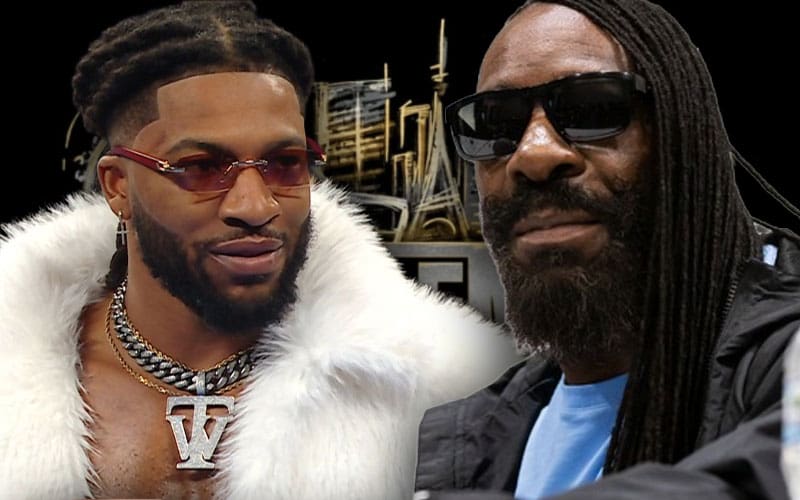
Trick Williams faces a sink or swim moment at WrestleMania 41
3 months, 2 weeks ago