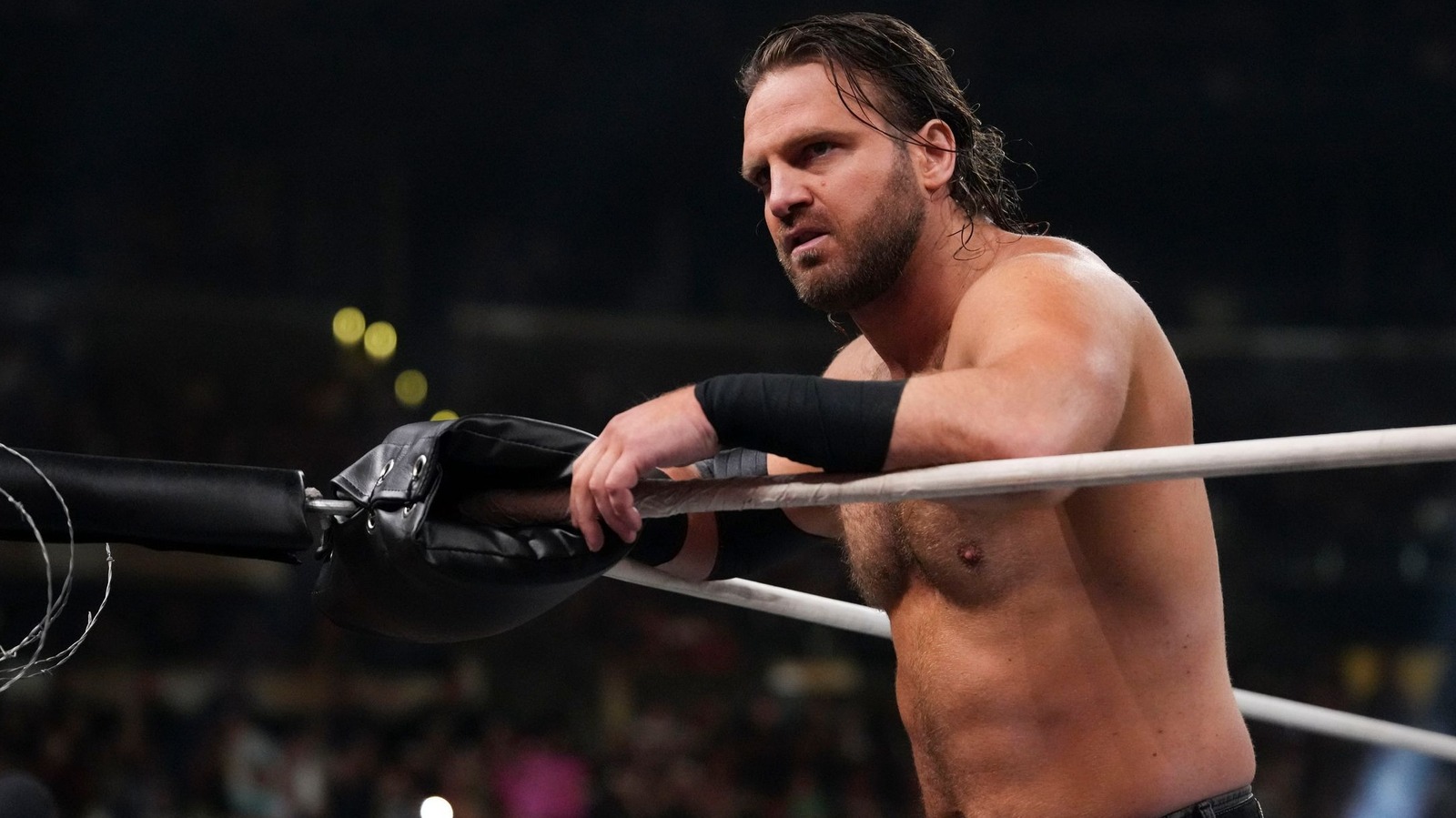
Buff Bagwell and the cost of keeping the dream alive
The messy reality behind the neon spandex
If you were watching WCW back in the late nineties, you remember Marcus Bagwell. He was the guy with the hat, the tassels, and enough self-confidence to power a small city. We spent years watching him pose in the mirror, strutting down the ramp as if he owned the Georgia Dome. It was the quintessential WCW mid-card experience—high energy, low stakes, and enough ego to fill an empty arena. But now, decades later, Buff is pulling back the curtain on what was actually happening while those pyrotechnics were going off.
Bagwell recently admitted that while he was busy living the life of a mid-card superstar, his wife at the time had to resort to stripping just to handle the household finances. It is a jarring image. We have this tendency to equate the television product with the actual life of the performer. When we see a guy like Buff in the ring dancing to “American Males,” we assume he is cashing checks that require an armored truck. Apparently, the reality in the deep cuts of the WCW roster was far more bleak.
The myth of the WCW money machine
The common narrative about WCW is that Eric Bischoff was throwing money at the wall like he was playing Whac-A-Mole. We have the stories of guys getting six-figure deals to sit at home or wrestle once a month against a jobber in a dark match. But for every high-end contract, there was someone like Bagwell, living a life that wasn't quite as glamorous as the promo package suggested. It exposes the massive chasm between the top of the card and the guys holding it up.
Comparing this to modern locker rooms, the difference is night and day. If you look at how Bret Hart reflects on the old guard, you see a man who understands how power structures dictated who ate and who starved. During the peak Nitro era, the management style was basically 'pray for a rating spike.' If you were in the middle of that mix, you were at the mercy of a regime that changed its mind with the seasons. It wasn't just a business; it was a chaotic experiment in mismanagement.
Why we shouldn't romanticize the past
We need to stop pretending that the nineties were some golden era of fiscal responsibility for wrestlers. While the fans were chanting 'WCW' until their voices gave out, the talent was often struggling to keep the lights on. Bagwell living that lifestyle in private while playing the cocky heel in public is a strange, sad juxtaposition. It makes you look at every botched suplex or mid-card tilt differently when you realize the person in the ring might be stressing about rent. It puts a grim shadow over the whole thing.
Even looking at the current state of AEW Collision and its recent struggles, we see how the business side of wrestling can dictate the quality of the product. When the money isn't moving, the show loses its way. Back in the day, WCW had the money but burned it on vanity projects and broken booking, leaving guys like Bagwell to deal with the fallout. It is a cautionary tale that clearly never went away. The business side is always lurking beneath the surface.
The dark side of the gimmick
Buff Bagwell thrived on playing a character who was entirely about vanity and pleasure. He was the guy who would brag about his abs while your favorite babyface was trying to cut a serious promo. Knowing what he was balancing behind the scenes makes those segments feel like a sick joke. It adds a layer of depth—or maybe just unnecessary baggage—to his career that we never suspected. How many other guys were standing under the WCW marquee, doing the same thing?
We have to be critical of the industry as a whole here. Promoters were clearly content with keeping guys on the roster for the sake of depth without ensuring they were living above the poverty line. The irony of the industry where millionaires are made on one side of the curtain while the other side is scraping for change is not lost on anyone who has followed this sport long enough. Wrestling is a brutal, unforgiving machine that chews up performers and spits out their stories decades later.
Ultimately, this isn't just about Bagwell. It is about the systemic failures of the nineties wrestling boom. We were all distracted by the pyro and the turncoat heel angles, oblivious to the fact that the entire structure was built on shaky, broken ground. It is a miracle that more rosters didn't collapse under the weight of these financial realities. The next time you see a mid-card guy doing a pose on the way to the ring, try to remember that they are human beings, not just props in a promotion's failing narrative. Bagwell was a caricature of a man, but the problems he faced were as real as the three count in the middle of the ring.
Becky Lynch: The Man: Not Your Average Average Girl
Becky Lynch's unfiltered, inspiring journey to the top of WWE.
Frequently Asked Questions
What did Buff Bagwell reveal about his financial situation in WCW?
How did WCW pay structures impact mid-carders like Buff Bagwell?
Why did Buff Bagwell's wife resort to stripping during his WCW run?
What management issues did WCW face during the peak Nitro era?
How does WCW's financial history compare to AEW Collision?
More Coverage
Tammy Sytch’s legal swings at WWE are the final act of a chaotic career
6 hours agoWhen Scott Steiner's self-tanning grease turned into a weapon
6 hours agoWWE playing dress-up is a lazy nostalgia trap
10 hours agoSting vs. Ric Flair at AEW Dynamite: Why we need to stop living in the past
14 hours agoNJPW's G1 Climax 36 gamble shifts to Chicago soil
15 hours ago
Bret Hart is still burning bridges and he doesn't care who gets scorched
1 day, 4 hours agoMore Analysis
Bret Hart is burying the hatchet everywhere except his own mind
2 hours ago
WWE's latest trademark filings point toward an inevitable homecoming
2 hours ago
Sheamus is gone and WWE booking just got a lot harder
2 hours ago
Money in the Bank 2026 is a giant gamble on the mid-card
2 hours ago
Why the Maple Leaf Pro deal ends with AEW buying Scott D'Amore's promotion
2 hours ago