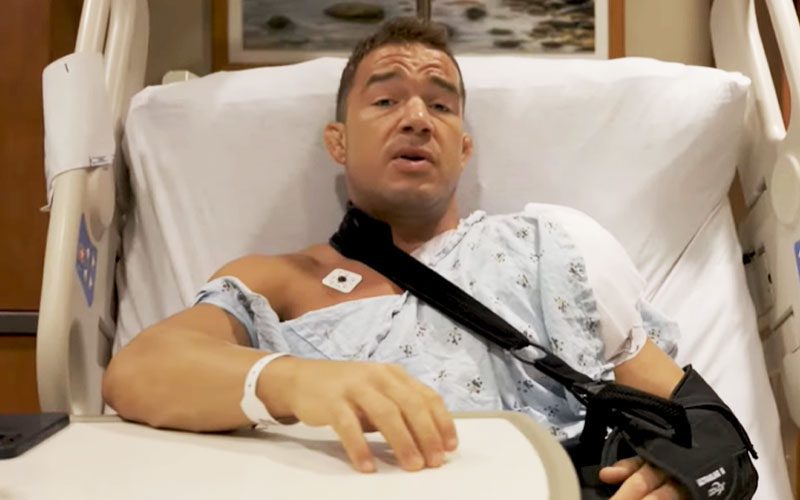
The reality of Gable’s surgical complications
Chad Gable has provided the definitive update on the neck procedure that forced him out of action last year. While initial reports framed the surgery as a standard measure, Gable’s recent comments confirm the reality was far more intensive. The structural integrity of his cervical spine required a level of intervention that sidelined him far longer than the initial projections.
Surgeons identified shifting vertebrae that were putting pressure on sensitive neural pathways. This necessitated a complex stabilization procedure rather than a routine cleanup. For an athlete whose game is built on high-velocity impact and technical chain wrestling, the margin for error during this rehab process was nonexistent.
The timeline of a stalled momentum
Gable underwent the operation mid-last year, right as his television presence was at its peak. The decision to go under the knife was reactive, stemming from cumulative trauma that made continuing in the ring an impossible proposition. He went from main-eventing high-stakes matchups to months of rigid physical therapy.
Modern professional wrestling remains a punishing physical grind. Gable’s case mirrors that of other technical stalwarts who hit a wall after years of sustained high-intensity output. Unlike a simple ligament tear, structural neck repair demands full clearance from medical personnel who prioritize career longevity over near-term booking returns.
Broader industry impact and strategic risks
The incident highlights the inherent fragility of the mid-card and main-event rotations when relying on human assets who prioritize work rate. When a performer like Gable is pulled from the schedule, the creative team is forced to abandon long-term narrative threads. The ripple effect was immediate, as recent reports confirmed his recovery path was significantly altered by the severity of the findings.
Competitors and peers have taken note of the caution surrounding his return. The wrestling industry has seen a pivot toward increased medical transparency in recent years, largely due to the fallout from long-term injuries that end careers prematurely. Gable’s methodical approach to returning serves as a case study in managing talent that cannot afford to sustain further hits to the neck.
Analyzing the booking consequences
The most glaring oversight remains the lack of immediate contingency plans for injury management at the top of the card. When the medical diagnosis revealed the surgery was more serious than initially communicated, the booking team effectively lost months of television development time.
This creates a genuine problem for fans expecting consistent character arcs. Without a reliable anchor, stories lose their bite, and viewership peaks flatten. It is easy to blame the talent for the physicality of their style, but the structural issue lies in a schedule that rarely mandates significant downtime before injury occurs.
The return to form for any athlete after cervical surgery is rarely linear. While Gable is reportedly aiming for full clearance, the speed at which he integrates back into high-impact wrestling remains the primary variable. Expect a cautious re-entry, likely relying on technical exhibitions before jumping back into the high-flying sequences that defined his pre-surgery style.
Gable’s path remains at 100 percent focus on functional mobility rather than vanity workouts. If he can maintain the standards he set prior to the injury, the tactical shift in his in-ring psychology may actually benefit his longevity. He cannot afford the same risks he took two years ago if he intends to remain a viable headliner through the end of this decade.