
Gilbert Burns bows out after a brutal tactical decline
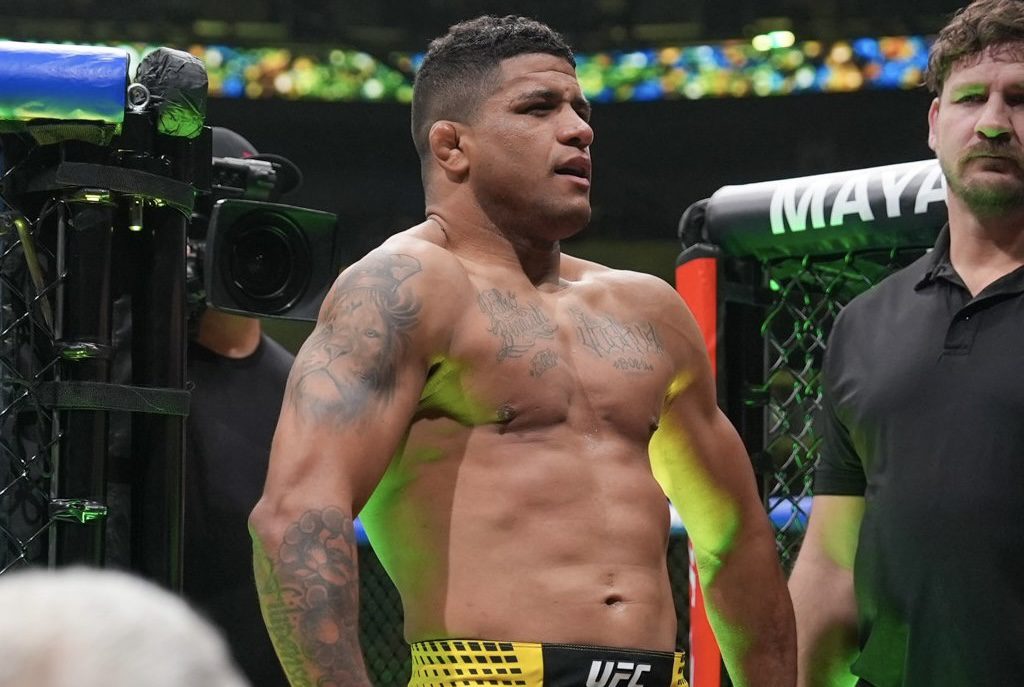
The final, inevitable act in Winnipeg
The end rarely looks like a triumphant walk into the sunset. For Gilbert Burns, it arrived in the form of a Round 3 TKO against Mike Malott at UFC Winnipeg.
It was a difficult watch. Not because the outcome was particularly shocking, but because the decline was so starkly visible. When a fighter relies heavily on explosive twitch reflexes, the drop-off is never gradual. It falls off a cliff.
Burns officially announced his retirement after the bout, bringing the curtain down on a career that spanned over a decade in the octagon. He walks away with a 22-10 professional record.
Sadly, he leaves on a five-fight losing streak. That string of defeats will heavily skew how casual observers remember his final years, completely masking the terror he once inspired in the 170-pound ranks.
The Malott fight followed a familiar, depressing script for late-stage veterans. Burns looked a half-step behind the exchanges from the opening bell. The explosive bursts that defined his prime were replaced by labored, predictable entries that Malott read with ease.
Instead of slipping offline and returning fire, Burns was caught stationary. Malott simply managed the distance, picked his shots with a long jab, and found the finish when Burns could no longer scramble out of danger.
It was clinical from the Canadian, but grim for anyone who remembers the peak 'Durinho' violence.
The anatomy of a brutal descent
To understand the end, you have to look at the beginning of the slide. Burns' last taste of victory came in April 2023 against Jorge Masvidal.
That night in Miami felt like a coronation of sorts. He retired a massive star in Masvidal, navigating the striking exchanges smartly and utilizing his grappling to secure a dominant decision. He looked primed for another run at the gold.
Instead, the bottom fell out entirely. The subsequent five fights exposed the harsh reality of aging in the welterweight division. At 170 pounds, you are dealing with athletes who carry the power of middleweights and the speed of lightweights.
It is an unforgiving bracket that demands a blend of wrestling, cardio, and striking power. Any physical drop-off is punished severely.
Once Burns lost that fraction of a second in his reaction time, the defensive holes became glaring. His chin, which had absorbed massive punishment in wars past, finally began to betray him under the lights.
You could see it in the way he reacted to feints. Two years ago, a feint would draw a devastating counter hook. In Winnipeg, feints froze him. He was no longer processing the striking data fast enough to pull the trigger.
The lightweight struggles and the welterweight rebirth
It is easy to forget that Burns began his UFC tenure as a severely drained lightweight. The early years at 155 pounds were characterized by inconsistency.
He would look like a world-beater one night and completely flat the next. The extreme weight cut was visibly taxing his cardio and his ability to absorb damage. Losses to Michel Prazeres and Dan Hooker showcased a fighter who simply did not have the physical fuel tank to compete at the highest level for fifteen minutes.
The decision to abandon lightweight and move to 170 pounds saved his career.
Unburdened by the brutal dehydration process, Burns transformed. The speed translated perfectly, but suddenly, the power was devastating. He was no longer just a slick submission artist; he was a physical bully.
The turning point was the dominant decision victory over Gunnar Nelson in September 2019. He completely neutralized one of the division's most dangerous grapplers, proving that his size disadvantage at welterweight was a myth.
He followed that up with a terrifying knockout of Demian Maia, cementing his status as the premier BJJ practitioner in the division. But the masterpiece was the destruction of Tyron Woodley in May 2020.
Against Woodley, Burns was flawless. He dropped the former champion early, bullied him in the clinch, and dominated every second of the twenty-five-minute affair. It was the performance of a man who had finally put the puzzle pieces together.
When a grappler falls in love with his hands
Tactically, the evolution of Gilbert Burns was fascinating and eventually became his undoing. He entered the promotion as a decorated Brazilian Jiu-Jitsu world champion. Early on, he desperately needed to drag the fight to the mat to be effective.
Then, under the guidance of striking coach Henri Hooft, he learned how to crack.
The threat of the takedown became a brilliant decoy for a devastating overhand right. He started dropping elite strikers. He used his grappling fear factor to create massive openings on the feet.
But the problem with grapplers who fall in love with their hands is that striking relies heavily on fast-twitch muscle fibers. When those fibers start to fade in your late thirties, the striking becomes a massive liability.
In his recent skid, opponents simply stopped fearing the takedown. They realized Burns lacked the explosiveness to finish double legs against the cage. Once the grappling threat was neutralized, he was forced into pure kickboxing matches against younger, faster athletes.
Without the wrestling to keep opponents guessing, his overhand right became a telegraphed swing rather than a hidden trap.
The tactical breakdown of the decline
If you watch the tape from the Woodley fight and compare it side-by-side with the Malott loss in Winnipeg, the physical regression is startling.
Against Woodley, Burns was constantly shifting stances, masking his entries with level changes, and firing combinations that ended with punishing calf kicks.
Against Malott, he was entirely stationary. The head movement vanished. Instead of rolling under strikes, he was pulling straight back with his chin in the air.
Pulling straight back is a cardinal sin in striking defense, and Malott ruthlessly exploited it with a sharp, piston-like jab.
Furthermore, his offensive wrestling became non-existent. During his peak, Burns used a brilliant chain-wrestling approach. If the double-leg was stuffed, he would immediately transition to a body lock or drag his opponent to the mat.
In his final five fights, if the initial takedown entry failed, Burns simply gave up on the sequence and reset at striking range. He lacked the cardio and muscular endurance to chain together multiple attacks.
This predictability allowed opponents to sit back, conserve energy, and counter-strike without fear of being dragged into deep waters.
The Chimaev war took the ultimate toll
We have to talk about UFC 273. April 2022. The Khamzat Chimaev fight.
That fight cemented Burns as an absolute fan favorite. He stepped in against the undisputed boogeyman of the division, a man everyone else was actively avoiding, and dragged him into a three-round bloodbath.
He lost the decision, but his stock skyrocketed. He proved Chimaev was human. He dropped him, bloodied him, and pushed him to the absolute brink.
However, fighters rarely walk away from those types of high-car-crash-velocity brawls unchanged. The sheer volume of trauma he absorbed that night fundamentally altered his durability going forward.
It is the classic MMA paradox. The fight that makes you immortal in the eyes of the fans is often the fight that physically ruins you.
He was never quite the same after Chimaev. He gutted out the Masvidal win through sheer veteran savvy, but the miles on the odometer were adding up rapidly. The recovery between camps grew longer. The nagging injuries piled up.
The ruthless nature of promotional matchmaking
This brings us to a harsh, necessary criticism of how the promotion handles its fading stars. The UFC is not a retirement home, and they do not specialize in golden parachute exits.
The matchmaking over Burns' final stretch was undeniably cruel. Rather than giving him fellow veterans to ease his transition out of the sport, they routinely fed him to the wolves.
Mike Malott is a rising, violent talent who needed a recognizable name on his resume to legitimize his contender status. Beating a fading Gilbert Burns on a four-fight losing streak provides that name value without the corresponding risk of fighting the prime version of the man.
It is standard industry practice, but it remains a bitter pill to swallow when watching a legend stumble.
Burns was essentially used as structural scaffolding for the next generation of welterweights to climb over. Every time he stepped into the cage recently, the promotional intent was entirely transparent. They wanted to extract the last ounce of his remaining star power to build someone else.
He arguably deserved a softer landing. A farewell fight against someone like Neil Magny, Vicente Luque, or another aging veteran would have been fitting.
Instead, he got a hungry finisher in Winnipeg who battered him mercilessly until the referee was forced to step in.
It highlights a brutal system where fighters are incentivized to keep taking punishing matchups until their bodies completely give out, simply because the paychecks for fighting down the rankings are still too lucrative to refuse.
The peak at UFC 258
To truly appreciate what Burns brought to the table, you have to revisit February 2021 and UFC 258. The title shot against Kamaru Usman.
For roughly three minutes of the first round, Burns looked like he was going to shock the world. He caught Usman with a massive right hand that rattled the champion. He swarmed. He forced Usman into panic mode.
He ultimately fell short, getting stopped by the piston-like jab of Usman in the third round, but the performance proved he belonged in the rarefied air of the elite.
He forced Usman, a historically dominant wrestler, to abandon all grappling entirely because Burns' guard was deemed too dangerous to engage with. That alone is a terrifying metric of respect.
He was a fighter who genuinely never turned down a tough stylistic matchup. While top contenders sat on their rankings and waited for perfect opportunities, Burns fought the best grapplers, the scariest strikers, and the most hyped prospects.
Legacy of a warrior who overstayed his welcome
Despite the ugly finish in Winnipeg, the legacy of 'Durinho' is secure in the record books. His BJJ pedigree brought a unique, ever-present danger to his fights.
Even when he was losing rounds on the feet, there was always the lingering threat of a sudden submission off his back or in a wild scramble.
The 22-10 record tells the story of a man who fought absolute killers for a decade. He did not pad his record with favorable stylistic matchups.
UFC Winnipeg was simply a grim reminder that time is the only undefeated champion in this sport. Gilbert Burns stayed at the table, continually rolling the dice, until he had absolutely nothing left to bet.
The welterweight division moves on today, as it always does. The machine never stops turning.
But the memory of that terrifying overhand right, the elite grappling transitions, and the sheer willingness to bite down on his mouthpiece and trade fire with the scariest men on the planet will remain long after the sting of this five-fight skid fades.
Drafting Greatness: Buy the Belt by Conrad Thompson
A deep dive into wrestling history from the legendary podcaster.
Frequently Asked Questions
Who did Gilbert Burns fight in his final MMA match?
What was Gilbert Burns' professional record when he retired?
When did Gilbert Burns secure his final victory in the UFC?
Why did Gilbert Burns struggle significantly in his final five fights?
In which weight class did Gilbert Burns begin his UFC career?
More Coverage
Why the industry is cooling on the big man archetype
1 week, 4 days ago
Tiger Mask IV hangs up the mask and leaves us all feeling ancient
1 week, 5 days ago
Tomoaki Honma's retirement shows the brutal cost of the underdog style
2 weeks, 2 days ago
John Cena's final WWE numbers prove his retirement was overdue
2 weeks, 2 days ago
Why Max Holloway is a massive tactical nightmare for Conor McGregor
2 weeks, 6 days ago
FTR fans are having a collective existential crisis today
1 month agoMore Analysis

Gilbert Burns is hunting relevance again
1 month, 2 weeks agoGilbert Burns moving to UFC BJJ is the weirdest sequel in fight game history
2 months, 1 week ago
Justin Gaethje's declining strike differential and the reality of his decline
4 weeks, 1 day ago
Michael Chandler is fighting for his relevance at this point
4 weeks ago
Alex Pereira's heavyweight gamble: The numbers behind the White House loss
1 month ago