The loudest man in the squared circle isn't changing his stripes
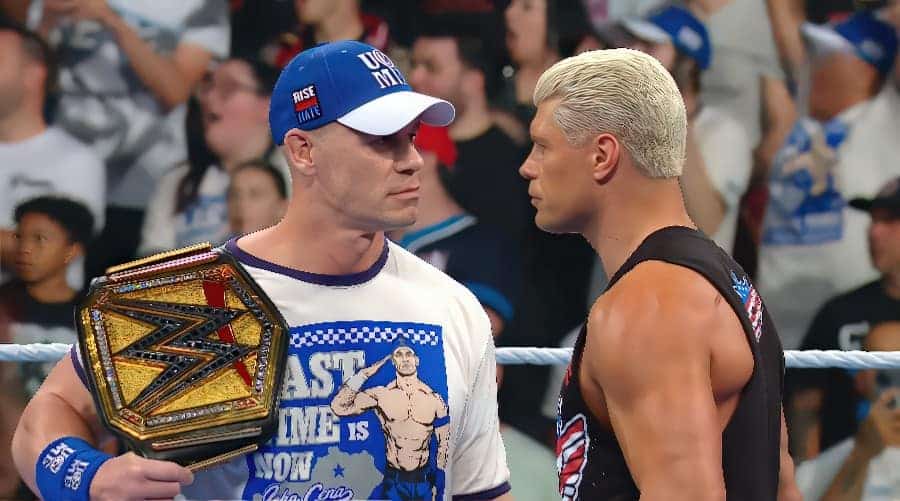
If you have ever sat near the front row of a WWE arena, you know the drill. You hear the thud of the mat, the grunts of exertion, and inevitably, the booming, unmissable voice of John Cena barking out orders to his opponent. It has become part of the lore, a comedic footnote in his legendary career.
As Cody Rhodes recently pointed out, the volume isn't an accident. It is a specific, deliberate choice of a guy who wants to ensure that every sequence, every transition, and every near-fall is executed without a hitch. Rhodes notes that Cena yells his next spots as loud as his lungs allow, which is his own unique way of ensuring the match stays on the rails.
Some fans find the lack of subtlety on the main roster breaks the immersion, turning high-stakes championship bouts into a loud rehearsal. But honestly? It is charming. In an era where production feels increasingly sterile, having a 16-time world champion shouting “Powerbomb through the table” like he’s ordering a coffee at Starbucks is a refreshing dose of reality.
The post-Hollywood reality check
Cena’s career trajectory has clearly shifted toward Hollywood, even if he still maintains a burning love for the business. While he has expressed that he genuinely prefers the atmosphere of the WWE to the film set, he has been brutally realistic about his own physical limitations.
He recently admitted to Amy Poehler that while his heart remains in the ring, his body is effectively screaming for retirement. As noted by Wrestling Inc, he recognizes he physically cannot maintain the grind of a full-time schedule anymore. We are watching the sunset of a giant, and quite frankly, if he wants to yell his head off while he is still out there, let the man be loud.
Coyote vs. Acme and the void left behind
Cena’s pivot toward projects like Coyote vs. Acme is a reminder that the world outside the squared circle is far more forgiving on the joints. Even with his film success, the guy can't escape his wrestling roots. He has spoken about his involvement in the film, and the industry impact of his pivot is a constant topic in the backrooms of the business.
The downside? We lose the artistry of a master who has spent decades perfecting the live-action chess match. The lack of discretion he shows in calling spots is a legacy of his training, a byproduct of an era where you had to be loud enough to be heard over the pyrotechnics and the deafening cheers of twenty thousand people.
We should enjoy the noise while it lasts. When he eventually hangs up the jorts for the last time, someone is going to have to actually learn to whisper their spots, and the sport might be just a little bit duller for it. Cena is currently managing the transition from full-time icon to part-time guest, and he seems at peace with the fact that he has given 100 percent to the industry for over two decades.
Maybe we stop roasting him for the volume and start appreciating that he cares enough about the flow of the match to scream it into existence. It is not about protecting the business; it is about putting on the best show possible. If that means hearing a clothesline setup from the nosebleeds, so be it.