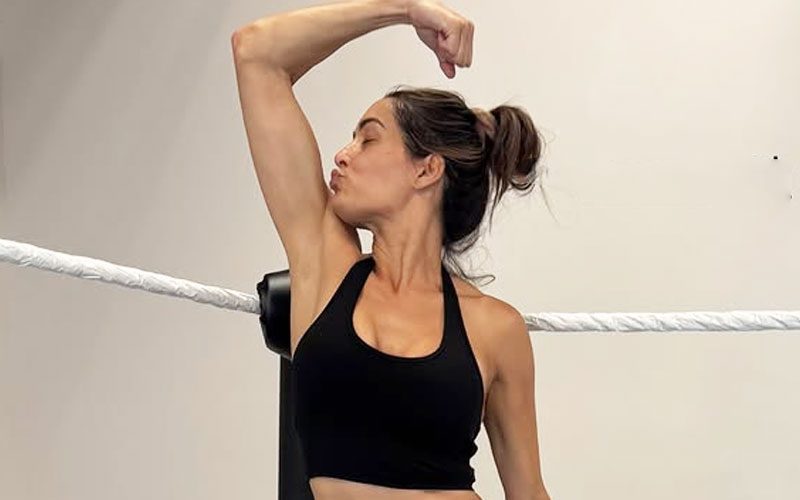
Paige resurrecting the PTO is a massive biomechanical gamble

The mechanics of a medical comeback
WrestleTalk reported this week that WWE Women’s Tag Team Champion Paige plans to bring back her signature PTO submission 'soon.' It is a short update that carries an enormous amount of physical and emotional weight. For a fanbase that watched her medically retire in 2018, the return of the hold is a massive nostalgic hook.
When Paige was medically disqualified from competing in 2018, the medical consensus was absolute. The damage from years of taking bumps, culminating in a severe impact at a live event in Uniondale, forced her into a premature retirement. Her neck was structurally compromised.
Her return to active competition was a medical marvel. It mirrored the comebacks of athletes who managed to rehabilitate severe spinal issues against overwhelming odds. But stepping back into the ring is not the same thing as rolling the physical clock back to 2014.
Since her return, Paige has heavily modified her in-ring style. She operates primarily within the safer, tightly controlled environment of the tag team division. Tag team wrestling is the traditional refuge for veterans managing severe physical limitations.
You work a fraction of the match. You come in for the hot tag, hit your explosive offense, and quickly tag out. You avoid the grinding, lengthy singles matches that expose physical degradation or invite unnecessary high-impact spots.
But resurrecting the PTO completely changes that risk profile. The move is not a simple strike or a flat bump. It is a highly complex isometric hold that requires the attacker to expose their own spine to significant torque.
The biomechanics of the Scorpion Crosslock
The PTO—the Paige Tap Out—is an inverted scorpion crosslock. It is a move innovated by the legendary Japanese wrestler Bull Nakano during her feuds with Alundra Blayze in the mid-1990s. Nakano used it to project pure sadism, bending opponents into unnatural shapes.
Paige adopted it in NXT to project dominance. The hold requires a precise sequence of movements that force both the attacker and the victim into vulnerable positions. The opponent lies face down on the mat.
The attacker steps through the opponent's legs, trapping their thighs. Then, the attacker elevates the opponent's lower body, sitting out to establish a heavy base on the mat. From there, the attacker reaches forward to hook both of the opponent's arms in a double chickenwing.
Finally, the attacker arches backward. The visual is striking, but the physics of that arch are deeply concerning for an athlete with a history of cervical fusion. When Paige leans back to lock the arms, she is forcing her own spine into severe extension.
She has to support the dead weight of her opponent's upper body while maintaining her base. If the opponent slips, or if they fail to assist in the elevation, the kinetic energy shifts abruptly. Paige's lower back and fused neck have to absorb that sudden, violent change in momentum.
An Anterior Cervical Discectomy and Fusion surgery fundamentally alters the biomechanics of the neck. When a disc is removed and the adjacent vertebrae are fused together with titanium hardware, that segment of the spine no longer bends. The loss of mobility at the fusion site forces the vertebrae above and below the hardware to work harder.
They absorb more shock and handle more rotation. When you arch backward and pull on two arms, you are relying entirely on the integrity of your cervical and thoracic spine. It is a brutal isometric stress test.
The tag team division problem
This brings us to the most glaring issue with this tease. Is the WWE Women’s Tag Team Championship worth that level of physical risk? The booking of these titles has been notoriously erratic for years.
WWE creative rarely shows a sustained commitment to the women's tag division. The belts are frequently defended in rushed, under-promoted matches on television. Teams are assembled from spare parts in the locker room and disbanded without explanation.
Risking the structural integrity of a surgically repaired neck for a pop on a random episode of Friday Night SmackDown seems mathematically unsound. The mileage on her neck is finite. Every severe arch spends a little bit of that remaining physical capital.
If a wrestler is going to dip into their limited reserve of health, it should be for a main event storyline. It should be for a major premium live event. It should not be for a random tag team title defense that received zero promotional buildup.
Furthermore, tag team wrestling introduces chaos into the application of the hold. It relies on misdirection, blind tags, and sudden run-ins. Imagine Paige locking in the PTO in the center of the ring, arched back and completely immobile.
Her peripheral vision is pointing directly at the arena ceiling. At that exact moment, the illegal opponent enters the ring to break up the submission. A dropkick to the face or a running knee strike while Paige's neck is fully extended is a terrifying variable.
The margin for error is non-existent. A healthy neck can absorb a botched break-up spot. A fused neck faces a catastrophic failure. The geometry of the Scorpion Crosslock leaves the attacker entirely exposed to outside interference.
The mathematics of television matches
Let us look at the mathematics of a television tag team match in the modern era. The match might be allotted eight minutes total. Two minutes are eaten by elaborate entrances. Another two minutes run through a mandatory commercial break.
The actual televised wrestling is reduced to a series of rushed spots designed to hit a commercial cue or a strict hard-out time dictated by the broadcast truck. In that compressed environment, wrestlers rush their setups.
When a wrestler rushes a setup, mistakes happen. A cue is missed. A referee is slightly out of position. Someone slips on a sweat spot on the canvas. The PTO is not a move you can rush.
It requires a deliberate, step-by-step application. You have to ensure the opponent's legs are correctly isolated. You have to secure the base on the mat before reaching back for the arms.
If you rush the application to beat a commercial break, you compromise your base. If you compromise your base with a fused neck, you are inviting disaster. The physics simply do not forgive a sloppy setup.
A psychological victory over medical reality
Wrestlers are uniquely stubborn regarding their physical branding. The PTO is inextricably linked to Paige's identity. It was the move she used to dominate NXT, and the move that won her the Divas Championship on her first night on the main roster on April 7, 2014.
When she debuted the night after WrestleMania 30, she shocked the audience by defeating AJ Lee. That era was defined by a distinct visual style, and Paige aggressively rejected it. She was pale, dressed in black, and wrestled a heavily physical, aggressive style.
At the center of that physical style was the PTO. It was a statement of intent. It wasn't a quick roll-up or a flashy transition; it was a grueling, painful-looking submission.
Not being able to use it likely feels like a silent concession to her injury. By bringing it back, she reclaims a piece of her history that the medical disqualification stole. It is a powerful psychological victory.
Look at how other returning stars handled their injuries. When Steve Austin returned from his devastating neck injury at SummerSlam 1997, he fundamentally altered his approach. He became a brawler and relied on the Stunner, a move that protected his cervical spine.
When Edge returned in 2020 after a nine-year retirement for spinal stenosis, he eliminated high-angle back bumps. He grounded his offense and relied on the Spear, a linear impact move that allowed him to control the collision.
Bryan Danielson is the counter-example. Despite severe neck histories, Danielson routinely engages in high-risk spots, wrestling as if the injuries never happened. Paige has mostly followed the Austin model since her return, minimizing risk.
The sudden tease of the PTO is a pivot toward the Danielson model. It is an embrace of risk for the sake of the art. But Danielson takes those risks in main event matches that define pay-per-views, not in rushed television tag bouts.
The clearance protocols
"WWE Women’s Tag Team Champion Paige has said that she will bring back her old PTO submission finisher 'soon.'"
The fact that she is publicly teasing the move speaks volumes about WWE's current medical clearance protocols. A decade ago, a wrestler with her injury history would never be allowed to attempt a high-angle submission.
The company's medical staff operates with intense scrutiny regarding spinal injuries. The clearance to use the PTO means that the medical team believes the surrounding musculature in her neck is strong enough to support the fusion.
It also means she has convinced the producers that she can execute the hold safely without putting herself in a compromised position. This likely involves subtle modifications to the move that the average fan will not notice.
Perhaps she won't arch back as far. Perhaps she will rely on the opponent to support more of their own body weight. These invisible adjustments are the secret language of professional wrestling.
They allow battered athletes to perform miracles in the ring while protecting their surgically repaired bodies. But even with modifications, the inherent risk remains. A modified Scorpion Crosslock is still a Scorpion Crosslock.
Yet, professional wrestling is live theater performed at high speeds. You can script the match perfectly, but you cannot script gravity or a slightly misplaced boot. Every match she wrestles now is bonus time.
When she finally steps through the legs and raises her arms in that familiar pose, the arena will erupt. The clip will generate millions of social media impressions. But underneath the spectacle, the harsh technical reality remains.
She is trading a high-risk biomechanical stress test for a temporary emotional high. As fans, we can celebrate the return of the PTO. But we will also be quietly holding our breath, watching the angle of her neck instead of the tapping hand of her opponent.
WWE Authentic Wear Roman Reigns Bloodline T-Shirt
Acknowledge your Tribal Chief with the official Bloodline tee.
Frequently Asked Questions
What is the PTO submission move in WWE?
Why did Paige medically retire in 2018?
How does Paige wrestle safely after her neck injury?
Why is the PTO submission dangerous for Paige's neck?
Who invented the inverted scorpion crosslock hold?
More Coverage
Top 10: Defining Wrestling Milestones of 2026
19 minutes ago
Top 10: Defining WWE Moments of the Modern Era
19 minutes ago
Why Madison Square Garden proved WWE still needs to refine its main event story
34 minutes ago
Tom Brady at WWE: A celebrity crossover we didn't ask for
34 minutes ago
Top 10: main
35 minutes ago
WWE is fumbling Gunther's legendary rub while Saraya tells the truth
36 minutes agoMore Analysis

Paige’s return to the ring demands more than just a nostalgic run
2 months, 3 weeks ago
Paige's emotional UK return exposes a massive WWE tag team booking crisis
3 weeks ago
Brie Bella and Paige team-up was a desperate scramble, not a masterpiece
1 month, 3 weeks ago
Paige is back but the WWE division she left no longer exists
2 months, 4 weeks ago
Saraya’s WWE return isn't building toward a final in-ring run
2 months, 3 weeks ago