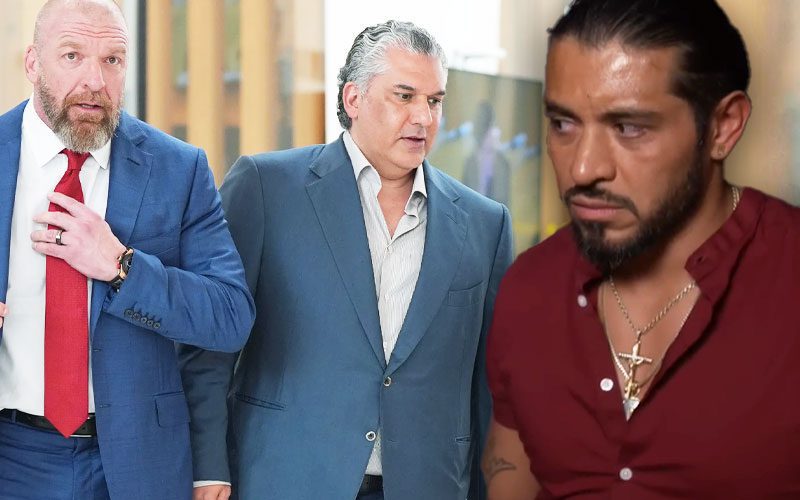
The status of Sammy Guevara and Tay Melo nears a breaking point
AEW is facing a persistent talent retention headache as the status of Sammy Guevara remains shrouded in administrative ambiguity. Despite flashes of promise during his tenure, Guevara has been absent from active programming since his last recorded appearances in 2026. This is not an isolated incident but part of a wider trend where talent communication channels appear to be fraying.
Reports suggest high-level discussions regarding his contract status and potential release requests have surfaced frequently over the last twelve months. While the company maintains a tight lid on internal roster shifts, the silence surrounding Guevara is deafening to those tracking the AEW star's trajectory. Speculation is high, but the confirmed facts indicate that he is currently removed from active long-term rotation.
Contract instability and the release request pipeline
The industry knows all too well how contract disputes play out. Historically, wrestlers seeking movement often hit a wall when promotion offices choose to freeze booking rather than grant an immediate exit. We have seen this play out with various talents across both WWE and AEW over the last five years, where the 'frozen status' becomes a punitive measure for requesting a release.
Guevara’s history in the company includes significant highs, such as his runs within the Inner Circle and his multiple TNT Championship victories. However, the lack of output since 2025 suggests that the creative wells have run dry. When a top-tier performer is pulled from television without a clear injury designation, the business reality shift usually points to professional friction or contract renegotiations stalled at the finish line.
Managing the fallout of silent departures
Tay Melo has also spent significant time away from the ring, complicating the pair’s professional narrative. Injuries have played a role, but the length of their mutual absence suggests deeper issues within the talent management branch. A promotion thrives when its mid-card anchors are active, yet AEW continues to allow prime performance years to burn off in this vacuum.
The critical observation here is one of wasted potential. Guevara’s ability to execute complex spots remains elite, but high-risk wrestling requires consistent ring time to maintain timing and safety. By shelving him for extended blocks, AEW effectively damages his market value and his physical sharpness. The company needs a clear declaration on whether he fits the 2026 booking strategy or if a formal departure is imminent.
Historical precedents for roster stagnation
In the late 2010s, similar situations occurred in legacy promotions, leading to an erosion of fan interest in specific acts. When performers simply vanish, the audience disconnects. If AEW cannot reconcile the difference between creative frustration and contract obligations, they risk alienating a fanbase that values continuity. Fans refresh social media feeds not for press releases, but for the clarity of who is actually standing in the ring.
Management must address whether the current roster bloat has made certain talents expendable, even if they were formerly central to the product’s identity. Keeping a talent in limbo—effectively paying them to stay home—is an inefficient use of budget and a disservice to the performer's career. The total number of missed matches since the initial request in 2025 is substantial, totaling over 100 potential appearances across television and pay-per-view events.
The strategic implication of roster silence
Going forward, external observers will look for signs of life in their professional status. A return to the ring requires a conditioning period, and the longer the gap, the greater the likelihood of re-injury upon return. This is not just a personnel matter; it is a signal of how the promotion handles its veteran roster. If the goal is long-term stability, burying talent in the archives is an outdated strategy.
For the sake of both the performers and the audience, a definitive path forward is necessary. If the 2025 request holds, then the delay in processing has been significant. We are approaching a point where a resolution is not just wanted, but required to maintain professional credibility. The promotion’s next move will define whether they prioritize talent development or contractual control.