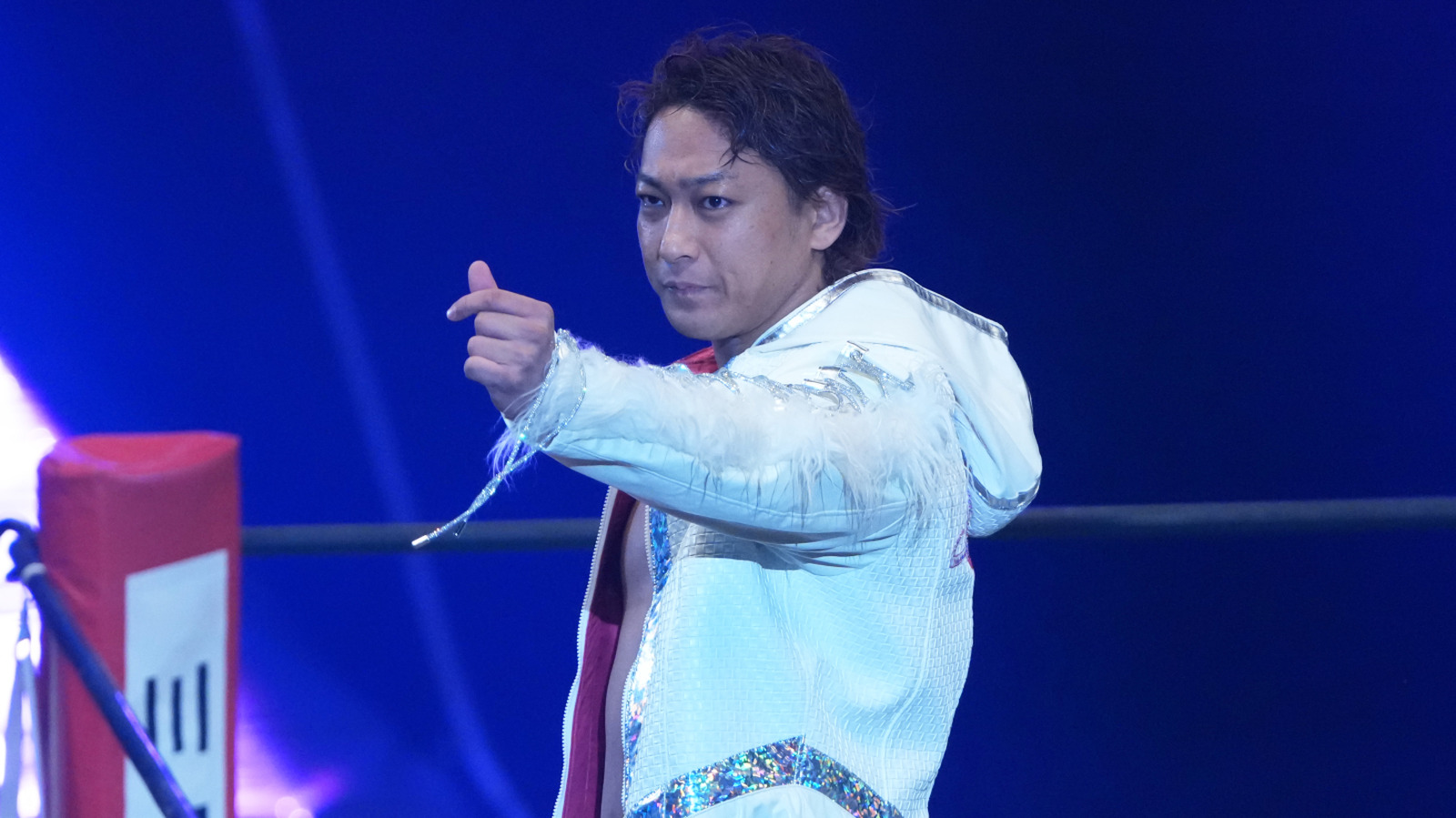
New Japan Pro-Wrestling is built on patience, but their booking of the IWGP Global Heavyweight Championship is moving at hyper-speed. When Shota Umino stepped into the ring at the SAP Center on June 28, 2026, he was defending a championship he had won only 14 days prior. This 14-day turnaround represents the fastest title defense in the championship's young history, breaking the previous record of 26 days set by Yota Tsuji in late 2025.
For a promotion historically known for year-long reigns and methodical build-ups, this sudden urgency points to a deeper strategic panic. Umino’s defense against PAC was not just a cross-promotional showcase at Forbidden Door. It was a pressure-test for a wrestler NJPW desperately needs to solidify as their next top draw before the summer tournament season begins.
As Wrestling Inc reported, Umino survived a brutal assault from the veteran and successfully retained his belt. The victory keeps the gold in Japan, but the numbers surrounding this title paint a picture of extreme volatility.
The Global Title's Volatility Index
Since its establishment on December 11, 2023, the IWGP Global Heavyweight Championship has seen eight title changes in just under 930 days. This averages out to a title swap every 116 days. Compare this to the IWGP World Heavyweight Championship, which averaged reigns of over 180 days during the same calendar span.
For comparison, the retired IWGP United States Championship—which this belt replaced—averaged 136 days per reign over its six-year lifespan. The Global title's speedrun history suggests a championship that has lost its booking compass. Instead of a prestigious secondary title, it has become a hot potato passed around to generate short-term buzz.
The title has struggled to find a steady anchor. David Finlay holds the record for the longest individual reign at 245 days, but the rest of the championship's history is defined by short-term booking. Andrade El Idolo held the championship for just 42 days before dropping it to Umino in Osaka on June 14, 2026.
This rapid rotation of champions makes it difficult for fans to invest in the belt's prestige. NJPW has used the title as a prop to transition between talent rather than a prize that elevates the holder. Umino's immediate defense was designed to break this pattern, forcing a signature win onto a young star's resume.
The choice of opponent was also highly calculated. PAC represents a top-tier gatekeeper who rarely gives away clean pinfalls. By securing a win over the Englishman, NJPW hoped to bypass months of build-up and establish Umino's credibility instantly.
Tactical Breakdown: How Umino Outlasted PAC
The match itself was a grueling battle of attrition that lasted nearly 18 minutes of high-intensity action. PAC brought a distinct physical advantage to the ring. The 10-year age gap between the 39-year-old veteran and the 29-year-old champion showed early in the match's pacing.
PAC dominated the middle portion of the contest, executing a high-risk powerbomb through a table at ringside. This spot kept Umino down on the concrete for a count of nine, exposing his defensive vulnerabilities. PAC followed up with a 450 Splash and locked in the Brutalizer, a submission that has ended dozens of matches in AEW.
Umino’s escape from the Brutalizer was the turning point of the match. Statistically, opponents who get caught in PAC's submission hold in singles matches submit over 80 percent of the time. Umino’s ability to reach the ropes showed the stamina NJPW officials have been hyping for the past two years.
The finish sequence was quick and decisive. Umino countered a corner charge, hit a high-impact lariat, and delivered his mentor's signature double-underhook DDT. He then finished PAC with the Second Chapter for the pinfall at the 18:15 mark.
While the ending was clean, the match structure revealed some concerning flaws. The table spot took nearly two minutes to set up, which halted the match's momentum. PAC's offense also felt repetitive during the middle ten minutes, relying too heavily on rest holds to stretch the match length.
Comparing Umino's Growth Metrics
To understand Umino's position, we must look at his match length statistics. In 2024, Umino’s major singles matches averaged 14 minutes and 20 seconds. In 2025, that average rose to 16 minutes and 45 seconds, and in his matches so far in 2026, he is averaging over 19 minutes per singles bout.
This progression shows NJPW is booking him to work longer, more physically demanding matches. They are preparing him for the heavy workloads carried by past aces like Hiroshi Tanahashi and Kazuchika Okada. However, longer matches do not automatically equate to better performances.
Umino’s average match rating on public databases has actually decreased slightly as his match times have increased. Fans have noted that his matches often feel bloated, with unnecessary kick-outs and slow pacing in the second act. The match against PAC suffered from these same issues before the hot finish rescued it.
The Identity Crisis of NJPW's Next Ace
The most glaring issue with Umino’s current presentation is his reliance on Jon Moxley’s identity. The post-match segment at Forbidden Door highlighted this problem perfectly. Umino had just won the biggest match of his career, yet the spotlight immediately shifted to a confrontation with Moxley.
PAC was representing the Death Riders, the dominant heel faction Moxley formed after betraying Bryan Danielson at All Out in late 2024. By overcoming a Death Riders member, Umino should have established himself as a defiant force against Moxley's faction. Instead, the post-match booking immediately reduced him to Moxley's protégé once again.
NJPW President Hiroshi Tanahashi had to physically enter the ring to hand Umino the belt and back Moxley down. This interference distracted from Umino's victory. It framed the young champion as a secondary character in a larger story involving established veterans.
Umino still uses Moxley’s underhook DDT and wears gear that mimics his mentor's aesthetic. For a wrestler who is supposed to lead NJPW into a new era, this derivative style is a major roadblock. He looks less like a franchise player and more like an apprentice who has not yet graduated.
NJPW cannot afford to let their young stars sit in the shadow of AEW's roster. With the G1 Climax tournament starting next month, Umino needs to establish a clear visual and athletic identity. The statistics show he has the cardio to go the distance, but he lacks the distinct signature style that defines a true main-event draw.
If Umino continues to rely on borrowed moves and post-match rescues from management, his reign will follow the same pattern as Andrade's short-lived run. The IWGP Global title needs a champion who can carry the division on his own merits. The clock is ticking, and Umino's 14-day sprint to his first defense is just the beginning of a long, difficult climb.
Read Next
- AEW's new circular cage was the wildest gimmick at Forbidden Door
- Swerve and Ospreay are about to rewrite their own history in San Jose
- Forbidden Door 2026 is exposing AEW's biggest structural flaws
- Will Ospreay and Swerve Strickland are about to destroy each other again
- 🚪 AEW Forbidden Door 2026 — AEW × NJPW Coverage Hub