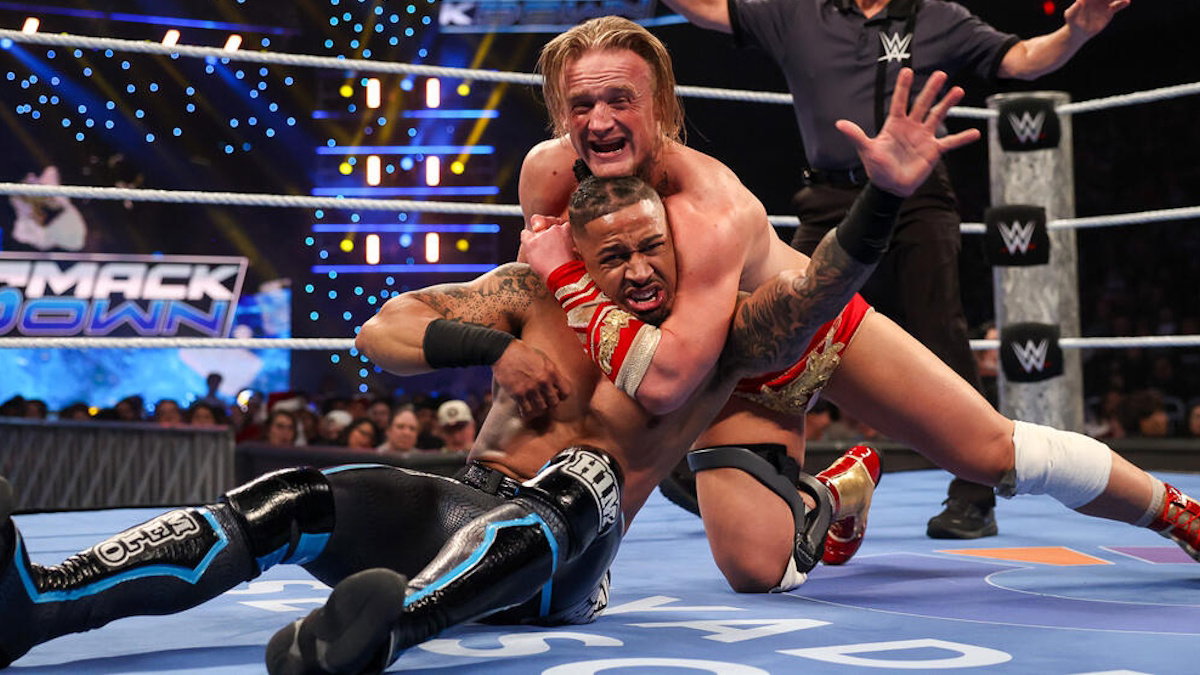
Measuring the distance between growth and fatigue
WWE’s aggressive push into international markets reaches a high-water mark this season. The recent Australian tour wasn’t merely a stop on a ledger; it served as a tactical stress test for the current roster. When elite performers move between time zones at this cadence, the human toll becomes quantifiable. Rhea Ripley recently revealed that the sheer intensity of the travel cycle led to a physical collapse backstage due to a panic attack, a stark reminder that the logistics of a global schedule often outpace personnel recovery metrics.
The physical limits of the schedule
Ripley’s experience during the Australia tour highlights a recurring issue in modern wrestling logistics. Since signing in 2017, Ripley has seen the company shift from regional developmental models to a continuous, high-travel global cycle. According to recent reports, the mental and physical strain during international runs has become a tangible performance variable. When the schedule forces rapid, high-stakes appearances, the margin for error in rest periods shrinks to near zero.
The hidden performance gaps
We often focus on the spectacle of the matches while ignoring the preparation time lost to airports and hotels. In professional football, we track player load in minutes and sprint distances; in wrestling, the equivalent is the percentage of downtime between air-travel-heavy domestic show blocks. When performers spend disproportionate amounts of time on regional circuits, individual consistency drops. This creates a ripple effect where creative momentum is halted by mandatory recovery windows.
Dissecting the storytelling disconnect
Performance isn't just about athletic load; it is about the internal logic of the character. On a recent installment of WWE Raw, Oba Femi delivered an unscripted segment that left veteran onlookers like Bully Ray signaling a disjointed rhythm. As reported by Wrestling Inc, the promo structure failed to maintain internal consistency, causing the audience to detach from the narrative stakes. When performers are exhausted from travel, the precision of verbal delivery and character pacing often suffers.
Bully Ray revealed the one moment from Oba Femi’s promo this past Monday on WWE Raw that left a bad taste in his mouth, and ultimately 'lost' him.
The absurdity of planned variance
Management often dictates the trajectory of a career through creative constraints that defy standard win-loss logic. Curt Hawkins famously petitioned for the extension of his infamous losing streak, a career-long arc that occupied hundreds of television hours. By intentionally maintaining a 0-269 record, Hawkins proved that the value of a performer is sometimes tied inversely to their immediate win probability. This is a counter-intuitive finding: long-term asset value can be manufactured through statistical futility rather than immediate push strategies.
Scripting the perception of truth
The institutional veneer of WWE extends to the media surrounding it. Jackie Redmond recently clarified that even the broadcast countdown shows are heavily scripted, challenging the public notion that these segments offer organic insight. If the supplementary content is as curated as the scripted segments on Monday and Friday nights, the total volume of reality-based narrative is diminishing. In a space where fans crave authenticity, the reliance on pre-written scripts for pundits reduces the viewer's ability to engage with the actual health and performance realities of the talent.
Ultimately, the disconnect stems from a system that demands peak performance while simultaneously limiting the bandwidth for genuine recovery or spontaneous character growth. Whether it is a backstage collapse or a disconnected promo, the numbers suggest that the current operational tempo is nearing a ceiling. If the primary focus remains on international expansion without adjusting the load for talent, the quality of both discourse and physical execution will likely continue to face these avoidable hurdles.