The Mask Outlives the Man
Pull up a barstool, grab a cold one, and let's talk about the absolute circus NJPW served up yesterday in Tokyo. If you thought retirement shows were supposed to be dignified affairs where old veterans cry and receive gold watches, you clearly missed Tiger Mask IV's final stand at Korakuen Hall. The company packed a sellout crowd of 1,490 fans into the venue to watch a 56-year-old man run a gauntlet of nostalgia, strange booking, and cheap run-ins.
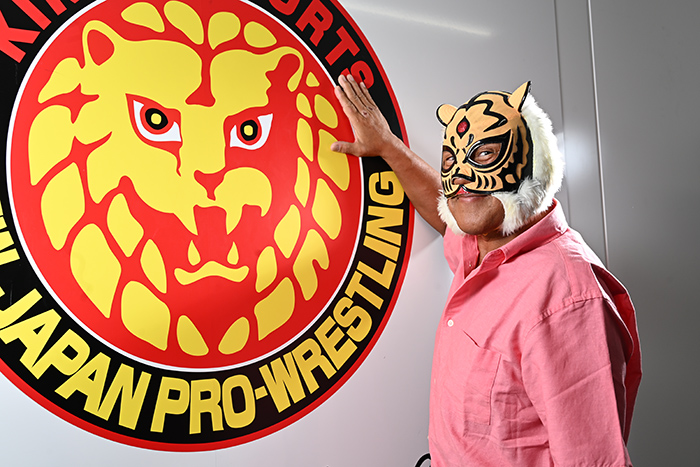
According to the official results reported by PWInsider, last night marked the end of an era that spanned three decades. Yoshihiro Yamazaki has been wearing that yellow plastic tiger head since 1995, making him the longest-tenured feline in professional wrestling history. Yesterday, NJPW decided the best way to honor his 31 years of service was to book him in two separate matches that both ended in draws.
That is the kind of brain-dead booking that makes you wonder if Gedo has been spending too much time at the local izakaya. Yamazaki was never the unbelievable genius that Satoru Sayama was. He wasn't the high-flying innovator who captured the imagination of the entire country in the early eighties.
Instead, he was the workhorse. He was the guy who stayed in the midcard, put over the young guys, and kept the junior heavyweight division from collapsing. When NJPW was struggling to draw five hundred people to Korakuen Hall in the mid-2000s, Yamazaki was there, working his tail off.
He deserves all the respect in the world, even if his retirement show was booked like a fever dream. The man sacrificed his body for decades for a company that often forgot he was even on the roster. It was a career built on reliability rather than main-event glory.
The Undercard Meat Grinder
Before we get to the main event weirdness, we have to talk about the undercard. NJPW loves their multi-man tag matches like a drunk guy loves late-night diner food. They threw almost the entire roster into a blender, resulting in five tag bouts that ranged from fun showcases to absolute filler.
The opener saw Shota Umino, Satoshi Kojima, and Yuji Nagata defeat Togi Makabe, Toru Yano, and Taisei Nakahara in less than five minutes. Umino secured the win by locking Nakahara in a Boston Crab, which felt less like a wrestling transition and more like a varsity athlete bullying a freshman. It was quick, brutal, and exactly what Nakahara deserved for trying to step to the veterans.
Then the United Empire stable showed up to assert some dominance. Jake Lee, Great-O-Khan, Francesco Akira, Jakob Austin Young, and Zane Jay went up against Hirooki Goto, YOSHI-HASHI, YOH, Ryusuke Taguchi, and Tatsuya Matsumoto. The match went nine minutes and twenty-eight seconds, culminating in Jake Lee planting Matsumoto with a running knee strike for the pin.
Lee continues to look like a guy who belongs in a movie villain role, while Matsumoto was just there to take the fall. It was fine, but it felt like the kind of match you watch while checking your phone. There was zero tension and even less story.
We also got a bizarre combination of Olympic prestige and comedy wrestling. Aaron Wolf, the Olympic judo gold medalist, teamed up with Jado and Oleg Boltin to take on Unbound Company's trio of Gedo, OSKAR, and Yuto-Ice. The highlight of the night was Wolf forcing Gedo to submit to a Triangle Choke at the nine-minute and fifty-five-second mark.
Watching an actual Olympic champion choke out a sixty-year-old manager in a bandana is the exact kind of beautiful nonsense that keeps us coming back to Japanese wrestling. You can find the full breakdown of these matches in the NJPW event summary on PWInsider. It was highly entertaining, even if it was functionally meaningless.
House of Torture then did their usual routine, which is to say they cheated their way to a victory. Ren Narita, SANADA, DOUKI, SHO, and Yoshinobu Kanemaru defeated Yuya Uemura, Taichi, El Desperado, Master Wato, and Masatora Yasuda. SHO ended the match at nine minutes and twenty seconds by hitting his Shock Arrow finisher on Yasuda.
It was a standard House of Torture match, complete with the usual interference that makes you want to throw your beer at the screen. Honestly, the sooner NJPW moves past this group's constant shenanigans, the better off we all will be. The fans are tired of the constant garbage finishes.
Finally, TMDK got a win over Unbound Company in an eight-man tag. Zack Sabre Jr., Hartley Jackson, Ryohei Oiwa, and Kosei Fujita took down Yota Tsuji, Shingo Takagi, Taiji Ishimori, and Daiki Nagai. Kosei Fujita looked like a star in the making, pinning Nagai with a bridging German suplex at ten minutes and nine seconds.
Fujita has been on a tear lately, and this was another reminder that the young generation is ready to take over the spot. If NJPW has any sense, they will build the junior division around guys like Fujita instead of relying on the past. The veteran presence is nice, but youth wins championships.
A Double Dose of Draw Drama
But let's get to the real reason everyone was watching. The main event was booked as a special doubleheader of five-minute exhibition matches. The first match pitted Tiger Mask against Tommy Billington, who is the nephew of the legendary Dynamite Kid. This was designed as a direct tribute to the historic matches between Satoru Sayama and the original Dynamite Kid from the early eighties.
The issue is that you cannot recreate magic by just putting the same masks and names in the ring. The match itself was fine, but it felt incredibly rushed. They hit the five-minute time limit just as they were getting into second gear.
Billington tried his best to channel his uncle's explosive power, but five minutes is barely enough time for a modern wrestler to break a sweat. It felt like NJPW wanted the nostalgia points without actually putting in the work to build a real contest. They wanted the image of the Tiger Mask and Dynamite Kid names on the marquee, but they didn't want to give them the time to actually tell a story.
It was a missed opportunity that left the crowd feeling a bit flat. Then, the booking went off the rails. Before Tiger Mask could even catch his breath, Rocky Romero ran out dressed as Black Tiger IV and attacked both men.
This set up the second five-minute exhibition match. Yes, instead of a clean, emotional farewell, we got a surprise attack from a guy in a secondary mask who hasn't been relevant to the Tiger Mask storyline in years. It was the kind of booking that makes you roll your eyes and take a long sip of your drink.
The match between Tiger Mask and Black Tiger IV also went to a five-minute time-limit draw. At this point, the Korakuen Hall crowd was starting to wonder if they were going to get any actual finishes. Fortunately, Romero demanded more time, and the referee restarted the match.
Tiger Mask immediately caught Black Tiger and pinned him with a Tiger Suplex Hold in exactly 18 seconds. The crowd popped, but it felt like a cheap payoff to a weirdly structured segment. Why did we need two separate draws just to get to an eighteen-second squash?
It feels like Gedo was playing booking simulator on his phone and forgot how real human pacing works. If you wanted Tiger Mask to win with his signature suplex, just book a single ten-minute match. The restart gimmick felt cheap, like a magician showing you how the trick works before actually doing it.
It was a bizarre choice that detracted from the emotional weight of the night. It felt like a waste of the crowd's energy. Still, the post-match ceremony saved the night from feeling like a total waste.
The Final Lock-Up
Romero unmasked, hugged Yamazaki, and presented him with his Black Tiger mask. It was a genuine moment of respect between two veterans who have traveled the world together. The NJPW roster then flooded the ring to present flowers, which is the traditional Japanese way of saying thank you for destroying your knees for our entertainment.
You could see the toll the career had taken on Yamazaki, but he stood tall. He was ready for the next chapter. Then came the moment that brought the house down.
Satoru Sayama, the original Tiger Mask, walked out to the ring. Sayama has been dealing with severe health issues for years, so seeing him standing in the ring was a massive deal. The two men locked up in the center of the ring for one final, symbolic struggle.
It was slow, it was heavy, and it was absolutely beautiful. It was a passing of the torch that happened thirty years too late, but it still carried immense emotional weight. The Tiger Mask legacy is a heavy burden to carry.
Every wrestler who puts on the mask is compared to Sayama, which is a losing battle from day one. Yamazaki was the only one who embraced the role and made it his own for a lifetime. He didn't run away from the mask to become Mitsuharu Misawa, and he didn't let it destroy his body like others did.
He just put the hood on every night and did his job. That is why his peers respected him so much. Yamazaki is expected to stay with the company as a trainer.
This is probably the best place for him. He has decades of experience to pass down to the young guys in the dojo. The junior heavyweight division is in a weird spot right now.
With guys like Hiromu Takahashi and El Desperado getting older, NJPW needs new stars. Yamazaki's training might be more important than his wrestling ever was. The night ended with the traditional ten-bell salute.
As the bell rang for the tenth time, Yamazaki stood in the ring, surrounded by his peers and the ghosts of his career. It was a fitting end to a career that was defined by reliability rather than flash. Yamazaki was never the megastar that Sayama was, but he was the guy who kept the division alive when everything else was falling apart.
He was the anchor, and now that anchor is finally being lifted. NJPW will survive, but it won't be the same without the fourth Tiger Mask holding down the fort.