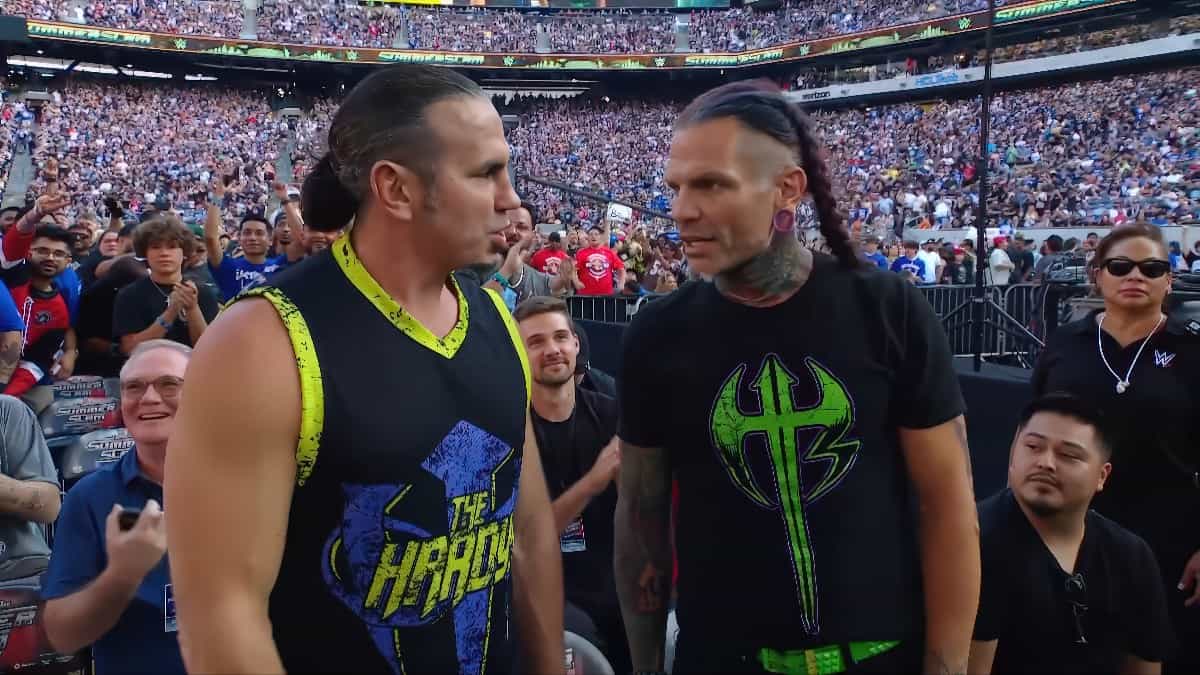
TNA is playing a dangerous game with its current booking patterns
The thin line between momentum and repetition
Professional wrestling promotions often fall into a trap of recurring matchups, and TNA’s current trajectory suggests they are standing perilously close to that edge. When analyzing the card for next week’s TNA Impact, the reliance on high-profile bouts without clear, long-term stakes becomes glaringly obvious. Promotions survive on the tension of the unknown, yet current programming feels increasingly iterative.
The announcement of next week’s main events, as reported via PWInsider, suggests a promotion leaning heavily on familiar names to anchor the broadcast. While these wrestlers possess undeniable technical capability, the lack of fresh variables in their recurring feuds diminishes the impact of the television product. Strategic booking requires a delicate balance of marquee talent and mid-card development, but the current configuration favors safety over spectacle.
Tactical stagnation in the ring
If we examine the pacing of matches on recent TNA cards, there is a noticeable plateau in creative output. Wrestling, at its core, is a series of problem-solving exercises. If the same competitors execute the same counter-sequences over three-week arcs, the audience stops anticipating the finish. The reliance on established main-eventers for weekly television slots might provide a temporary ratings cushion, but it suppresses the upward mobility of tier-two talent.
Consider the logistical burden of constantly featuring top-tier workers on standard episodes. When these individuals are exposed to standard television slots week after week without meaningful shifts in character motivation or tactical application, their perceived scarcity disappears. The marginal utility of a "big time" match drops whenever it is deployed on a standard broadcast slot without a significant narrative catalyst.
The danger of ignoring roster depth
A promotion’s strength is usually found in its ability to cycle talent through the mid-card, creating new challengers. TNA’s current approach risks creating a glass ceiling that is difficult to break. If the viewing public becomes conditioned to expect the same four or five names in the closing segment of every broadcast, the lower-lever workers effectively become white noise.
Effective booking requires the courage to bench a main-event star for a cycle to allow the audience to miss them. Allowing a talent like the one recently caught in litigation-heavy headlines elsewhere is a different beast, but in TNA's case, the self-inflicted repetition is the real issue. The booking team has the resources to build intrigue, yet they frequently opt for high-floor, low-ceiling matchups that offer little in the way of long-term investment. They are prioritizing the match quality of the 12-minute television sprint over the story arc of the 3-month rivalry.
The hidden cost of safe booking
Perhaps the most critical observation is that TNA’s obsession with "clean" professional wrestling—matches devoid of outside interference or character-driven chaos—has actually made the product more predictable. In the broader context of the industry, where corporate shadow-boxing often defines the news cycle, the wrestling itself should serve as the primary escape. When the action on television feels like a repetition of the previous Tuesday, the escape loses its efficacy.
Booking committees often fear losing the interest of the casual viewer by shifting focus away from the marquee names. This is a fallacy. The casual viewer is more likely to be retained by a compelling, evolving narrative than by the 20th iteration of a standard wrestling match between two competitors who have already capped their chemistry. It is time for TNA to utilize its roster depth, rotate the headliners, and inject genuine stakes back into the Impact format before the audience settles into a permanent state of apathy.
WWE Cody Rhodes Elite Collection Action Figure
Bring the American Nightmare to your shelf with this highly detailed, poseable f
Frequently Asked Questions
What is the primary criticism of TNA’s current booking strategy?
Why is relying on top-tier wrestlers for every broadcast risky?
How does TNA’s booking affect mid-card wrestlers?
What is the problem with repetitive match sequences in TNA?
How can TNA improve its current television product?
More Coverage

Top 10: Definitive WWE Moments of the Modern Era
an hour ago
Why the TNA-to-WWE pipeline is actually a strategic pivot
2 hours ago
Top 10: The Definitive Ranking of Mid-Year 2026 Wrestling Moments
10 hours ago
Steve Maclin and Sami Callihan are leaving TNA and AEW is ready to pounce
10 hours agoTNA is bleeding out its personality and nobody is safe
18 hours ago
TNA is cleaning house and leaving fans with more questions than answers
19 hours agoMore Analysis
TNA is playing a dangerous game with this Champions Challenge
1 month, 3 weeks ago
TNA is playing a dangerous game with its current booking momentum
3 months, 2 weeks ago
TNA is spinning its wheels while the rest of the industry accelerates
1 week, 4 days ago
TNA is playing a dangerous game with its thinning roster
4 days, 10 hours agoTNA is playing a dangerous game with its booking in Philly
1 week, 1 day ago