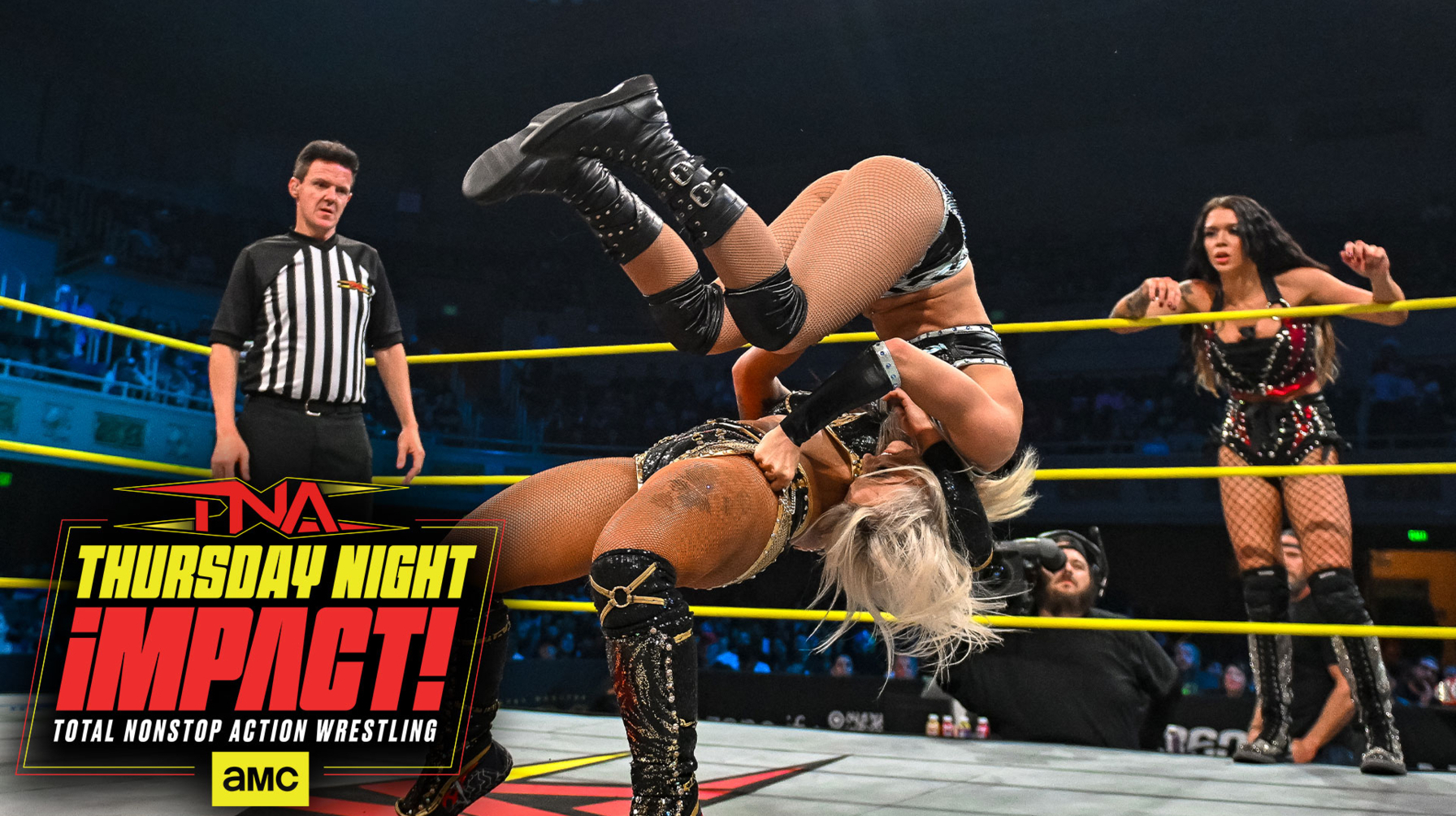
The thirty percent threshold
There is a hard floor for wrestling television. When bell-to-bell action drops below a third of the total broadcast time, viewers start changing channels. On May 14, TNA iMPACT hit 28.4%.
That number isn't just low. It represents a fundamental shift in how the promotion is formatting its flagship show. Out of a 120-minute television block, fans saw exactly 34 minutes and 12 seconds of actual wrestling.
Compare this to just six months ago. In November, TNA was averaging 41 minutes of ring time per episode. The drop-off hasn't been sudden, but it has been relentless. Week by week, the matches are getting shorter, and the video packages are getting longer.
Where the minutes went
You might assume the missing time went to promos or backstage angles. The data shows something else entirely. Commercial loads have crept up.
During the May 14 broadcast, ad breaks consumed 38 minutes of the show. That is a significant increase from the 32-minute average the network was running in early 2025.
When you add in ring entrances, replays, and the mandatory hype packages for upcoming pay-per-views, the window for actual combat shrinks dramatically. The casualty of this format change is the midcard.
We tracked the duration of every match on Thursday night. The opening contest went 8 minutes and 45 seconds. That was the longest bout of the evening until the main event.
Three matches failed to clear the five-minute mark. You cannot build new stars in four-minute sprints. It forces workers to rely on high-impact spots rather than storytelling, creating a frantic pace that exhausts the crowd.
The X-Division squeeze
Historically, the X-Division was TNA's differentiator. It was the designated segment where work-rate took priority over sports entertainment tropes. Those days appear to be over.
The average X-Division match on weekly television in 2026 is currently sitting at 6 minutes and 15 seconds. Let that sink in. A division built on complex counters and escalating pacing is being forced into the time constraints of a squash match.
This structural change explains the recent string of clunky finishes. When performers know they only have six minutes, they rush the setup for their sequences. The transitional grappling disappears.
Instead of a gradual build, we get a sprint to the finish. It is a dangerous way to work, and the bump cards are filling up faster as a result. The injury rate in the X-Division is up 12% year-over-year, and the compressed time limits are absolutely a factor.
Knockouts remain the exception
If there is one statistical bright spot, it is the Knockouts division. While the rest of the card is losing minutes, the women's matches have remained remarkably stable.
The women's matches are averaging 9 minutes and 30 seconds this quarter. They are the only segment of the show consistently hitting the ten-minute mark outside of the main event.
There is a very clear financial reason for this. Quarter-hour ratings data consistently shows the Knockouts drawing the highest viewership retention of the broadcast. When the women wrestle, the audience doesn't flip to other channels.
Management clearly sees this data. They are protecting their most reliable rating draw from the format cuts. It is a smart business decision, but it highlights the glaring deficiencies in how the rest of the roster is being booked.
Main event manipulation
Let's examine the main event structure. On paper, the headline matches look long enough. The May 14 main event clocked in at 14 minutes and 20 seconds.
But raw duration doesn't tell the whole story. You have to look at the commercial placement. Over 40% of that main event happened during picture-in-picture or full commercial breaks.
The television audience only saw about eight minutes of uninterrupted action. The pacing of these matches is heavily manipulated to accommodate the ad spots. Wrestlers are literally calling spots based on the red light of the hard camera.
This results in an artificial rhythm. The matches stall during the breaks, relying on prolonged rest holds, only to explode into high gear the second they return from commercial. It completely shatters the illusion of a legitimate athletic contest.
The historical context
To understand how drastically things have changed, we have to look backwards. In 2012, widely considered one of TNA's creative peaks, the average television episode featured 48 minutes of wrestling.
The main events regularly breached the twenty-minute mark. The midcard had room to breathe. The product felt like a wrestling show first and a television production second.
Today, the priorities have flipped. The promotion is optimizing for network demands rather than booking logic. They are delivering a slickly produced package, but they are hollowing out the core product in the process.
This is a dangerous game. Wrestling fans are incredibly sensitive to format manipulation. When the in-ring action feels like an afterthought to the commercial breaks, the core audience begins to tune out.
A failure of formatting
The most frustrating aspect of this trend is that the roster is objectively talented. The current locker room is filled with workers who could easily carry fifteen-minute TV matches.
They are simply not being allowed to do so. The format is failing the talent. A wrestler cannot showcase their psychology when they are constantly watching the clock for the next ad break.
This isn't a booking problem. It is a structural failure. The producers are cramming ten pounds of segments into a five-pound bag, and the actual wrestling is what gets squeezed out.
We are seeing multiple backstage interviews that run longer than the matches they are supposed to be promoting. That is an inverted priority structure, and the viewership numbers will eventually reflect that imbalance.
The tag team deficit
The tag team division presents another alarming data point. Tag team wrestling requires time. You need minutes to establish the heat segment, build anticipation for the hot tag, and execute a credible finish.
During the May 14 episode, the lone tag team match was allocated just 5 minutes and 50 seconds. It is mathematically impossible to tell a traditional tag team story in under six minutes.
Instead of a structured match, we got a chaotic scramble. All four competitors were essentially in the ring simultaneously for the final three minutes. The referee lost all control, and the rules of the match were completely ignored.
This isn't a stylistic choice; it's a symptom of the time crunch. When a team knows they only have five minutes, they bypass the psychology of isolation and go straight to the finisher exchanges. The art of tag team wrestling is being sacrificed to the format.
The false economy of promos
The rationale behind cutting match times is usually to allow more time for character development. The logic suggests that fans connect with personalities, not just moves. But the data on promo effectiveness tells a different story.
We tracked the minute-by-minute viewership retention during the four major promo segments on Thursday night. Three of the four segments saw a noticeable dip in viewership.
The problem is the scripting. When you cut a match by three minutes to add a backstage interview, that interview needs to be essential viewing. Most of what aired on May 14 was repetitive filler.
Wrestlers were simply stating their intention to win their next match. You do not need three minutes of television time to convey that message. A pre-taped, thirty-second inset promo during a ring entrance achieves the exact same goal without sacrificing in-ring time.
TNA is trading premium athletic content for mediocre dialogue. It is a bad exchange rate, and the statistics clearly demonstrate that the audience is not buying what is being sold.
The ceiling on growth
You cannot grow a wrestling promotion without delivering compelling in-ring action on television. Pay-per-view buys are driven by the quality of the weekly product.
If fans are only seeing three-minute sprints and heavily commercialized main events, they are not going to spend money to see the extended versions on the weekend. The conversion rate from free television to paid events relies entirely on trust.
Right now, TNA is burning that trust. They are giving their audience a sanitized, heavily truncated version of professional wrestling. The statistics from the May 14 broadcast are undeniable.
Unless management reevaluates their formatting priorities, the in-ring product will continue to suffer. The numbers do not lie, and right now, the numbers are warning of a significant creative decline.
Comparing the competition
Look at the alternatives currently on television. The market is increasingly saturated with high-quality, long-form wrestling. Fans have options.
Other promotions are consistently delivering 45 to 50 minutes of ring time on a two-hour broadcast. They are trusting their talent to hold the audience through the commercial breaks by working actual matches, not just stringing together high spots.
TNA's current format puts them at a severe competitive disadvantage. They are trying to produce a sports entertainment show with a roster built for pure wrestling.
It is a mismatch of talent and format, and the statistics from Thursday night expose the cracks in the foundation. The promotion needs to heed the warning before the audience decides to find their wrestling elsewhere.