The quiet exit of a throwback brawler
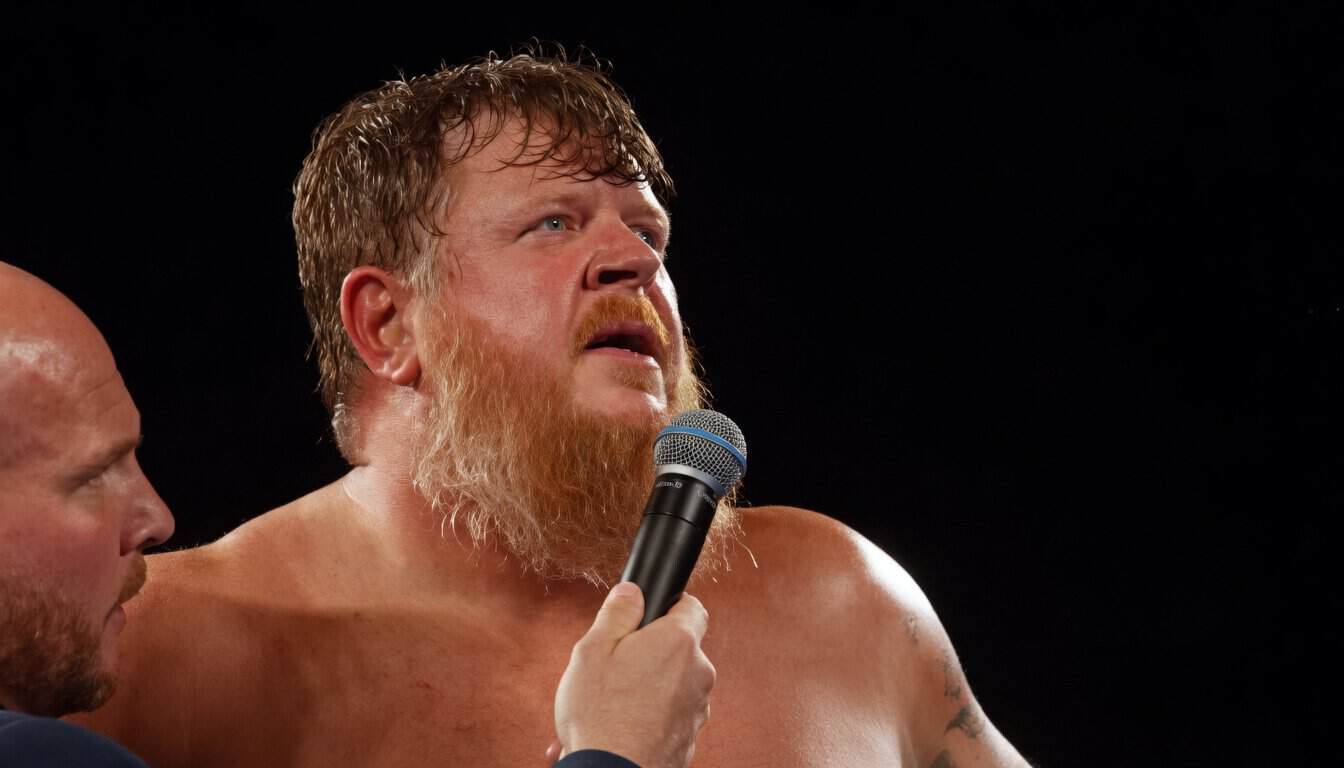
Trevor Murdoch has quietly called it a career. There was no massive farewell tour. There was no crying in the ring while leaving his boots in the center of the mat. He simply stepped away.
For a guy whose entire persona was built on blue-collar authenticity, that feels exactly right. Murdoch was a two-time NWA Worlds Heavyweight Champion, but he never carried himself like a polished superstar. He looked like a guy who just climbed out of a pickup truck outside a St. Louis bar.
His retirement strips the National Wrestling Alliance of its most reliable babyface. More importantly, it removes one of the last genuine links to the territory-style brawling that Billy Corgan has desperately tried to replicate. Without him, the promotion looks completely exposed.
Professional wrestling is obsessed with the future. As we head into May 2026, the industry is buzzing about WWE Backlash next week and AEW's Double or Nothing later this month. Promoters constantly chase the next viral clip. They want the next twenty-something who can do a standing shooting star press. Amidst all that noise, Murdoch proved there is still money in throwing a believable right hand.
The tactical mechanics of a Murdoch match
Watch a Trevor Murdoch match from his recent NWA run. You won't find Canadian Destroyers. You won't see him doing dives over the top rope. You will find punches. Heavy, thudding, working punches.
Murdoch understood the geometry of a wrestling ring better than guys half his age. He worked a heavy, plodding style that demanded patience. He didn't use the ropes to build momentum; he used them to cut off escape routes. His footwork was deceptive. He routinely stepped across his opponent's lead leg to trap them during tie-ups. This was a subtle nod to the Missouri grappling traditions.
He dragged his opponents into deep water using headlocks, heavy forearms, and a deliberate pace. This forced crowds to actually pay attention to the physical struggle rather than passively waiting for the next high spot.
His signature top-rope bulldog was a direct tribute to his trainer, Harley Race. But it wasn't just a finish. It was the exclamation point at the end of a long, grueling sentence. When he hit it on Nick Aldis at NWA 73 to win his first world title, the roof nearly came off the Chase Park Plaza. That match was a masterclass in slow-burn psychology.
Aldis targeted the back early in the bout. Murdoch sold the damage like a gunshot wound, limping and grimacing between sequences. His comeback was entirely built on right hands and sheer desperation. He didn't need to fly. He just needed you to believe he was fighting for his life.
The sequence leading to the finish involved a brutal exchange of strikes, a desperation spinebuster, and then the slow, agonizing climb to the top turnbuckle. It took him 15 seconds just to get his footing on the ropes. The crowd lived and died with every inch he climbed.
The WWE years and the mid-card grind
Most fans first met him as part of Cade and Murdoch in the mid-2000s WWE. Alongside the late Lance Cade, he was presented as a redneck trucker. That gimmick easily could have died on arrival. Instead, they made it work through sheer mechanical competence in the ring.
They won the WWE Tag Team Championship three times. They had a remarkably physical series of matches with The Hardys in 2007. Cade and Murdoch acted as the grounded, brutal contrast to Matt and Jeff's aerial offense. They would isolate a limb, cut off the ring, and physically grind their opponents down into the mat.
They also had excellent, under-appreciated bouts against Paul London and Brian Kendrick. London and Kendrick wanted to sprint. Cade and Murdoch wanted to wrestle in mud. The clash of styles created compelling television on Monday Night Raw during an era not known for stellar tag team wrestling.
When he was released by WWE, Murdoch drifted. He worked independents across the Midwest. He bounced around. He had a brief, totally forgettable run in TNA Wrestling as Jethro Holliday. The company put him in a comedic role that completely misunderstood his value.
For a long time, it looked like his legacy would be a mid-card tag team run and a brief stint doing a country singer gimmick. The industry was speeding up. Wrestlers were getting smaller and faster. Murdoch was staying exactly the same, seemingly left behind by the business.
The St. Louis resurgence and the Ten Pounds of Gold
Then came Billy Corgan's reboot of the NWA. The studio wrestling format was tailor-made for Murdoch's promo style. He spoke directly into the camera with a gravelly earnestness that you cannot teach in a performance center.
He was a heavy, aging wrestler who openly acknowledged he was past his prime. He told the audience he was fighting for one last shot at glory. That vulnerability made him a massive star in that specific room in Atlanta. His feud with Aldis carried the NWA through a very difficult post-pandemic period.
Before he won the big one, he captured the NWA National Heavyweight Championship from Aron Stevens. He proved he could carry a singles division. When he finally won the Ten Pounds of Gold, it felt completely earned. He wasn't playing a character. He was a guy trying to do right by Harley Race and his family.
Watch his involvement at NWA Alwayz Ready. Matt Cardona tore his bicep, changing the entire complexion of the main event scene. Murdoch was forced to step in, navigate the chaotic booking, and eventually win the title back in a fatal four-way match. He was the ultimate utility player. He could anchor a classic with Aldis or brawl in a messy multi-man match to save a pay-per-view from disaster.
A critical failure in booking
This brings us to the negative reality of Murdoch's run. The NWA relied on him entirely too much. They used his genuine connection with the audience to paper over a glaring lack of depth on the roster.
When you have a babyface who can get a crowd invested with just a microphone and a frown, a promoter will abuse that crutch. Corgan asked Murdoch to carry main events against opponents who had absolutely no business being in world title matches. The promotion utterly failed to build a credible successor who worked that same gritty style.
His second world title reign was far less impactful. This was largely due to the bizarre booking surrounding it. The NWA began leaning heavily into questionable decisions. They eventually put the belt on Tyrus, losing whatever critical goodwill the Aldis and Murdoch era had built with hardcore fans.
They squeezed every drop out of the Trevor Murdoch comeback story. Now, the sponge is bone dry. The company is left holding a world title with severely diminished prestige. They lack a hero the audience actually believes in.
During his feud with Cardona, Murdoch was asked to play the straight man defending the NWA's honor against sports entertainment antics. Murdoch did his part perfectly. But the company failed to capitalize on the heat. They booked themselves into corners with convoluted finishes and constant interference.
What happens to the NWA now?
With Murdoch officially retired, the heavyweight picture in the NWA is a barren wasteland. You have EC3 currently holding the title. He cuts long-winded, philosophical promos that actively push viewers away. You have Thom Latimer, who looks the part but has never shown the fire necessary to carry a brand as the top guy.
The NWA desperately needs a stylistic anchor. Murdoch was the guy who reminded you that professional wrestling is supposed to look like a fight. Without him, the promotion risks drifting further into a weird, disjointed mix of ex-WWE talent and green rookies working in a vacuum.
Who steps up to fill the void? There is no obvious answer. The independent scene is filled with incredibly athletic wrestlers who want to get their spots in. Very few of them want to grab a side headlock and hold it for three minutes to build anticipation.
The prediction for Billy Corgan's promotion
Here is what happens next. The NWA management is going to panic. Realizing they lack a sympathetic, blue-collar babyface to replace Murdoch, they will attempt to hotshot the world title to create buzz.
I predict they will bring in a recognizable free agent by mid-summer. Someone like a recently released WWE mid-carder or an aging veteran from another company. They will strap a rocket to them and push them straight to the main event scene in an attempt to replace the lost star power.
It will fail miserably. You cannot artificially manufacture the deep connection Murdoch had with that audience. He earned it by bleeding in VFW halls, driving thousands of miles, and paying his dues for two decades.
The NWA is about to learn a very hard lesson. There is a massive difference between a character written on a television script and a guy the fans actually trust. Trevor Murdoch deserved a better final act than carrying a struggling promotion on his injured back.
He did the work. He threw the best working punch in the business. And he walked away on his own terms. That is more than most get in this strange, unforgiving industry.