The Security of the Safe Bet
Fifty-six point nine-four percent. In a vacuum, a 56.94% win rate over 144 matches in All Elite Wrestling suggests a protected, successful asset.
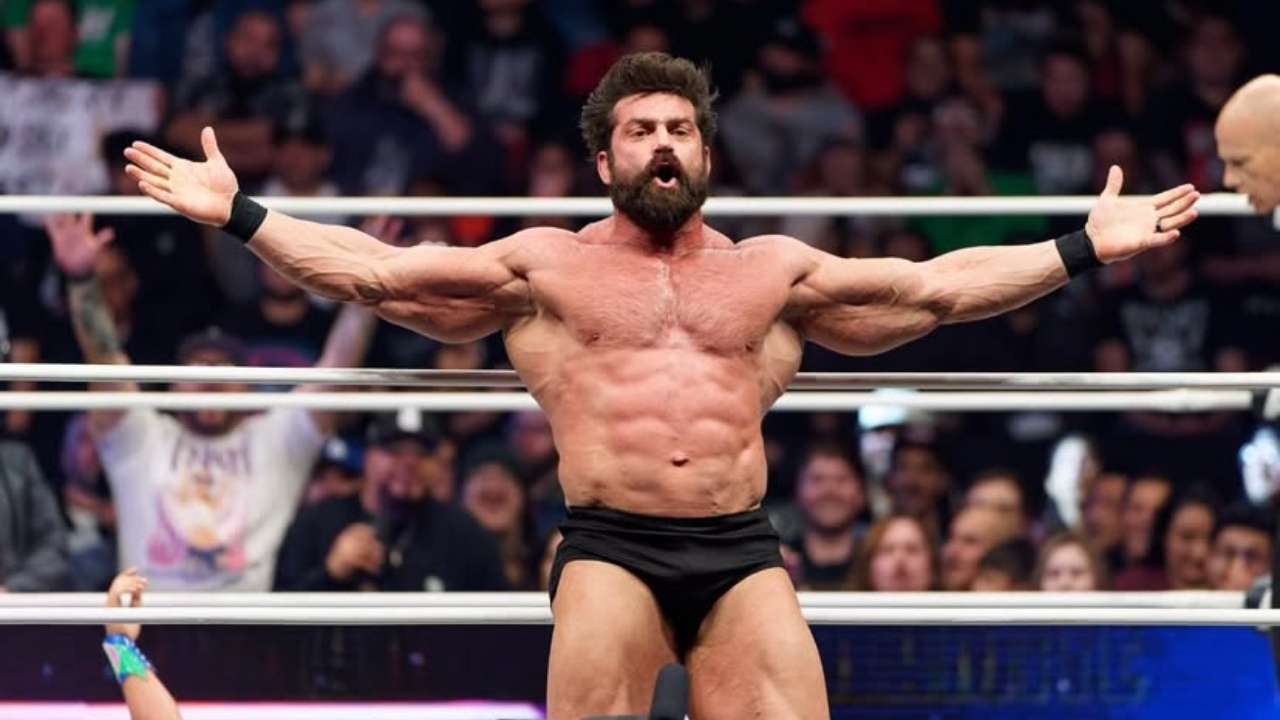
Professional wrestling is a business built on the illusion of control. Wrestlers spend decades curating their bodies, perfecting their transitions, and negotiating their positions, yet they remain at the mercy of promoters who can rewrite their careers with a single phone call. Brian Cage knows this reality better than most.
During a recent appearance on Insight with Chris Van Vliet, the 42-year-old veteran detailed the mechanics of his 2023 decision to re-sign with AEW. WWE had come calling, offering the allure of a clean slate and the structural machine of Stamford. But Cage chose the safe bet.
As WrestlingNews.co reported, Cage prioritized Tony Khan's travel coverage over Stamford's strict contract structure. While Cage secured his financial comfort and peace of mind, he signed away his competitive agency. The statistical breakdown of his booking history since that fateful decision reveals a stark reality.
The Illusion of the Mid-Card Anchor
Look closer at the 144 matches that define his tenure. The win rate is heavily padded by low-stakes squash matches on Rampage and ROH television. When Cage steps into the ring for a high-profile singles match, he is booked to fail.
On May 15, 2024, Cage faced Swerve Strickland in a World Title Eliminator on Dynamite and was pinned in under twelve minutes. A month later, on June 22, 2024, he challenged Will Ospreay for the International Championship on Collision and suffered the same fate. As detailed in the AEW Forbidden Door preview, these matches served to build up others rather than elevate Cage.
Even in 2025, the pattern remained unbroken. On January 29, 2025, a high-octane singles match against Ospreay on Dynamite ended in another pinfall defeat. These are not isolated incidents; they are the blueprint of his role.
He is the ultimate gatekeeper. He possesses the physical size to look like a legitimate threat, yet he lacks the booking protection to ever cross the threshold into the main event. His workrate is undeniable, but his standing is stagnant.
The Multi-Man Dilution
During his appearance on Insight, Cage admitted that he wanted to do more solo stuff to stand out. Instead, AEW has consistently tucked him into factions. He has spent the majority of his recent years lost in multi-man matches.
The numbers back this up. Over his tenure, Cage has held the ROH World Six-Man Tag Team Championship twice for a combined 361 days. His first reign with Toa Liona and Kaun lasted 284 days, while the second lasted 77 days.
This is a comfortable role, but it is also a creative graveyard. Six-man tag matches naturally dilute individual stars. The transitions are too fast, the ring is too crowded, and Cage's unique power game is reduced to a series of hot tags.
He is rarely allowed to build a narrative inside the ropes. Instead, he is used to execute high-impact sequences in 10-minute sprints. The athletic freak who once dominated Lucha Underground is now a gear in a faction machine.
The ROH TV Title Detour
Even when Cage did taste singles success, it came with a caveat. On October 12, 2024, he defeated Atlantis Jr. at WrestleDream: Zero Hour to capture the ROH World Television Championship. It was his first singles title in years.
Yet, this reign lasted only 69 days. He defended it on the streaming-only HonorClub platform before losing it on December 20, 2024. He was eliminated from a six-way Survival of the Fittest match at Final Battle by Mark Davis.
The title run did little to elevate his standing on AEW's primary television. It was a secondary title on a developmental brand. For a wrestler of Cage's caliber, it felt less like a promotion and more like a distraction.
This detour is a symptom of AEW's bloated roster. Rather than booking Cage in meaningful stories on Dynamite, the creative team sends him to ROH to fill time. It keeps him occupied, but it keeps him irrelevant.
The FTW Anomaly
To find Cage's longest singles run, one has to look back to the FTW Championship. He held the unsanctioned title for 377 days, from July 2, 2020, to July 14, 2021. But the title was never an official AEW championship.
It was a vanity belt created by Taz to give his faction legitimacy. Because the title was unsanctioned, Cage's matches did not carry the weight of official championship contests. He was defending a prop, not a crown.
When he finally lost the title to Ricky Starks at Fyter Fest, the story faded quickly. Cage was immediately cycled back into tag matches. The year-long reign did not lead to a main-event push.
This is the central paradox of Cage's AEW career. He is trusted to carry titles for hundreds of days, but only titles that do not matter. The company values his stability, but not his star power.
WWE vs. AEW: The Financial Equation
In his interview, Cage laid out the financial reality of modern wrestling. WWE offers the largest platform, but their contract structure is notoriously demanding. Talent must pay for their own hotels and rental cars.
AEW's travel package is significantly more generous. Tony Khan covers hotel rooms, ground transportation, and all flights. For a veteran like Cage, this difference represents tens of thousands of dollars in savings every year.
Furthermore, AEW's status as an actual independent contractor allows him to work independent shows. He can supplement his income by wrestling for regional promotions on his off-days. WWE's exclusivity clause makes this impossible.
It is a logical business decision. Wrestling is a career with a short shelf life, and securing the bag is paramount. But from a sporting perspective, the choice comes with a heavy tax.
By choosing safety, Cage accepted a lower ceiling. In WWE, the risk of release is higher, but the potential reward is massive. He chose the comfort of a guaranteed spot over the gamble of Stamford stardom.
In his interview, Cage stated he doesn't fear being released in AEW. That peace of mind is rare in professional wrestling. However, that lack of fear can also lead to complacency in creative booking.
The Gatekeeper's Tax
This complacency is visible in his match structures. Cage is a spectacular athlete, combining power moves like the Weapon X with springboards and moonsaults. But his matches have become highly formulaic.
He dominates the opening minutes, hitting impressive power moves to wow the crowd. Then, the babyface makes a comeback, hits a signature move, and pins him. It is the same script, rewritten with different opponents.
His singles matches are designed to make other stars look good. When he fought Ospreay on January 29, 2025, Cage did the heavy lifting, taking difficult bumps to highlight Ospreay's agility. But in the end, it was Ospreay who stood victorious.
This is the gatekeeper's tax. Cage gets to showcase his skills, but he must always pay the toll. He absorbs the physical wear while others reap the booking rewards.
The Long-Term Verdict
At 42 years old, Cage's window for a major singles run is closing. He has achieved financial security, which is a rare and admirable feat in this industry. But the numbers do not lie.
His 144 matches in AEW have yielded zero official AEW singles championships. His longest title runs have been with an unsanctioned belt and a trios championship on a secondary brand. He chose safety, and safety is exactly what he got.
For a sports fan watching with a notebook, Brian Cage remains a fascinating study in asset management. He is a premium worker who chose a comfortable harbor over the open sea. He is safe, but he is also stranded.