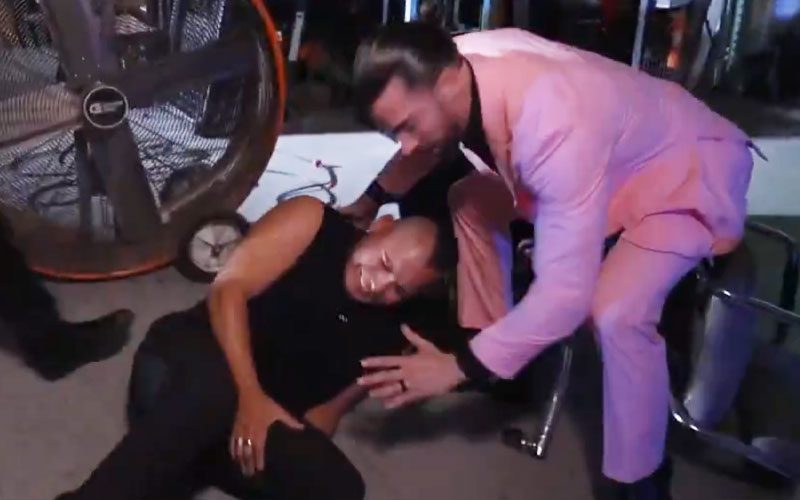
Why Jade Cargill and Tiffany Stratton deserve better than WWE's stalling tactics
The Atlantic City holding pattern
Pro wrestling booking is a game of spacing. A great booker understands when to press the action and when to pull back, letting a storyline breathe before the final push. Yet, the July 3, 2026, episode of SmackDown at the Jim Whelan Boardwalk Hall in Atlantic City showed a promotion struggling with its timing.
Rather than accelerating the momentum from Night of Champions, WWE opted for a familiar stall. The centerpiece of this stalling strategy was a six-woman tag team match. The contest pitted Jade Cargill, Michin, and B-Fab against Charlotte Flair, Chelsea Green, and the Women's United States Champion, Tiffany Stratton.
This was not a progression of the division's primary narrative. It was a structural holding pattern designed to keep the main players warm without advancing the plot.
According to the PWInsider report, the Atlantic City crowd was left watching a match that existed solely to fill television time. By dragging six performers into a single ring, the creative team avoided making hard decisions. The result was a diluted television product that served neither the champion nor her challengers.
This holding pattern is particularly frustrating given the stakes. SummerSlam is the second-biggest event on the corporate calendar, yet the path to it is being paved with television filler. When fans buy tickets to see stars, they expect progress, not a repeating loop of multi-person matches.
The Atlantic City taping felt less like a step forward and more like a holding of the breath. To understand why this match failed to advance the division, one must look at the layout of the contest. The bout lasted exactly 11 minutes and 42 seconds.
Anatomy of a tag team stall
During that time, the division's most compelling rivalry was reduced to a series of brief, teasing interactions. Tiffany Stratton, who should be establishing her championship run, spent less than three minutes as the active competitor.
Instead, the bulk of the ring work fell to Chelsea Green and Michin. Green is a superb character worker, but in the ring, she serves a specific mechanical purpose. She is the designated pin-eater.
Her presence in the match was a shield for the two women who actually matter to the SummerSlam box office: Charlotte Flair and Tiffany Stratton. When Jade Cargill secured the pinfall victory, she did not pin the champion who cheated her in Riyadh. She did not pin the veteran who cost her the title.
Instead, she hit the Jaded on Chelsea Green, a performer who has lost her last four televised matches. This is a hollow victory that resets the board without resolving the tension.
The tactical spacing of the match was designed to hide weaknesses. B-Fab and Michin were positioned on the apron to provide a babyface buffer, but they offered nothing in terms of work rate. Their tags were brief, totaling under two minutes of combined ring time.
This left the match feeling disjointed, a collection of individual spots rather than a cohesive athletic contest. Furthermore, the structure of the match prevented any real heat from building. Every time Cargill got in the ring, Stratton immediately tagged out, which is standard heel behavior but grows tedious when repeated three times in ten minutes.
The tag mechanics were predictable, following the standard WWE television formula without a single creative variation. The hot tag to Cargill led to a brief flurry of power moves, a double-team breakup, and the inevitable finish.
The shadow over the United States Championship
The booking of the SmackDown women's division has a structural flaw. By inserting Charlotte Flair into the title picture, WWE has sidelined the actual champion. Tiffany Stratton's victory at Night of Champions on June 27, 2026, should have been a career-defining moment.
Instead, it was framed entirely around Flair's interference, who struck Cargill with the title belt while the referee was down. This decision turned the Women's United States Championship into a secondary prop. The championship is no longer the prize; it is the battleground for a personal grudge match between Flair and Cargill.
In the ongoing SmackDown coverage, it is clear that Stratton is being treated as a transitional figure. She is the third wheel in her own championship reign.
This is a repeating pattern in WWE's booking of Flair. She is frequently used as a shortcut to add gravitas to a division, but her presence often smothers younger talent. Stratton has the charisma and the athletic ability to carry the division.
Rushing her into a program where she plays second fiddle to Flair's ego is a waste of her current momentum. The match mechanics on July 3 reflected this hierarchy. During the closing sequence, Flair chose to walk away from a double-team opportunity, leaving Green isolated in the ring.
This visual told the audience that the heels were not united. More importantly, it showed that Flair operates outside the rules of the division, further undermining Stratton's authority as champion.
A championship needs prestige to survive, especially a newly introduced one like the Women's United States Title. When the champion is presented as an afterthought who cannot win without interference and is overshadowed by a veteran partner, the belt loses its value. If Stratton is to be a credible champion, she needs clean defenses against top-tier opponents, not tag team protection plans.
The undercard noise
The evening's other women's match further highlighted the division's reliance on over-booking. Brie Bella faced Laney Reid in what should have been a straightforward showcase of two different generations. Instead, the match ended in a chaotic flurry of interference, allowing Reid to secure a cheap victory.
This finish mirrored the issues of the six-woman tag. It prioritized shortcut booking over athletic competition, leaving the audience with another hollow result.
When every match on the card relies on distractions, run-ins, or tag team buffers, the impact of these tropes is completely lost. The crowd in Atlantic City became noticeably quiet during the middle portion of the show, tired of being fed the same finish under different names.
Reid's victory does nothing to elevate her because it was not earned in a contest of athletic superiority. Meanwhile, Bella's return is cheapened by being used as a prop in a poorly executed angle. The division is spinning its wheels, unable to produce a clean, competitive story that doesn't rely on booking crutches.
A masterclass in contrast: Fenix vs. Vikingo
The flaws of the six-woman tag were made even more obvious by what followed. Later in the evening, Rey Fenix defended his AAA Cruiserweight Championship against El Hijo del Vikingo. This was a match stripped of booking baggage.
It was a pure, high-stakes athletic contest that showed what SmackDown is capable of when it trusts its performers. The bout was a masterclass in pacing and execution, lasting exactly 14 minutes and 15 seconds. Fenix and Vikingo worked at a tempo that made the women's tag look like it was running in slow motion.
Vikingo attempted four springboard maneuvers, connecting on three, including an incredible springboard Spanish Fly that resulted in a near-fall at the ten-minute mark. Each move had a purpose, building toward a logical conclusion rather than serving as filler.
Fenix ultimately secured the victory with a devastating Mexican Muscle Buster. The match worked because the stakes were clear and the execution was flawless. The crowd at the Boardwalk Hall chanted "This is awesome" because they were witnessing a genuine athletic contest.
There were no run-ins, no blind referees, and no partners waiting on the apron to take the fall. This Cruiserweight Showcase stood in stark contrast to the rest of the card.
While the women's division was bogged down in multi-person stalling, the cruiserweights reminded the audience of the value of simple, focused storytelling. It was a stark reminder that pro wrestling is at its best when the championship is the focal point of the athletic struggle.
The success of Fenix and Vikingo proves that the Atlantic City crowd wants to invest in competitive wrestling. They do not need elaborate soap opera setups to care about a match. They simply need to believe that the competitors are fighting for something that matters, and that the outcome will be decided by athletic merit rather than booking room whims.
The rushed men's main event
The impatience that plagues the women's division was mirrored in the men's main event scene. Cody Rhodes defeated Jey Uso to become the number one contender for the Undisputed WWE Championship. This setup led to the booking of a title match against Sami Zayn for the upcoming Raw on Monday, July 6, 2026.
This is a tactical error that rushes a major story. Sami Zayn's title win at Night of Champions ended Cody's 113-day reign.
A title change of that magnitude should feel like a seismic shift in the promotion. Rushing into a rematch just nine days later on free television dilutes the value of the championship. It suggests that the title change was not a long-term booking decision, but a temporary shock tactic.
By forcing Rhodes and Uso to wrestle a grueling main event just to set up a rushed television rematch, WWE is burning through its biggest matchups. The promotion is trading long-term story building for short-term television ratings. This is the same creative impatience that has left the SmackDown women's division stalled in a six-woman loop.
Wrestling matches need room to breathe. When a champion wins a title, they need time to establish their reign against fresh opponents. Rushing back to the previous champion immediately narrows the focus of the division.
It tells the fans that the championship is a hot potato, rather than a prestigious prize that must be defended and earned. WWE has the most talented roster in the history of the industry. Performers like Jade Cargill, Tiffany Stratton, and Rey Fenix are capable of delivering classic matches.
However, they are being held back by a creative philosophy that prioritizes television format over logical narrative progression. The six-woman tag match on July 3 was a prime example of this failure.
Breaking the television loop
If the path to SummerSlam is to feel earned, the promotion must abandon these stalling tactics. They must trust their champions to carry singles storylines. They must allow their feuds to develop over months, not days.
Until they do, the road to SummerSlam will continue to feel like a circular track. This leaves talented performers running in place while the audience waits for something real to happen.
The Man: Not Your Average Average Girl
Becky Lynch's unfiltered, scrappy journey to the top of WWE.
Frequently Asked Questions
Who competed in the six-woman tag match on SmackDown in Atlantic City?
Who did Jade Cargill pin to win the SmackDown tag team match?
How long did the SmackDown six-woman tag team match last?
Who is the current Women's United States Champion?
How many consecutive televised matches has Chelsea Green lost?
More Coverage
WWE fans are completely split on Cody Rhodes getting an instant title shot
an hour ago
Top 10: Wrestling Podcasts Ranked by Industry Impact
2 hours ago
Cody Rhodes gets his title rematch on Raw but the timing is all wrong
2 hours ago
Top 10: Top Moments
2 hours ago
Finn Balor's move to SmackDown could solve WWE's post-Riyadh booking crisis
3 hours ago
Oba Femi is WWE's new Bill Goldberg, but with one major upgrade
5 hours agoMore Analysis
Why Lady Shani vs Lady Flammer is the match you cannot ignore tonight
an hour agoWhy the Jade Cargill and Charlotte Flair feud is already hitting a wall
an hour agoWhy Matt Cardona's WWE comeback is already dead in the water
an hour agoWWE fans are completely split on Cody Rhodes getting an instant title shot
an hour ago
Nostalgia won't save TNA from its own budget-cutting nightmare
2 hours ago