Why Jim Ross’s latest health battle signals the end of his AEW run
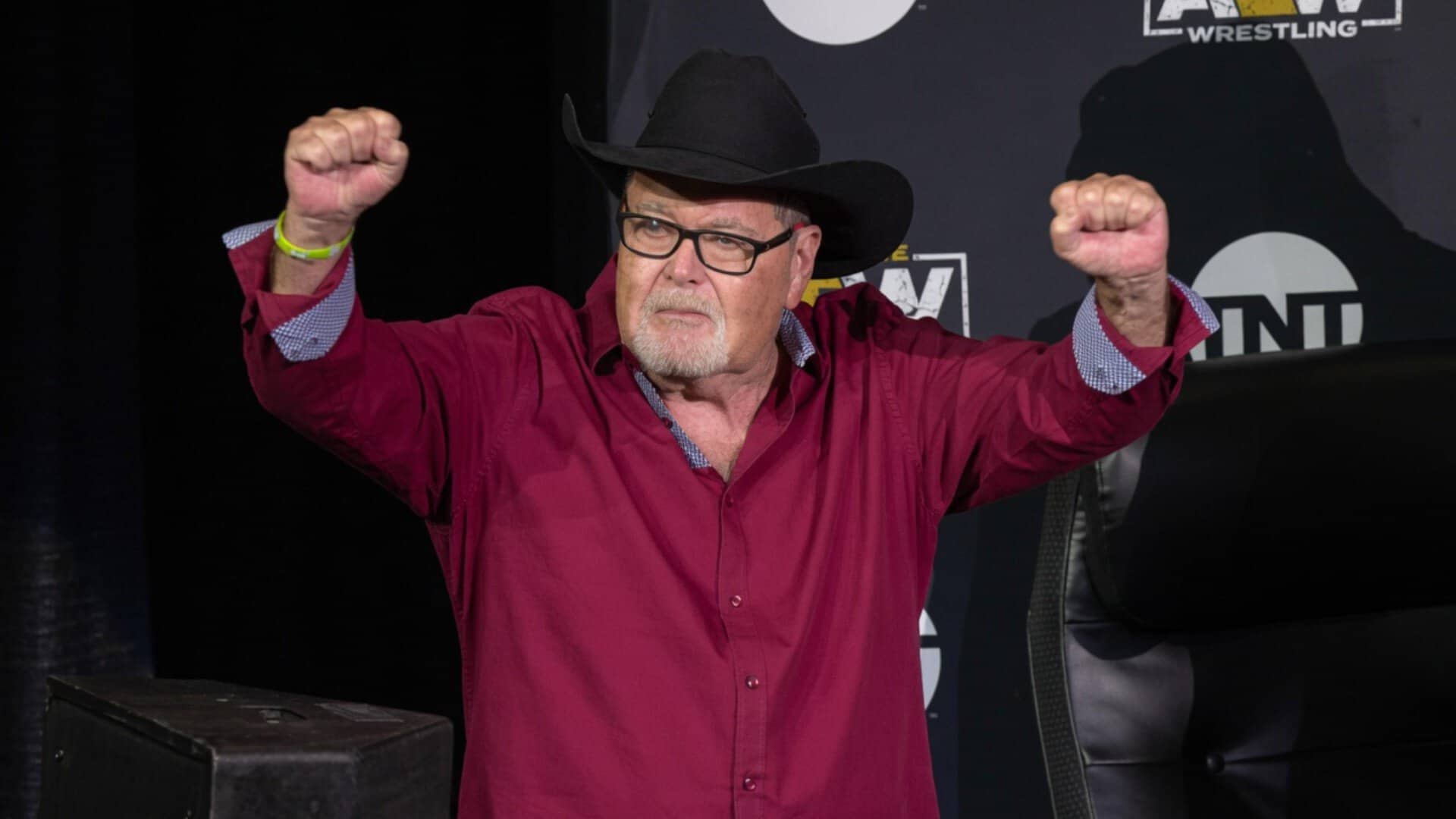
The physical toll of five decades at the microphone
Jim Ross is preparing for another fight, and this time the opponent is inside his own skull. On the July 10, 2026, episode of Grilling JR, his first podcast since returning home from a grueling hospital stay, the veteran broadcaster announced he will undergo brain surgery to implant a shunt. The procedure aims to drain excess fluid that has begun to affect his memory and general well-being.
The news, as reported by WrestlingNews.co on July 10, 2026, marks the latest health crisis for the 74-year-old announcer. It comes just weeks after Ross finished a nearly 40-day hospital stay following a severe fall in his home. With his current AEW contract set to expire in August 2026, this latest medical development pushes a long-simmering question to the forefront.
How does AEW handle the twilight of the most influential voice in professional wrestling history? It is a delicate situation that requires balancing respect for a legend with the cold realities of television production. The company must face the fact that Ross's time in the live broadcast booth should come to an end.
To understand the stakes, one must look at the physical toll Ross has endured over the last few years. He battled colon cancer in May 2025, undergoing successful surgery before being declared cancer-free. He has also dealt with multiple bouts of Bell's palsy throughout his career, which partially paralyzed his facial muscles.
Yet, he has repeatedly returned to the microphone, driven by an unmatched passion for the business. This upcoming brain surgery, however, represents a different level of concern. Implanting a shunt to drain fluid from the brain is a serious medical intervention, even if Ross joked on his podcast that doctors might not find much in there.
"I don't think they're going to find much, oh God, my brain."
Ross noted that he has secured approval from his cardiologist for the procedure. He expects to undergo the operation within the next week, followed by a brief two days in the hospital. While the recovery window is short, the long-term implications for his cognitive sharpness remain the primary concern.
The physical reality of the shunt procedure
The medical reality of a shunt implantation is daunting for any patient, let alone a septuagenarian. The surgery involves inserting a hollow tube into the brain ventricles to redirect excess cerebrospinal fluid to another part of the body, usually the abdomen. This fluid buildup, if left untreated, puts pressure on brain tissue, causing the cognitive decline and balance issues Ross described.
For months, fans noticed Ross seemed to struggle with word recall and basic identification during broadcasts. Many assumed it was simply the natural decay of age or the lingering effects of his Bell's palsy. The diagnosis of fluid buildup provides a clear clinical explanation for these struggles, showing that his recent difficulties were neurological rather than motivational.
A successful shunt placement can dramatically improve a patient's cognitive function and physical stability. However, the brain needs time to adapt to the sudden shift in intracranial pressure. Expecting Ross to return to a high-stress live broadcast environment shortly after such an invasive procedure is both unrealistic and irresponsible.
For a play-by-play announcer, quick cognitive processing is the primary tool of the trade. If the fluid buildup has already impacted his memory, returning to the frantic pace of live television is a massive risk. Pro wrestling in 2026 does not wait for an announcer to gather his thoughts.
The mechanics of a declining booth presence
This leads to the uncomfortable but necessary critique of Ross's recent work. In his prime during the WWE Attitude Era, Ross was the master of narrative pacing. He treated the performances as legitimate athletic struggles, anchoring the chaotic antics of Stone Cold Steve Austin with sports-centric gravity.
When Mick Foley was thrown off the Hell in a Cell in 1998, Ross's raw emotion felt like a dispatch from a war zone. He did not just call the moves; he explained the stakes. His voice was the connective tissue that turned athletic exhibitions into dramatic stories.
But the modern style of AEW is built on a completely different set of athletic principles. The current product prioritizes rapid-fire sequences, high-risk aerial maneuvers, and minimal down time. Wrestlers like Will Ospreay, Nick Jackson, and El Hijo del Vikingo operate at a tempo that leaves little room for traditional storytelling.
In this environment, Ross has frequently struggled to keep pace. During the 19-minute Continental Championship match at Double or Nothing on May 24, 2026, where Jon Moxley defeated Kyle O'Reilly, Ross called the action alongside Excalibur. The difference in their approaches was stark and occasionally jarring.
Excalibur rattled off complex move names and historical context at a breakneck speed. Ross, by contrast, spoke in a slower, more deliberate cadence that sometimes lagged behind the actual impact of the moves. By the time Ross finished explaining the physical pressure of a forearm strike, the competitors had already moved through two more exchanges.
More concerning is Ross's tendency to let his personal frustrations bleed into the broadcast. He has frequently complained on air about tag teams ignoring referee counts or the lack of rules enforcement in modern matches. While these are legitimate critiques of modern booking, airing them during a live broadcast damages the product.
It breaks the presentation's illusion and highlights flaws that the audience is meant to overlook. An announcer's job is to enhance the drama, not to critique the structural logic of the match in real time. When Ross sighs in exasperation at a referee's count, it pulls the viewer out of the story.
This disconnect has been visible for several years. Even during highly praised matches, such as the classic encounter between Will Ospreay and Bryan Danielson at AEW Dynasty in 2024, Ross's contributions were best utilized in short, controlled bursts. When left to carry longer stretches of a broadcast, his fatigue becomes apparent.
Lessons from the Attitude Era pacing
To appreciate what Ross has lost, one must analyze the architecture of his greatest calls. In the late 1990s, wrestling matches were structured around clear heel and face dynamics with distinct peaks and valleys. Ross worked in tandem with the in-ring action, lowering his voice during submission holds to build suspense and rising to a roar for the finish.
His famous call of Steve Austin's title win at WrestleMania XIV was not just noise. It was a calculated crescendo that matched the visual of referee Mike Tyson counting the three. Ross's voice gave the moment a sense of historical weight that a modern, flat-delivery announcer simply cannot replicate.
Modern matches do not have these clean, isolated peaks. Instead, they are continuous streams of high-intensity action with multiple near-falls starting from the five-minute mark. This relentless style leaves no room for the slow-burn narrative structure that Ross perfected over fifty years.
The modern broadcast booth dilemma
AEW's current three-man booth often resembles a crowded highway. Excalibur functions as the technical director, calling every maneuver from a standard vertical suplex to a complex Canadian Destroyer. Taz provides the athletic context, drawing on his background as a shoot-style wrestler to explain submission mechanics.
Tony Schiavone acts as the nostalgic anchor, bringing a warm, familiar presence to the broadcast. When Ross is added to this mix, the dynamic frequently breaks down into competing voices. Ross often ends up silent for long stretches, only to interrupt with a critique of a rule violation.
This creates a disjointed listening experience for the viewer. Instead of a unified team guiding the audience through a story, we hear a clash of generational philosophies. The broadcast suffers, and Ross looks isolated from the product he is supposed to be selling.
This is not a failure of talent, but a mismatch of eras. Ross began his broadcasting career in 1974 in Mid-South Wrestling, a territory built on regional logic and slow, physical heat. The industry has evolved through multiple structural changes since then.
The modern viewer expects analytical precision, instant move identification, and meta-textual storytelling. Excalibur represents this new breed of broadcaster, serving as a human database for global wrestling history. Trying to force Ross into this hyper-speed mold is a disservice to his legacy.
The August deadline and AEW's next move
With his contract expiring next month, AEW President Tony Khan faces a critical decision. Ross's agent, Barry Bloom, will undoubtedly look to secure another deal for his client. Ross himself has stated he is relaxed about the future, leaving the final call to management while expressing a desire to remain involved.
The correct path forward is not a complete parting of ways, but a structural reassignment. AEW should transition Ross out of the live commentary booth entirely. The physical demands of travel and the mental strain of live three-hour broadcasts are no longer suitable for his health.
Instead, AEW should sign Ross to a specialized, permanent emeritus contract. This role would utilize his greatest remaining strength: the sit-down interview. Ross remains the absolute gold standard when it comes to conducting serious, character-building interviews.
His pre-taped sit-down segments with stars like MJF, Kenny Omega, and Cody Rhodes in the early days of AEW are masterclasses in promotion. In these controlled environments, Ross does not have to worry about the frantic pace of a springboard cutter. He can focus on character motivation, history, and emotion.
A pre-taped format allows for editing, ensuring that Ross always sounds sharp, focused, and authoritative. It removes the physical toll of traveling to weekly television tapings across the country. He could record these segments from a centralized studio or even his home, protecting his recovery.
Furthermore, Ross could serve as a valuable behind-the-scenes mentor for AEW's younger broadcast team. Announcers like Tony Schiavone, Alex Marvez, and Daddy Magic could benefit immensely from his fifty years of experience. He knows how to structure a broadcast, build to a commercial break, and sell a finish.
The Sting blueprint for legend management
AEW has shown it can manage the decline of its legends with grace when it wants to. The retirement run of Sting in early 2024 is the gold standard for how to handle an aging icon. Tony Khan protected the veteran by booking him exclusively in tag team matches, allowing Darby Allin to take the heavy physical bumps.
Sting was protected, his legacy was preserved, and his final match at Revolution 2024 was a critical success. A similar level of tactical planning must be applied to Ross's broadcasting career. You do not send a legend out to struggle on a random Friday night show; you protect his presentation.
By transitioning Ross to a specialized role, AEW can ensure his final appearances are memorable. He should be the voice that introduces the biggest matches, not the announcer who struggles to remember the name of a mid-card wrestler's signature maneuver. This is the only way to respect his past while securing the future of the product.
Wrestling promotions have historically struggled with transitioning their aging legends. Too often, veterans are kept on television long past their prime, leading to diminishing returns and fan frustration. We have seen this in both WWE and WCW, where iconic figures became caricatures of their former selves.
AEW has an opportunity to handle this transition with dignity. By removing Ross from the weekly grind of Collision and Dynamite, they can preserve the aura of his voice. His appearances should feel like special events, reserved for video packages that introduce major pay-per-view matches.
Imagine a package for a major championship match where Ross's gravelly voice sets the stakes. "This is for the richest prize in the sport," he would say, instantly giving the match a sense of historical importance. That is how you use a legend in 2026.
You do not use him to call a chaotic six-man tag team match on a random episode of Rampage. That only highlights what he can no longer do. It exposes his physical limitations and frustrates a modern audience that expects rapid-fire precision.
Ross's upcoming brain surgery is a stark reminder of the passage of time. He has given his life to this industry, sacrificing his body and his health to voice the soundtrack of our favorite memories. He has earned the right to step away from the live headset.
Tony Khan must show the leadership necessary to make this call. It will not be an easy conversation, as Ross's competitive drive is legendary. But it is the responsibility of management to protect performers from their own desires.
If AEW allows Ross's contract to quietly transition into an ambassadorial role, everyone wins. The live broadcasts will benefit from a more focused, fast-paced commentary team. Ross's legacy will remain unsullied by the struggles of age.
Most importantly, Ross will have the time and space to heal. A shunt in the brain is not a minor adjustment; it is a life-altering medical reality. He needs to focus on his recovery, his memory, and his quality of life.
The voice of the Attitude Era has called his final classic match. That is not a tragedy; it is the natural conclusion of a legendary career. It is time to let Jim Ross step back from the microphone and take his rightful place as wrestling's greatest living statesman.
WWE Roman Reigns "OTC" Original Tribal Chief Authentic T-Shirt
The hottest shirt in wrestling, marking the return of the Original Tribal Chief.
Frequently Asked Questions
What medical procedure is Jim Ross scheduled to undergo?
When does Jim Ross's current contract with AEW expire?
Why did Jim Ross experience recent struggles during broadcasts?
What health issues has Jim Ross faced in recent years?
How long is the expected recovery time for Ross's shunt surgery?
More Coverage
From the Ring to Your Living Room: Essential Gear for the Dedicated Wrestling Fan
4 hours ago
Jack Perry re-signs with AEW while Queen Aminata exposes the TV contract trap
15 hours agoThe Rock is back on screen but the ring remains empty
19 hours agoBeach Break was a masterclass in AEW's identity crisis
1 day, 2 hours ago
AEW is playing a dangerous game with their PPV calendar
1 day, 9 hours ago
Sheamus leaving WWE marks the end of an era for European hard-hitters
1 day, 11 hours agoMore Analysis
Top 10: The World Title Hierarchy in Professional Wrestling as of July 2026
an hour agoTNA is playing a dangerous game with their latest TV booking
an hour agoOmega is back on top and the AEW title hunt is a total mess
2 hours agoTNA's post-Slammiversary direction has the internet screaming at each other
3 hours ago