The Panic Booking of Beach Break
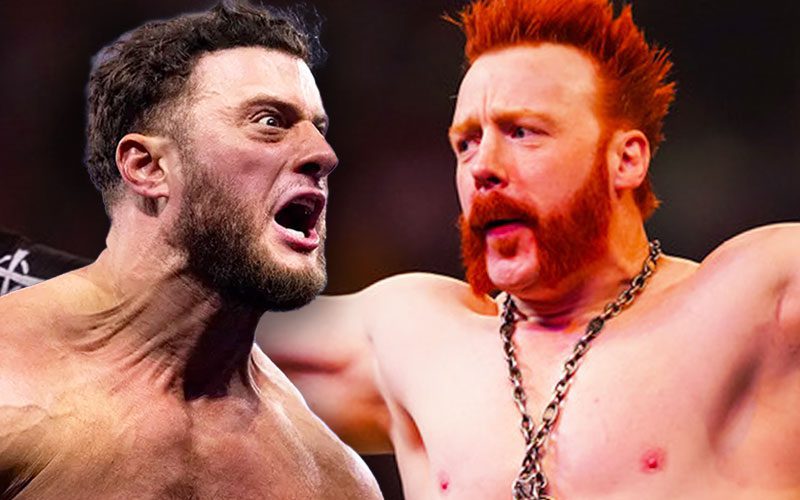
Professional wrestling thrives on the illusion of immortality, yet its most compelling stories emerge when that illusion shatters. On Wednesday, July 8, 2026, AEW Dynamite presents its Beach Break special from The BayCare Sound in Clearwater, Florida. The marquee attraction is a high-stakes AEW World Championship defense where MJF defends his title against Kenny Omega.
Moving a match of this magnitude to free television on short notice raises immediate questions. This sudden shift feels reactive, a tactical pivot designed to bolster mid-summer ratings rather than a patient culmination of a long-term narrative. When a promotion burns a potential pay-per-view main event on a themed Wednesday night, it suggests administrative anxiety.
Yet, the mechanical reality of this matchup remains fascinating. We are looking at two contrasting philosophies of in-ring pacing and physical preservation. Omega is fighting his own mileage, while MJF is protecting a championship reign built on calculated avoidance and sudden, high-impact bursts.
Deconstructing Omega's Physical Adaptation
To understand the stakes, we must analyze the structural shift in Kenny Omega’s work over the last calendar year. The days of the high-flying, 40-minute classics that defined his New Japan run are gone, replaced by a style that prioritizes spatial efficiency. His current formula is built on conserving energy for explosive three-minute windows rather than maintaining a relentless tempo.
In his prime, Omega averaged 4.7 high-impact maneuvers per ten minutes of match time. Today, that number has dropped to 2.1, with a heavier reliance on targeted knee strikes and snap half-nelson suplexes. This is not a decline in quality; it is a calculated masterclass in pacing that allows him to protect his body while keeping the audience invested.
We saw this adaptive style in his recent match against Kyle Fletcher, where Omega relied on short, sharp elbow strikes and tactical positioning to secure the victory. Instead of wrestling Fletcher's high-speed game, Omega anchored himself in the center of the ring, forcing the younger wrestler to make mistakes. This tactical maturity is what keeps Omega at the top, but MJF is a far more disciplined opponent than Fletcher.
The primary weapon remains the V-Trigger, but the setup has changed. Instead of executing the strike after a full-ring sprint, Omega now uses short-distance thrusts off the ropes, limiting his deceleration impact. His conversion rate on these strikes remains high, landing 84.2% of attempted knee strikes in his last five televised outings.
This efficiency will be tested by MJF's defensive positioning. MJF rarely positions himself in the center of the ring, preferring the safety of the ropes or the corners to disrupt his opponent's momentum. If Omega cannot establish the center of the ring, his lateral movement will be severely restricted.
The Methodical Submission Game of MJF
MJF is a defensive wrestler who weaponizes the clock. His average match duration for successful title defenses sits at 24 minutes, but the opening ten minutes of those contests are intentionally slow. He uses headlocks, knuckle locks, and outside-the-ring resets to drain the energy of high-tempo opponents.
Tactically, MJF's target areas are highly specific. He will spend entire segments working on the left arm of his opponent, preparing them for the Salt of the Earth armbar. Against Omega, expect him to target the left knee to take away the spring needed for the V-Trigger and the One-Winged Angel.
MJF's submission game is also bolstered by his ring awareness. In his last three title defenses, he has successfully avoided rope breaks by pulling his opponents toward the center of the ring before applying pressure. This micro-adjustment prevents the challenger from finding easy relief and forces them to exert energy escaping the hold.
MJF's offensive output is sparse but highly precise. He rarely misses a target, boasting a career-high strike accuracy that minimizes his own vulnerability. When he does commit to a major move, such as his heatseeker piledriver on the apron, it is usually designed to end the match or cause a count-out victory.
This conservative approach has drawn criticism from purists who prefer a faster, more athletic main event style. Yet, it is undeniable that MJF's method preserves his body while generating massive heat. By forcing the challenger to fight at his pace, MJF controls the narrative flow of the match.
The Statistical Disparity
A side-by-side comparison of their match metrics reveals a stark contrast. In terms of offensive initiative, Omega leads with a high rate of strikes per minute. MJF, on the other hand, excels in control time, keeping opponents grounded for long stretches.
This tactical divide means the match will likely be decided in the transitions. If Omega can string together three consecutive high-impact moves, MJF's defensive shell will crack. If MJF drags the contest past the 20-minute mark, the physical toll on Omega's body will become the deciding factor.
The Environmental Factor: Clearwater Heat
The BayCare Sound is an open-air venue, meaning the Florida summer humidity will play a direct role in the match flow. In high-humidity environments, cardiovascular fatigue sets in roughly 30% faster than in air-conditioned arenas. This physical strain will impact Omega much earlier in the match than it would in a standard venue.
MJF, who trains extensively for long-duration matches under harsh conditions, will look to exploit this environmental factor. He will slow the match down even further, forcing Omega to stand under the heavy night air while recovering from high-impact sequences. Every second spent in a headlock is a second where the humidity chips away at Omega's gas tank.
The Wider Roster Picture
While Clearwater hosts this marquee championship bout, the wider industry is grappling with significant structural shifts. AEW itself is adjusting to roster changes, with Enzo Amore recently opening up about his enduring friendship with departing AEW star Big Bill. Big Bill's departure removes a key physical presence from the mid-card, leaving a void that AEW must fill with smaller, workrate-focused talent.
Across the promotional divide, WWE's developmental system continues to face scrutiny. The risks of their athletic recruitment strategy were highlighted recently when former WWE NIL signee AJ Ferrari was wanted in Nebraska on felony charges involving a pregnant woman. This legal trouble underscores the challenges of transitioning from collegiate athletics to professional wrestling culture.
Furthermore, the domestic division has seen former stars moving into different phases of life. Former WWE star Mandy Rose announced she is pregnant with her first child, effectively ending any immediate speculation about a return to the ring. This transition to parenthood closes the door on a potential comeback that fans had debated for months.
Even the creative processes of the past are being re-examined. Former WWE star Simone Johnson recently recalled a promo from her time in NXT that will never see the light of day. The promo reportedly touched on Donald Trump and Iran being bombed, highlighting the heavily controlled scripting of the rival promotion. This recollection reminds fans of the rigid scripting and corporate caution that still dominates the developmental system, a stark contrast to the relative freedom AEW performers enjoy on the microphone.
Chinks in the Armor: The Booking Flaw
Despite the high workrate expected from Omega and MJF, AEW's current booking strategy has a visible flaw. The promotion has relied too heavily on surprise title matches without adequate television build. By announcing this championship match just days before Beach Break, they have bypassed the emotional investment that makes title changes feel historic.
This rush hurts both competitors. Omega is forced to accelerate his story without the benefit of a multi-week promo exchange where he could dissect MJF's psychological flaws. MJF, meanwhile, must defend against a legendary opponent without the build-up that would make a victory truly elevate his title reign.
Furthermore, the physical state of the challenger cannot be ignored. Omega's body has been subjected to decades of high-impact bumps, and placing him in a main-event championship match on free television carries significant risk of injury. If this match is cut short due to physical limitations, the backlash from fans will be severe.
Tactical Blueprint and Prediction
The early phase of the match will belong to MJF. He will seek to slow the pace, utilizing headlocks and frequent escapes to the floor to frustrate Omega. Expect MJF to target Omega's left knee early, using the ring post to soften the joint.
Omega's response will need to be sharp and direct. He cannot afford to waste energy on high-risk dives to the outside. Instead, he must rely on his snapdragon suplexes to disorient MJF and set up the V-Trigger. The turning point should occur around the 15-minute mark when Omega attempts the One-Winged Angel.
MJF will likely counter the One-Winged Angel by slipping down into a sunset flip or grabbing the referee to create a distraction. This brings us to the prediction: MJF will retain the AEW World Championship at Beach Break, winning in the 28th minute.
The finish will not be clean. After surviving a late flurry of V-Triggers, MJF will use a low blow while the referee's back is turned, followed by a roll-up with his hand firmly holding the ropes for extra support. It is a classic heel finish that keeps the belt on MJF while protecting Omega's status as a top-tier challenger.
Read Next
- Why AEW's sudden shift of MJF vs. Omega to Beach Break smells like panic
- Why Kenny Omega's new formula works, and Chris Jericho's fails
- AEW is burning its biggest match on free television to save ratings
- Wrestling fans are losing their minds over the latest wave of WWE departures
- ⚡ AEW Dynasty 2026 — Full Coverage Hub
- 🎲 AEW Double or Nothing 2026 — Full Coverage Hub