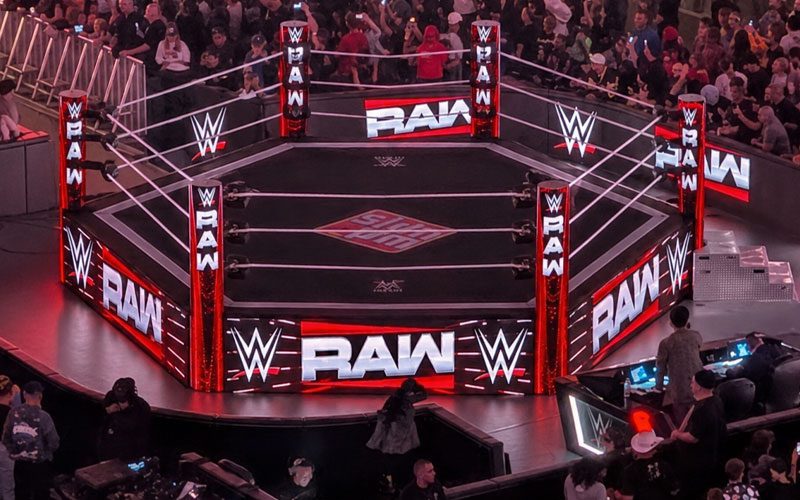
The geometry of the mat
Penta recently proposed that WWE reintroduces the six-sided ring to spice up the television product. It is a request steeped in nostalgia for his time in AAA, but the math behind professional wrestling ring dimensions suggests this is a logistical nightmare waiting to happen.
A standard professional wrestling ring measures 20 feet by 20 feet. That footprint occupies 400 square feet of floor space. A six-sided ring, geometrically speaking, requires a different set of logistical calculations for corner padding, cabling, and broadcast camera placement. Moving from four turnbuckles to six increases the required perimeter hardware by 50 percent immediately.
The infrastructure drag
There is a hidden cost to modifying the squared circle. Modern WWE production relies on a standardized setup that tours across the country on a weekly basis. Every venue, from mid-sized arenas to massive stadiums, is rigged for a four-sided ring rotation.
In 2025, WWE held 214 live events globally. Standardizing a non-traditional ring shape requires re-tooling every single staging crew, camera rig, and light plot in the company. Even a fractional increase in setup time costs thousands in labor hours, a calculation that executives rarely ignore.
A history of diminishing returns
The six-sided ring’s last major stint in mainstream US wrestling occurred in Impact. Between 2004 and 2010, the brand cycled through ring types, settling on the hexagonal design to differentiate itself from WWE. The company eventually reverted to four sides in 2010, citing talent injury risks.
Data from the era suggests that high-flyers struggled with the tighter angles of the hexagon. The distance between corners in a 20-foot ring changes depending on the geometry. In a four-sided ring, the distance between any two opposite corners is roughly 28.2 feet. In a six-sided setup, the interior space becomes more restricted, forcing wrestlers into tighter pockets near the ropes.
The Lucha Underground gap
Penta explicitly stated he won't revive his specific Lucha Underground moniker inside WWE, choosing instead to focus on his current persona. This highlights a disconnect between the AAA-style presentation he grew up with and the current WWE corporate framework.
While Penta argues that a different ring shape would make matches feel unique, statistics regarding engagement shifts in the 2010s don't support the revenue growth he might be implying. The decision to maintain a four-sided ring isn't just about tradition. It is about maintaining an efficiency metric that allows the company to maximize its 100% consistency in production quality across 52 weeks of programming.
The booking reality
Wrestling is a business of patterns. Changing the ring structure introduces a massive variable into a performance environment that prioritizes safety and predictability. If the move to a six-sided ring resulted in a 5% increase in ring-related injuries, it would be considered an objective failing by the health and safety department.
Penta has identified what he views as a visual change, but he ignored the structural reality. Wrestling is won in the details—cables, springs, and angles. Adding two more sides adds too much friction to a machine that is already humming at record-breaking speed.