The Summer of Broken Bones and Creative Resets
Professional wrestling in the summer of 2026 is fighting a losing battle against the human anatomy. A relentless scheduling loop combined with high-impact in-ring styles is breaking top talent faster than promotions can build them. Creative teams are forced into constant triage, rewriting major storylines on a weekly basis to survive.
The physical toll is altering the championship picture across both major promotions. While WWE celebrates new champions, the underlying roster depth is being stretched to a dangerous breaking point. Fans are left watching compromised athletes perform on damaged joints.
Sol Ruca’s High-Risk Style and Knee Joint History
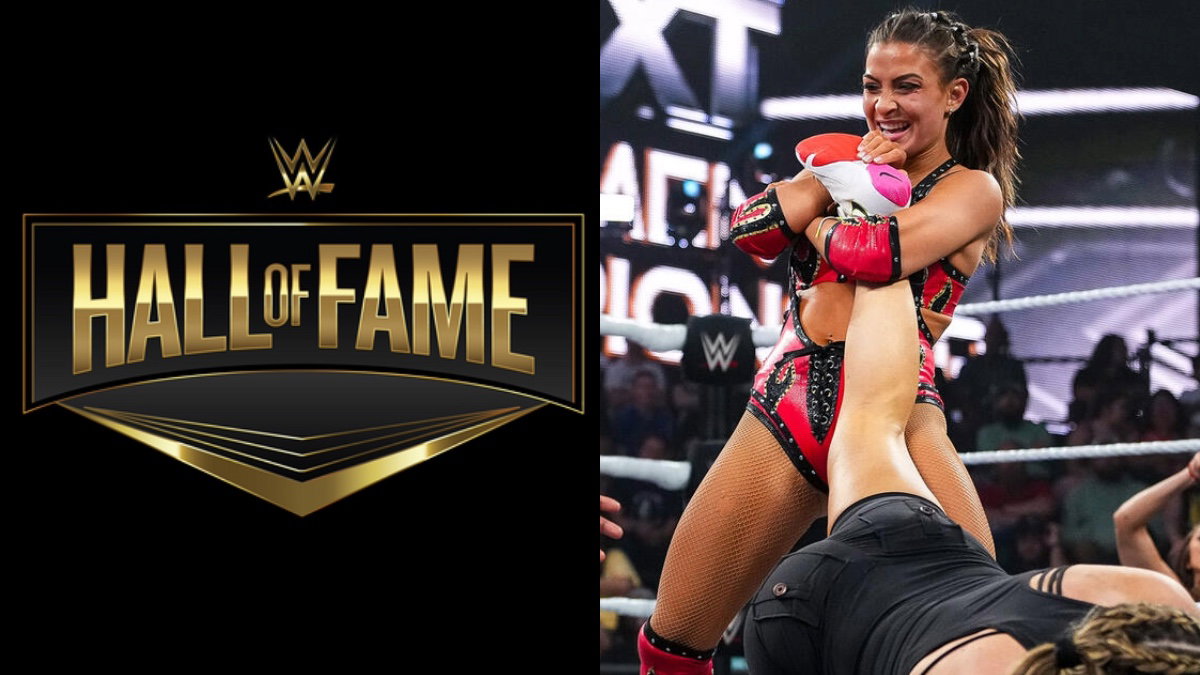
Sol Ruca's recent ascent to the WWE Women's Intercontinental Championship highlights the thin line between superstar potential and medical disaster. Ruca won the title from Becky Lynch in a physical battle at Clash in Italy. Despite her championship glory, the physical risks of her high-flying style have the medical staff in Stamford holding their breath.
Ruca's signature finisher, the Sol Snatcher, places an extraordinary biomechanical burden on her knees. The springboard backflip cutter requires her to run up the turnbuckle, leap backward, rotate 180 degrees, and crash to the canvas. A single slip on the plastic-coated ropes can destroy a joint in a fraction of a second.
This style has already forced multiple major interruptions in her young career. In April 2023, she suffered a ruptured ACL during a training session at the Performance Center, sidelining her for nearly a year. She spent 11 months in intense physical therapy before returning to action at NXT Roadblock in March 2024.
Her joint issues did not end with that initial reconstructive surgery. In October 2025, she was forced to relinquish the WWE Women's Speed Championship due to another knee injury. This recurring instability is a massive warning sign for a performer who relies entirely on explosive lower-body power.
Ruca's physical transition highlights the speed of WWE's modern developmental pipeline. Recruited directly from collegiate gymnastics, she had zero wrestling experience before WWE contacted her. She recalled her initial confusion on KVAL News, which was transcribed by WrestleTalk:
“Honestly at first I thought it was the UFC and was like ‘I don’t know how to fight, I’m not gonna do that’. Did my research and was like ‘okay, this is sick, I think I could do this’, might as well go on a tryout, if I don’t make it it’s a cool story to tell people and if I do, hell yeah let’s do it.”
By fast-tracking gymnasts to the main roster, WWE gains spectacular athletes but bypasses years of defensive ring craft. When Ruca slipped on the ropes during her Raw debut contract signing on May 4, 2026, the backstage reaction was supportive. According to F4WOnline, Paul Levesque called her to calm her nerves, advising her to stay off social media.
Triple H's verbal support is a helpful shield, but it cannot repair torn cartilage. Ruca's tendency to take extreme risks was clear at NXT Revenge on April 21, 2026. She was thrown through tables, missing the center and striking the wooden edge, which cut her scalp open and required 8 staples to close.
Skye Blue’s Long Recovery and the Metal in Her Ankle
Across the promotional divide, AEW is navigating its own roster strain as top stars return from long injury layovers. Skye Blue is currently back in the mix after a devastating lower-body injury that kept her sidelined for ten months. Her injury was a stark reminder of the physical cost of modern women's street fights and hardcore matches.
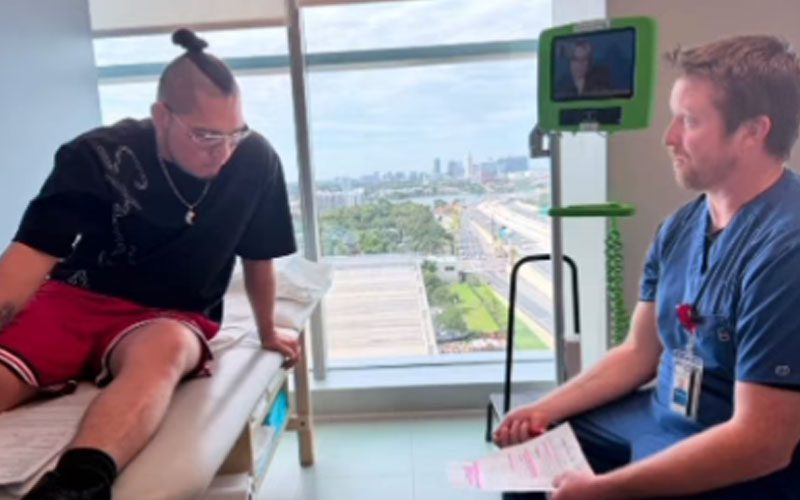
The Chicago native sat down with TMZ Inside the Ring to detail the structural damage to her joint. The medical scans revealed an injury that went far beyond a standard sprain. Blue described the moment she realized the severity of the damage:
“When I went to the surgeon and they did all the scans, he was like, surgery is this day. I was dumbfounded. He said, you don’t have a choice. My ankle was literally detached from my leg. His exact words were, you look like you were in a car crash.”
Surgeons rebuilt her joint using a steel plate, six screws on one side, and two long screws on the inside. The hardware is a permanent fixture that she can feel during cold weather and airport travel. Her recovery required 10 months of grueling rehabilitation to rebuild the surrounding stabilizer muscles.
While Blue is back in the ring, her return highlights a critical issue in AEW's booking strategy. The promotion frequently relies on high-risk stipulations to generate television interest. Rushing performers back into these physical matches before they have fully adapted to their reconstructed joints is a massive risk.
The TBS Championship picture was thrown into chaos when Willow Nightingale vacated the title due to a shoulder injury. Blue has set her sights on the vacant gold, but the physical toll of her recovery remains a factor. The booking team must manage her workload to prevent a secondary joint breakdown.
Big E’s Permanent Exit and the Safety Culture Dilemma
While Ruca and Blue represent athletes fighting to stay active, former WWE Champion Big E stands as a warning. Speaking on Chris Van Vliet's podcast, the veteran confirmed that his in-ring career is officially over. He has prioritized his long-term health over the dangerous gamble of a miracle return.
Big E suffered a fractured C1 and C6 vertebrae in March 2022 during a live SmackDown broadcast. He landed directly on his head on the floor after receiving an overhead belly-to-belly suplex. A C1 fracture is often fatal, and Big E chose a conservative healing path without surgical fusion.
Choosing to heal naturally preserved his mobility but left his neck highly vulnerable to high-impact trauma. The physical reality of modern wrestling makes a return to the ring medically impossible. The powerhouse now focuses on charity work, raising over $30,000 for Feeding America through Cameo donations.
Big E's permanent retirement exposes the persistent flaws in WWE's safety culture. The company continues to allow high-risk overhead suplexes on the concrete floor with minimal padding. Failing to ban these dangerous maneuvers is a critical mistake that continues to threaten the physical safety of the active roster.
Historical Precedents and the Booking Puzzles Ahead
Wrestling history is littered with stars who ignored medical advice, only to suffer career-ending setbacks. Stone Cold Steve Austin rushed back from a broken neck in 1997, leading directly to his early retirement in 2003. Modern sports science shows that scar tissue is less elastic, making rushed comebacks a recipe for disaster.
The promotions must learn from these historical precedents if they want to protect their investments. Committing to active, healthy champions on television is vital for sustaining long-term ratings. Writing injured stars off television immediately rather than forcing them to work through pain is the only sustainable path forward.