
WWE gambled with their belt rotations on the road to SummerSlam 2026

The cost of last-minute pivots
When Triple H confirmed a championship switch on the final edition of Raw before SummerSlam, the immediate reaction was surprise, followed quickly by a technical assessment of the booking. Placing a title change on a go-home show is a high-risk maneuver. It sacrifices the momentum of a major pay-per-view card to provide an artificial spike in television ratings. This is a recurring pattern in the current WWE product where the desire for short-term engagement overrides long-term narrative payoff.
We saw this same strategic fragmentation during the AEW Redemption event at the Bell Centre on July 26, 2026. While the Bell Centre floor vibrated with the intensity of Kyle Fletcher's title defense, the surrounding card felt disjointed. It is a symptom of a promotion struggling to map out their road to All In London without exhausting the audience. When companies prioritize a weekly television pop over the structure of a marquee event, the stakes inevitably suffer.
Tactical fatigue and the G1 effect
The issue of pacing is not confined to the North American market. The current G1 Climax is a prime example of physical and tactical depletion. As the Day 7 results from the EBARA WAVE Arena Ota demonstrate, the sheer density of the tournament schedule has led to a stagnation in match quality. Technical precision is collapsing under the weight of a bloated calendar.
The 5:51 sprint between United Empire and their opponents at the Ota show was a microcosm of this fatigue. It lacked the layering required to build genuine tension. When wrestling becomes a volume business, the space for nuance disappears. Matches that should be methodical tactical battles are reduced to accelerated spots, leaving the viewer to wonder if the wrestlers are just trying to survive the night.
The booking trap
The Triple H-led creative team at WWE is currently operating under the assumption that unpredictability translates to quality. This is a fallacy. Title changes are only effective if they move the needle forward for the characters involved. If a belt moves just because the calendar demands a pivot, it cheapens the lineage of the championship itself.
Consider the Women’s Intercontinental title change we witnessed this week. By shifting the strap twenty-four hours before SummerSlam, they have effectively signaled that the title is portable, rather than earned. It makes the upcoming weekend card feel like an afterthought, specifically for the division that held the contested belt.
Where the map breaks down
The industry is currently suffering from a lack of downtime. The transition from the G1 Climax to international PLEs leaves little room for talent to recalibrate or for the creative teams to adjust based on crowd reactions. We are seeing a direct correlation between the frequency of these high-stakes updates and a decline in thematic consistency.
At the Bell Centre, the disconnect was obvious. The crowd was invested in the individual moments, but the broader narrative progression felt stalled. We are approaching a point where fans can spot the machinery behind the curtain. When you push the talent too hard, the seams show. The 7-day window leading into major events is becoming a minefield of erratic decision-making that detracts from the spectacle rather than enhancing it.
If the goal is to drive eyes to the screen at all costs, the current output is successful. If the goal is to build long-term legacy moments that actually survive in the memory of the audience, the current strategy is failing. We need more breathing room between the major segments of the calendar. Otherwise, we are just watching a series of disconnected, albeit technically impressive, sprints toward a finish line that offers no real reward.
WWE Jey Uso YEET Authentic T-Shirt
Join the YEET movement with Jey Uso's viral catchphrase tee.
Frequently Asked Questions
Why are last-minute title changes on Raw criticized?
How does the G1 Climax schedule affect match quality?
What is the impact of shifting championship belts before a PLE?
Why does the author believe unpredictability is a creative issue?
What is the result of the industry's lack of downtime?
More Coverage
Top 10: Defining Wrestling Moments
3 hours ago
Why Matt Cardona’s return to WWE is actually a massive headache
3 hours ago
Why the G1 Climax 36 is already pushing NJPW to its breaking point
4 hours agoWWE Raw is shrinking and nobody knows why
5 hours ago
Why a high-profile AEW arrival isn't just speculation anymore
6 hours ago
Why Mike Bailey's AEW momentum makes a future WWE jump almost impossible
6 hours agoMore Analysis
Top 10: Defining Wrestling Moments
3 hours ago
Why Matt Cardona’s return to WWE is actually a massive headache
3 hours ago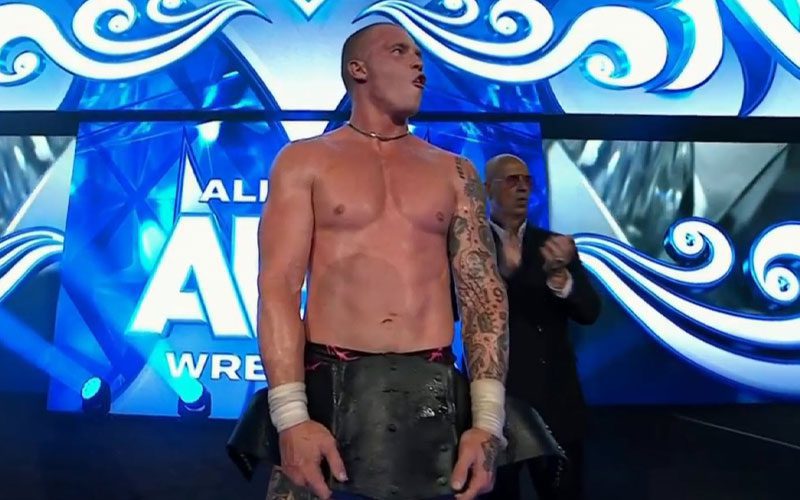
AEW Redemption left the All In roadmap looking like a minefield
3 hours ago
Why the G1 Climax 36 is already pushing NJPW to its breaking point
4 hours ago