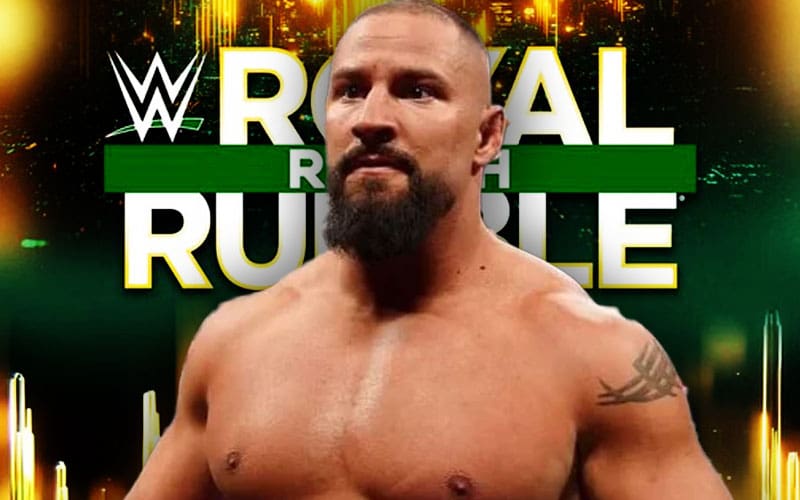
If you watched Oba Femi toss grown men around like lawn furniture or Trick Williams get twenty thousand fans chanting his name on SmackDown earlier this year, you probably assumed WWE had a master plan. You thought the front office sat in a war room, stared at whiteboards, and mapped out every detail months in advance.
Well, wipe that smirk off your face because wrestling backstage politics is never that clean. The curtain was yanked back on the real process, and it turns out the grand strategy was basically controlled chaos.
As revealed by Ringside News through footage from WWE's Unreal documentary series, executive Bruce Prichard was the man hammering the table. He pushed leadership to stop coddling developmental talent and throw them straight into prime time.
We are talking about a roster shift that moved Oba Femi, Trick Williams, Lash Legend, and Je’Von Evans out of the Performance Center sandbox. They were dumped straight into the deep end of Monday Night Raw and Friday Night SmackDown.
It explains why half these call-ups look like superstar million-dollar projects one week and lost tourists the next. Prichard wanted to break eggs, and brother, he brought out the whole carton.
The "Break Some Eggs" Doctrine
For years, NXT operated like a high-end culinary school where Shawn Michaels personally inspected every dish before it left the kitchen. Prospects stayed in Orlando until they could work twenty-minute classics in their sleep and execute camera cues without blinking.
That approach produced incredible wrestlers, but it also created a massive bottleneck. You had talented athletes turning thirty in developmental while waiting for main roster creative to find an open slot.
Bruce Prichard decided to smash that entire philosophy with a sledgehammer. He openly argued that waiting for total perfection was holding the main roster back from fresh blood.
During backstage strategy meetings captured on tape, Prichard laid out his philosophy with zero corporate sugarcoating.
"NXT—we've gotta look at our resources there, pull some people up that may not be ready, get them up here, get them started, break some fucking eggs, and let's figure it out."
That is raw executive gambling right there. It is the wrestling equivalent of drafting a freshman quarterback, skipping training camp, and handing him the start against a blitzing NFL defense on Sunday night.
Sometimes you hit the jackpot and land a generational superstar. Other times you get a quarterback who sees ghosts and spends the next three seasons holding a clipboard on the bench.
Throwing green talent on live television without a safety net is a terrifying play. When a spot goes wrong on live TV, there are no second takes, no editing tricks, and no mercy from social media.
The Oba Femi and Trick Williams Experiments
Look at the two flagship projects in this wave: Oba Femi and Trick Williams. Both guys have physical tools that make network executives drool, but they represent completely different operational risks.
Oba Femi is a brick wall of a human being. In NXT, he flattened opponents with brutal uppercuts, pop-up powerbombs, and effortless overhead belly-to-belly suplexes that made hardcore fans drop their jaw.
Triple H bought into the hype immediately. Behind closed doors, Hunter admitted nobody knows how a power wrestler translates until he faces main roster veterans, but he backed Femi as a prospect who could not miss.
The gameplan was to give Femi a monster launch at the 2026 Royal Rumble and build him into a legitimate main-event attraction.
Hunter practically gushed over Femi's potential when discussing his trajectory with executive staff.
"There's a part of me that thinks you do something with Oba here, then he debuts big in the Rumble, and we just get him cooking. He's a sponge. Great attitude. To make him a main-event, box-office attraction, he needs to be a bad motherf****r."
Triple H even compared Femi to a blue-chip franchise player: "You never know until he gets here. Yeah, that one I feel is the can't-miss quarterback coming out of the system."
When Femi made his official Raw in-ring debut on the March 9 episode, you could see the raw horsepower. He flattened his opponent, hit a violent clothesline, and walked out looking like a force.
Trick Williams presented a completely different puzzle. Trick has absurd charisma and gets arena crowds bouncing, but his ring work was running in place down in Florida.
Triple H pushed hard for Williams to make the jump, arguing that keeping him in NXT was actually stunting his growth.
"He's done everything he can possibly do in NXT. He's not gonna get any better down there. If anything, he might regress. He needs to come up here and work with people who have more experience. I think we've gotta pull the trigger on somebody, and why not try it with him?"
That is a damning statement about NXT's ceiling. When the Chief Content Officer says a wrestler will regress if he stays in developmental, it tells you everything about the gap between Orlando and the big leagues.
Why Sink-or-Swim Booking Usually Drowns Midcarders
Here is where we need to stop worshipping the corporate genius and look at the body count. For every superstar who thrives under pressure, three others get eaten alive by creative indifference.
Take Lash Legend and Je’Von Evans. Evans is only 20 years old and pulls off breathtaking springboards and Spanish Flies that defy gravity.
Putting a 20-year-old on nationwide television every single week without a clear creative arc is playing with fire. One botched spot or awkward promo can label a talent as unready in the eyes of fans forever.
We have seen this movie fifty times before. Remember when call-ups got shiny entrance graphics for three weeks before getting buried in chaotic six-man tag matches on SmackDown?
Just look back at how creative panicked during Bron Breakker's Rumble booking timeline when decision-makers froze up at the last second. When management lacks courage, the talent pays the price.
Even Bruce Prichard admitted the danger built into his own philosophy: "We have to be patient, too. When they come up, they won't be ready."
That line feels like a pre-packaged excuse. It allows management to blame the developmental system or the wrestler's readiness whenever a storyline flops, rather than admitting the writers failed to write a compelling script.
The Final Verdict on WWE's New Pipeline
At the end of the day, wrestling needs chaos. Watching over-rehearsed matches where every footstep is choreographed by ten producers in Orlando gets stale fast.
Prichard's policy is risky, reckless, and deeply flawed, but it forces energy back into the product. It gives young hungry athletes a shot to grab the brass ring before they turn bitter in developmental.
Oba Femi has the presence to be a monster champion. Trick Williams has the connection with fans to headline arenas if his in-ring work catches up to his mouth.
Whether this strategy succeeds depends entirely on Triple H's willingness to protect these kids while they learn on live television. If WWE pulls the rug after two bad weeks, the whole experiment collapses.
So strap in, wrestling fans. The pipeline is open, eggs are cracking backstage, and the main roster meat grinder is officially running at full speed.