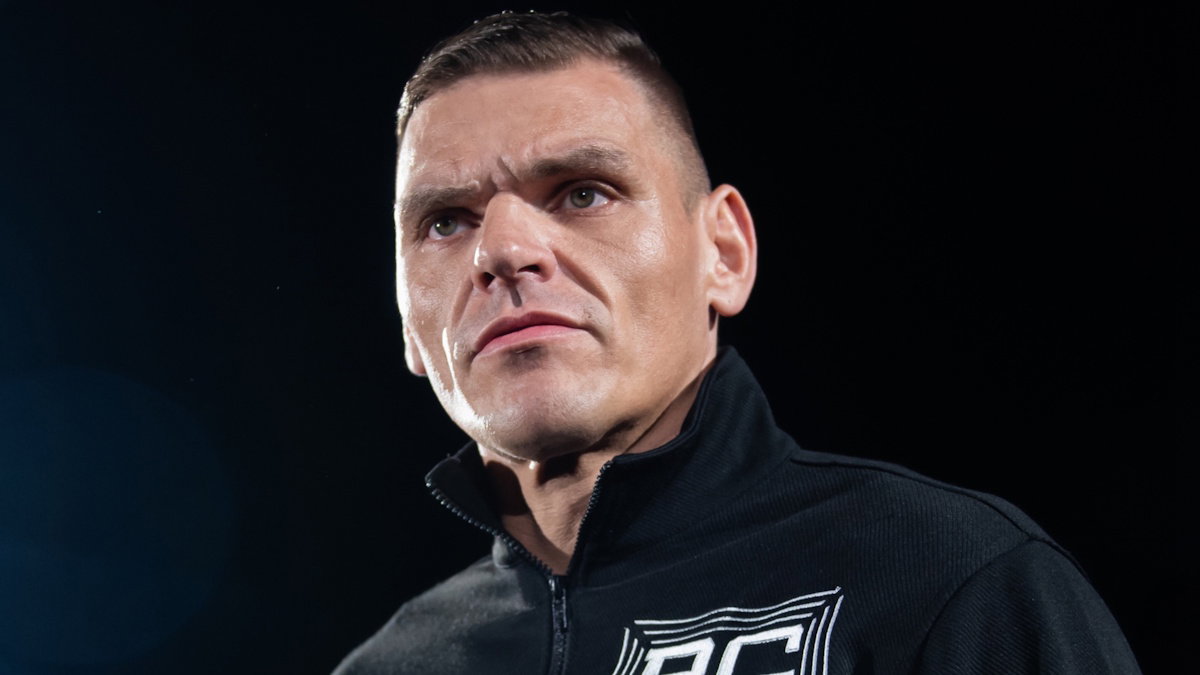
GUNTHER and the relentless mechanics of the retirement match
When GUNTHER steps into the ring, the geometry of the square circle shrinks immediately. His opponent is forced into a defensive posture within thirty seconds, forced to absorb stiff knife-edge chops that register above ninety decibels in arena acoustics. The ring psychology isn't complex, but it is executed with surgical precision: target the chest, destroy the breath, and neutralize high-flying counters before the opponent can set their base.
That brings us to AJ Styles, whose recent decisions around his retirement match at the Royal Rumble highlight a key shift in how veteran stars manage their exit. As reported by WrestleTalk, the choice to put his career on the line against GUNTHER wasn't an accident of creative booking. Styles knew that ending his run against an enforcer who doesn't cut corners would force a classic, heavy-hitting confrontation.
Watching Styles work through his final sequence was a masterclass in sell-and-fire psychology. He didn't rely on cheap spots or rapid-fire kickouts at two and nine-tenths. Instead, he ate three consecutive powerbombs, each one hitting the canvas with zero give, before submitting to a rear-naked choke at the 22-minute mark.
Yet, there is a flaw in how WWE handles these retirement angles. Building an entire division around one immovable final boss creates a structural bottleneck. When every veteran must feed the same Austrian meat grinder, the mid-card loses its narrative variety.
GUNTHER's lariat timing remains unmatched, but repetitive match structures risk dulling his impact. If every high-profile match follows the same formula of hero comeback into brutal submission, crowd reaction will eventually plateau.
The Performance Center friction: NCAA muscle meets indie craft
Step inside the WWE Performance Center in Orlando and you will spot two distinct schools of thought competing for TV time. On one side are the Division I collegiate athletes brought in through the NIL program. On the other side are the independent wrestling veterans who spent a decade driving eight hours for fifty-dollar paydays in high school gyms.
As former performers have noted, the animosity between these two camps isn't just internet rumor. As WrestleTalk documented, the friction stems from fundamental differences in how both groups approach the canvas. College wrestlers view the ring as an athletic drill with clear metrics, while indie workers view it as a theatrical canvas where timing and crowd manipulation dictate success.
Take a look at the tape from recent NXT broadcasts. College recruits hit double-leg takedowns with explosive speed, but they often miss the micro-adjustments needed between spots. A side headlock takeover looks technically sharp, but the worker forgets to sell the neck tension or register eye contact with the hard camera.
Indie veterans, meanwhile, excel at spacing and ring awareness. They know how to stall on the floor for an eight-count to build heat, or how to feed a shoulder block so the babyface gets maximum pop from the crowd. But indie workers often lack the explosive raw acceleration that NCAA All-Americans bring to spear variations and spinebusters.
The mistake NXT management keeps making is trying to sanitize both styles into a uniform TV template. Forcing a natural collegiate power athlete to work a 15-minute slow-burn wrist-lock sequence dilutes their strengths. Conversely, forcing an indie technician to sprint through three-minute sprint matches robs them of their ring control.
When these two philosophies collide without proper coaching, spots get missed and communication breaks down. A high-risk moonsault requires complete trust between the giver and the catcher. If the catcher is bracing like a football linebacker instead of giving ground like a wrestler, injuries follow quickly.
Saraya, Paige, and the physical toll of competing across promotions
The return of Paige—now working under her real name Saraya—to WWE after 4 years away has re-opened discussions about work-rate and physical preservation. Her time in AEW showcased both the freedom and the peril of modern alternative promotions. When a performer works with a fused neck, every bump carries exponential risk.
In recent comments, Saraya was blunt about her stint away from WWE, stating 'My Heart Wasn’t In It' during her AEW run. As F4WOnline detailed, she felt her physical sacrifices weren't matched by the environment, famously declaring 'I gave my neck for this company.' That raw admission exposes the vast difference in how WWE and AEW manage their injured stars.
AEW's match pace leans heavily into high-risk spots, unscripted apron bumps, and rapid-fire spot sequences. For a veteran coming off serious spinal surgery, that environment requires constantly taking protection into your own hands. WWE, by contrast, operates with strict agent-guided layouts where bumps are carefully paced and ring mats feature thicker padding under the canvas.
Saraya's current ring work reflects this reality. She relies less on the high-impact RamPaige cradle DDT and more on ground control, thrust kicks, and tactical ring positioning. She cuts off the ring using ropes and corner traps, minimizing high-angle back bumps.
However, critics are right to question whether her current move set can keep pace with WWE's hyper-athletic women's division. Matches against top-tier strikers require taking sharp German suplexes and running knees to the face. If her neck cannot absorb those impacts, her matches will inevitably feel restricted and overly protected.
Meanwhile, the wider medical room in WWE is watching closely as another injured WWE star is getting closer to returning to action. The roster depth is already stretched thin, meaning returning veterans will be pushed into high-stakes TV matches without warm-up loops on live events.
Jake Hager's Power Slap pivot and the reality of combat sports
Outside the squared circle, Jake Hager's recent venture into Power Slap has drawn sharp commentary from fight fans and wrestling purists alike. As Wrestling Inc covered, Hager addressed his recent knockout loss by insisting he remains a natural fit for the slap-fighting format despite the brutal finish.
From a biomechanical perspective, slap fighting removes every defensive tool a combat athlete spends decades developing. In wrestling or MMA, Hager relied on his collegiate wrestling base, shooting low singles and using head-positioning against the cage to avoid damage. In Power Slap, you stand flat-footed with your hands behind your back and absorb a full-torque strike directly to the jaw.
Taking an unprotected open-hand strike from a 265-pound opponent produces linear acceleration forces similar to a heavy car crash. For a wrestler with existing head trauma from years of mat bumps, participating in structured brain trauma for a quick payday is a questionable career decision.
Hager's belief that his athletic background translates to taking unshielded head strikes is flawed logic. Conditioning your neck muscles helps, but it cannot prevent the brain from sloshing against the skull when hit squarely on the chin.
Final tactical preview and match prediction
Looking ahead to the upcoming slate of marquee matches, the tactical key will be match pacing and bump discipline. Expect main event matches to slow down in the opening eight minutes, prioritizing heavy lock-ups and limb targeting over immediate dive sequences outside the ring.
My prediction for the main event title scene is clear and unwavering: GUNTHER will retain his dominant position through the remainder of the summer season. He will defeat his next challenger by referee stoppage within 18 minutes, targeting the midsection with short-arm clotheslines before locking in the sleeper hold.
The challenger will attempt early high-flying offense, hitting a springboard forearm and a dive to the outside at the six-minute mark. But GUNTHER's ability to cut off the ring and trap opponents in the neutral corner will prove decisive once again. Count on a violent, methodical masterclass that reinforces why simplicity in ring psychology beats reckless spots every single time.