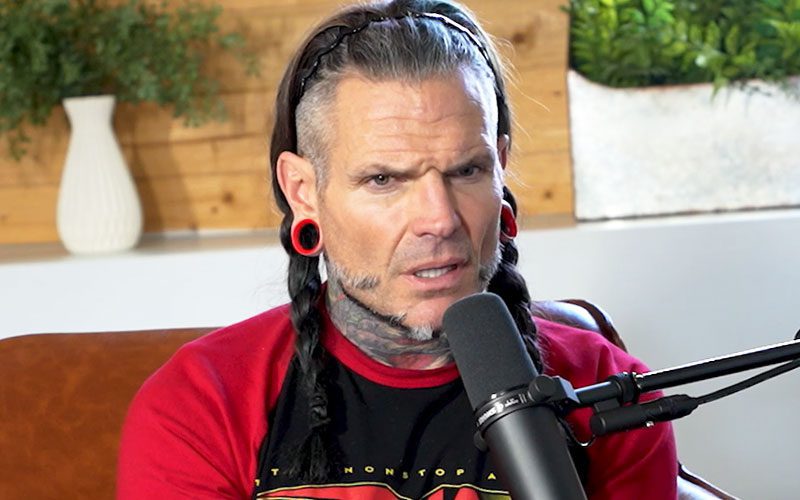
Hardy pivots toward a musical future
Jeff Hardy is publicly tempering expectations for his long-term future in professional wrestling. In a recent interview, the veteran performer indicated that his focus is shifting rapidly toward his musical career, with a target date of late 2026 for a potential reduction in his in-ring schedule.
Hardy, a multi-time world champion and a cornerstone of the industry's high-flying era, has maintained a dual-career trajectory for decades. However, the physical toll of his trademark style—defined by high-risk ladder matches and gravity-defying spots—has clearly influenced his outlook. The Ringside News report confirms he is now prioritizing his band and solo recording projects over a grueling weekly schedule.
I really feel like I'm moving toward a place where the music becomes the primary focus by the end of 2026. The wrestling is what I love, but my body has a shelf life that I am finally starting to respect.
The sentiment highlights a pivot that many veterans face as they reach their late 40s. Hardy’s career has been defined by high-impact maneuvers, but the modern physical demand of the business leaves little room for longevity without significant concessions. By setting a hard date for a lifestyle change, he is proactively managing his exit rather than waiting for a catastrophic injury to force his hand.
The musical gamble vs. in-ring legacy
Leaning into a music career is a classic move for retired wrestlers, yet Hardy’s transition attempt remains a massive outlier in pure success metrics. While many performers struggle to pivot, he views his artistic expression as a continuation, not a departure, from his persona. The transition could be viewed as a signal of his fading interest in the current booking environment as much as a genuine love for his guitar.
Critics point out that wrestling promotions often suffer when talent splits focus between the ring and creative side projects. A performer who isn't 100% committed to the schedule can create booking roadblocks. If Hardy is mentally checked out, the matches themselves—once the gold standard for innovation—may suffer in quality. He needs to maintain a high floor if he intends to remain a top-tier draw for another eighteen months.
The physical reality of the Charismatic Enigma
The math on Hardy’s body is punishing. Decades of Swanton Bombs and jumps from steel structures have left visible, deep-seated wear on his joints. Unlike some contemporaries who evolved their work into a more grounded, technical style, Hardy remains tied to his high-spots. That commitment is legendary, but it is also the reason he is currently discussing a transition plan.
Looking at the broader industry impact, promotions will likely be hesitant to anchor long-term storylines around a performer who has expressed a desire to scale back. Creative teams prefer stability. Unless Hardy signs a contract explicitly geared toward a final tour or a limited appearance deal, management may begin to phase him down the card faster than he anticipates to maximize value while he is still present.
What this means for the industry
Hardy’s potential departure brings up questions regarding the industry's reliance on legacy stars. When household names reach the point of wanting out, promotions are forced to cultivate younger talent that can reliably fill the gap. It is a necessary cycle, though usually a painful one for investors and fans who grew up watching the current icons.
The move also forces a conversation about the post-wrestling lives of iconic performers. Many wrestlers struggle with the void left by a lack of crowd reaction; by focusing on his music, Hardy is attempting to secure a different emotional outlet. It is a proactive health decision that should likely be viewed as a positive development for his long-term well-being, even if it leaves a hole in the current ring rotation.
Ultimately, by the time he steps away in 2026, he will leave a resume that is nearly peerless in terms of sheer spectacle. Whether he goes out with a major title reign or a quiet, professional wind-down remains the primary unknown variable in this scenario. One thing is certain: he is no longer willing to sacrifice his personal creative passion for the benefit of a promoter or a calendar that offers no end in sight.