The long-term ambition of a part-time attraction
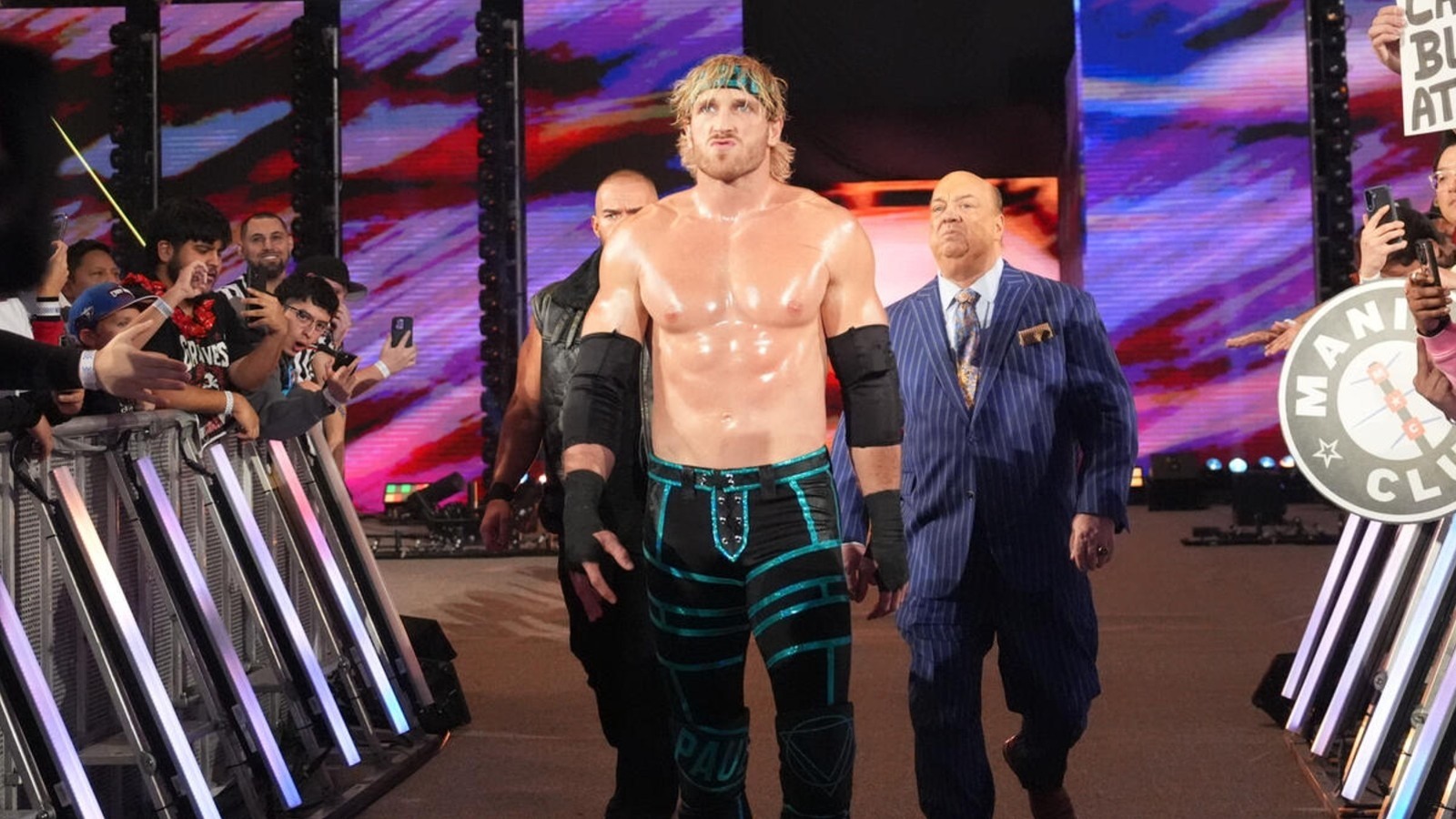
Logan Paul made headlines recently by declaring he intends to stick around WWE for another decade or decade and a half. He explicitly framed it around his newborn daughter, wanting her to be old enough to watch him perform live. On paper, it sounds like the commitment WWE management has been salivating over since he first stepped through the ropes at WrestleMania 38.
Yet any tactician analyzing Paul’s trajectory has to look past the quote and dissect the actual ring economy. A 10 to 15-year runway for a performer who averages less than ten matches a year is a vastly different proposition than a full-time tour worker. Paul’s strength has always been maximum efficiency per minute of screen time. Expecting that high-impact, high-risk style to maintain structural integrity into his early 40s requires serious scrutiny.
High-flying geometry vs. physical shelf life
When you watch Paul in the ring, his spatial awareness and execution of complex spots are undeniable. Look at his springboard Spanish Fly off the apron against Seth Rollins, or that mid-air collision with Ricochet at Royal Rumble 2023. Those sequence timings rely on precise athleticism, explosive twitch fibers, and immaculate physical conditioning.
However, high-volatility moves carry exponential wear on the spine and joints over a long timeline. If Paul intends to stretch his career to 2040, his move-set will have to undergo a massive tactical evolution. Relying on coast-to-coast splashes and taking terrifying bumps off ladder rungs is unsustainable over a decade-plus span, regardless of how light his annual calendar remains.
The critical flaw in his recent run isn’t his execution between the bells; it’s the pacing of his narrative arcs. When a champion or featured star is absent for six-week stretches, the surrounding midcard division gets pinned in place. Title defenses feel like standalone pay-per-view spectacles rather than the culmination of weekly episodic pressure.
The strategic reality of the Maverick era
WWE clearly values the mainstream crossover leverage Paul brings to every premium live event. His social reach translates into casual visual engagement that traditional wrestling angles rarely hit. But from a purely analytical standpoint, committing to a 15-year horizon means WWE must transition him from a novelty attraction into a functional gear of the core booking engine.
Can Paul handle the grind of regular storylines without losing the extra-special aura that protects his limited outings? That’s the real question facing Triple H and the creative team moving forward. If he remains a specialized mercenary who pops up for major stadium shows, talking about a 15-year run is easy. Doing the work to justify that spot while keeping fans invested for the long haul is an entirely different operational challenge.
The Verdict
Logan Paul will likely stay attached to WWE for years to come, but don't buy the idea of a full-throttle 15-year run just yet. Expect his active wrestling window to peak over the next three to five years before he transitions into a strictly operational or managerial role. When the athleticism wanes, the current spot-heavy style won't hold up without a fundamental reinvention of his ring psychology.