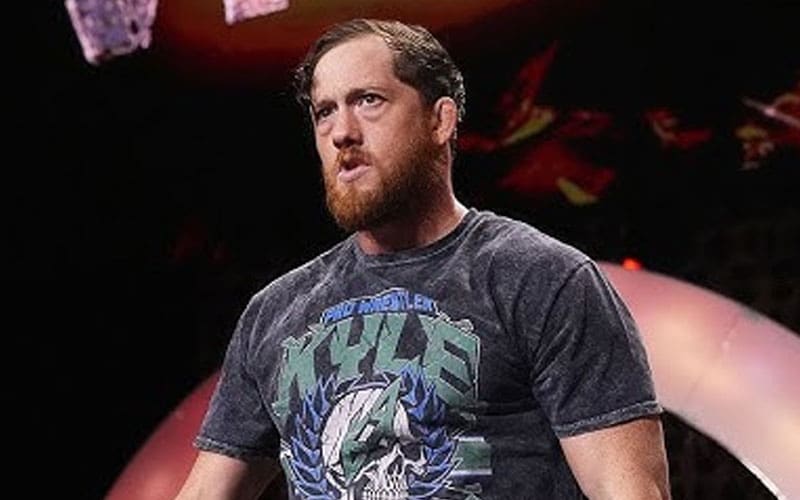
Tony Khan's hyperbole cannot hide the real story of Kyle O'Reilly
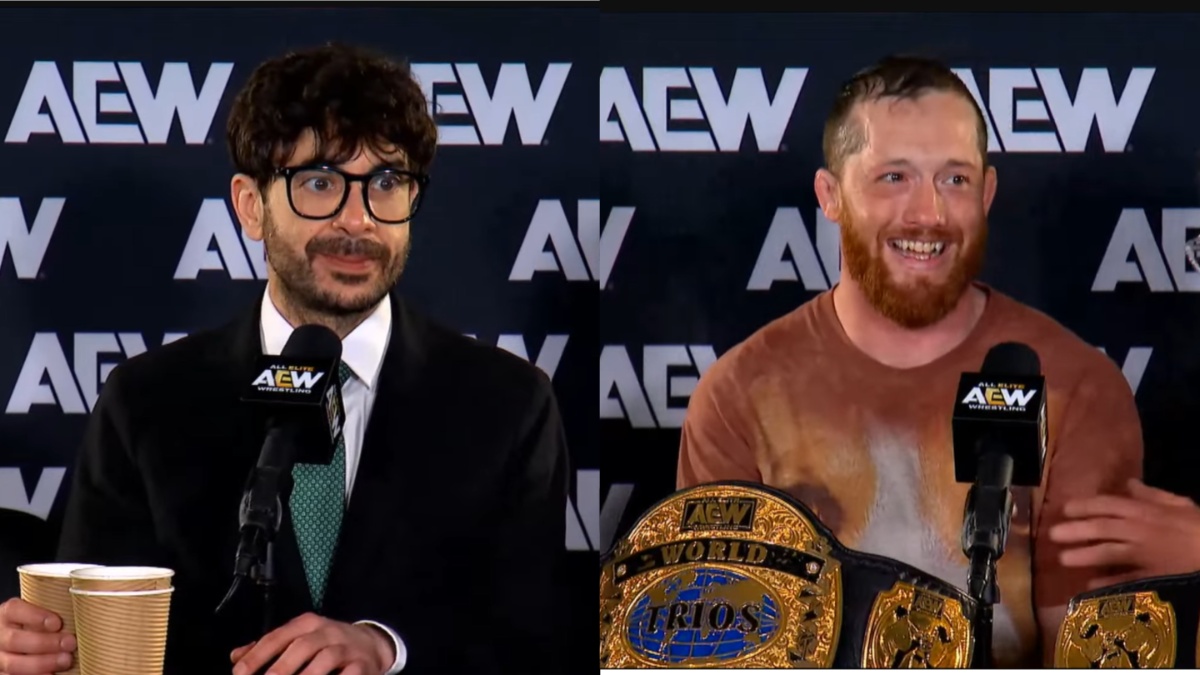
The hyperbole machine strikes again
Tony Khan simply cannot help himself. The AEW president has a well-documented and frequently exhausting habit of grading his own homework on a massive curve.
In Khan's world, every decent television match is an all-time classic. Every signing is a game-changer. Every pay-per-view is the greatest night in the history of professional wrestling.
We saw the absolute peak of this promotional tic recently. Discussing Kyle O'Reilly's emotional return to the ring at AEW Dynasty, Khan spoke to the press. As WrestlingNews.co reported, Khan declared the comeback “maybe the best memory I will ever have here in Canada as a wrestling promoter.”
It is a pleasant, feel-good sentiment on the surface. It is also completely ridiculous when you examine the actual context of AEW's history in that country.
Let us examine the actual history here. AEW has a rich track record north of the border. We saw Adam Copeland wrestle a brutal, bloody war against Christian Cage in front of a rabid Toronto crowd. We watched Kenny Omega return to his hometown of Winnipeg in a spectacular trios match. We witnessed the inaugural Forbidden Door pay-per-view at the Scotiabank Arena, a night that felt like a genuine earthquake for the industry.
Those were monumental events. Placing a solid midcard return above all of them is not just recency bias. It is a fundamental misread of what makes a wrestling moment legendary.
To slap the "best memory" label on O'Reilly's return does not actually elevate the moment. It just reminds exhausted fans that Khan's hype filter is permanently broken.
When every single event is framed as the apex of the sport, the words lose their meaning entirely. It is the boy who cried classic. Khan has conditioned his own audience to roll their eyes at his press conference quotes.
The real casualty here is the talent. O'Reilly does not need the burden of being the greatest Canadian memory in AEW history. He just needs a solid push and a chance to prove his neck can hold up to the grueling schedule.
A genuine triumph overshadowed by spin
The frustration here is absolutely not directed at Kyle O'Reilly. Far from it.
O'Reilly's return to the ring is nothing short of miraculous. A cervical fusion is not a sprained ankle. It involves removing a damaged disc in the neck and fusing the vertebrae together. For a professional athlete who takes back drops, piledrivers, and German suplexes for a living, it is often a one-way ticket to retirement.
Edge was forced into a nine-year exile because of severe neck issues. "Stone Cold" Steve Austin had his career drastically shortened by spinal stenosis. The fact that O'Reilly defied those grim medical odds is a spectacular achievement.
He spent torturous months locked in a heavy neck brace, unable to engage in even basic physical activities. He openly documented his terrifying struggles with losing feeling in his arm, a side effect of the severe nerve damage. Getting cleared by medical professionals to take bumps again is a massive, undeniable personal victory.
That should have been the only story.
AEW production should have focused entirely on the human element. The story of a beloved, hard-hitting worker fighting his way back from the absolute brink of forced retirement. The live crowd response at Dynasty was entirely genuine. The fans in the building understood exactly what he went through to get back down that ramp.
But Khan's immediate need to brand it as a superlative Canadian memory cheapens the raw reality of the situation.
It shifts the focus away from O'Reilly's grueling physical rehabilitation and places it squarely on the promoter's exaggerated sense of his own company's scale. It turns a visceral human triumph into a cheap marketing slogan.
The ghost of the Undisputed Elite
To understand the stakes of this return, we have to look at where O'Reilly left off.
His initial run in AEW feels like a lifetime ago. He debuted at the Holiday Bash in late 2021, immediately aligning with Adam Cole and Bobby Fish. They had absolute bangers against the Young Bucks and Jurassic Express.
The irony is that O'Reilly was performing at the absolute highest level of his singles career right before his body failed him. Let us rewind to the spring of 2022. He was having brutal, gritty matches on free television.
His clash with Rey Fénix on Dynamite was a breathtaking clash of styles—the high-flying luchador trying to survive against the grounded, limb-snapping technician. He followed that up with a violent main event against Jon Moxley. He was proving that he did not need Adam Cole to be a main event player. He was carving out his own brutal identity.
Then the injuries piled up. Fish left the company. Cole shattered his ankle. The entire faction fell apart in a mess of bad timing and worse luck.
Now, O'Reilly returns to a completely unrecognizable roster.
The Undisputed Kingdom storyline has completely flatlined. Roderick Strong is doing fine work as the International Champion, but the broader faction is drowning in apathy. Wardlow's booking has been a disaster class in start-and-stop momentum.
Throwing O'Reilly back into that specific mix feels like a massive step backward. He operates best as a lone wolf shooter. He excels when he is purely focused on dismantling opponents limb by limb, rather than standing behind Cole during twenty-minute in-ring monologues.
Where does he fit in the 2026 puzzle?
The broader question now is how AEW actually utilizes him.
The main event scene is currently dominated by the explosive athleticism of Will Ospreay, the swaggering brutality of Swerve Strickland, and the terrifying presence of Samoa Joe. The in-ring style has heavily shifted toward high-speed, explosive spotfests. The standard television match moves at a million miles an hour.
The AEW locker room is currently stacked with incredible, high-flying athletes. Ospreay is putting on acrobatic clinics every Wednesday. Rey Fénix and Penta El Zero Miedo are defying gravity. But a wrestling show needs variety.
If every match is a fast-paced gymnastics routine, the audience becomes numb to the spectacle. O'Reilly brings the dirt. He brings the grit.
O'Reilly's striking game is a massive, immediate differentiator from the rest of the roster. When he throws a combination, it looks like a legitimate mixed martial arts exchange rather than a choreographed dance. He targets the liver. He relentlessly chops the lead leg. He works over his opponent with a methodical, predatory precision.
When he locks in a cross-arm breaker, he contorts his face like he is genuinely trying to snap the bone in half. That level of intense realism is in short supply. AEW needs that violent anchor to keep the show grounded.
There is a massive opportunity to use him as a pure gatekeeper. Imagine O'Reilly tying up Konosuke Takeshita for fifteen brutal minutes. Imagine him trading stiff forearms with Eddie Kingston.
If Bryan Danielson is truly winding down his full-time schedule, AEW desperately needs someone to fill that role of the grimy, technical sadist. O'Reilly fits that profile perfectly.
Those are the matchups that make his return a television draw. He brings a grounded psychology that makes the whole card look significantly better.
The danger of the return pop
The biggest threat to O'Reilly right now is AEW's own booking patterns.
We have seen this movie too many times. A beloved wrestler returns from a long absence. The arena goes dark. The music hits. The crowd erupts into a deafening roar. They get a dominant win in their first match back.
And then nothing happens. They vanish into the vortex of AEW's bloated roster.
They pop up three weeks later in a meaningless tag team match on Rampage. They get stuck in a backstage promo segment that goes nowhere. Wardlow is the ultimate cautionary tale of this booking style. He was the hottest act in the company, and atrocious follow-up booking completely cooled him off.
Look at Miro's sporadic appearances. Look at PAC disappearing for months at a time. Earning consistent television time is an absolute dogfight.
O'Reilly needs immediate, high-stakes matches. He cannot just slot into random six-man tags against the Dark Order to kill time on a Friday night.
If Khan truly believes this return is one of his greatest memories, he needs to book O'Reilly like a top-tier star. He needs to be picking up decisive submission wins on Dynamite. He needs a clear, linear path to a championship.
Without a concrete plan, he risks becoming just another body in the locker room. The initial goodwill from the crowd will evaporate if he is not given compelling material to work with.
Booking the shooter
So, what should the immediate future look like?
Long before AEW existed, O'Reilly was proving his worth in Ring of Honor. His matches against Adam Cole for the ROH World Championship were legendary, blood-soaked wars that defined an entire era of independent wrestling. He showed a level of intense main event stamina that very few wrestlers possess.
He carried that same workhorse mentality over to his run in NXT, where he was arguably the MVP of the black-and-gold brand's twilight years. The man has a proven track record of delivering when the lights are brightest. He does not need synthetic hype to be seen as a star.
Keep him far away from the convoluted melodrama of the Undisputed Kingdom. Let him operate as a singles act with a massive chip on his shoulder.
A program with Katsuyori Shibata for the ROH Pure Championship would be an absolute dream for the sickos. Watching those two trade penalty kicks and Kimura locks would be a masterclass in modern technical wrestling.
A bloody, violent war with Jon Moxley is another obvious direction. Moxley loves working with guys who lay it in, and O'Reilly throws some of the stiffest knees in the business.
The immediate roadmap for O'Reilly needs to be ruthless and straightforward. No long, rambling promos. No goofy backstage skits. Just put him in the ring and ring the bell.
Let him challenge Roderick Strong for the International Championship. The built-in history is already there. They know each other inside and out from their days in Ring of Honor and NXT. A twenty-minute technical war between those two would steal any pay-per-view.
The options are there. The talent is undeniable. The physical recovery is a clear indicator of his incredible work ethic.
Tony Khan does not need to sell us on this being a historic, unmatched moment in promotional history. He just needs to let the man wrestle.
Let Kyle O'Reilly do what he does best. The hype is entirely unnecessary when the wrestling is this good.
Hopefully, the booking over the coming months will reflect that undeniable talent, rather than just riding the fleeting wave of a single, over-hyped press conference quote.
Read Next
- Tony Khan confirms Toni Storm was pulled from AEW Dynasty plans
- AEW Dynasty fallout: Severe injury forces major pivot in Trios Title match
- MJF's cheap win over Kenny Omega proves his AEW title reign is out of ideas
- Shane McMahon in Vancouver? Why tonight's AEW Dynasty is the moment
- ⚡ AEW Dynasty 2026 — Full Coverage Hub
Hitman: My Real Life in the Cartoon World of Wrestling
The brutally honest, definitive story from the best there is.
Frequently Asked Questions
What did Tony Khan say about Kyle O'Reilly's return at AEW Dynasty?
Why is Tony Khan criticized for his comments on Kyle O'Reilly?
What major AEW events in Canada contradict Tony Khan's claim?
What specific injury did Kyle O'Reilly recover from to make his return?
How does Tony Khan's hyperbole negatively affect AEW talent?
More Coverage
AEW's Redemption card is a mess of missing pieces and bad timing
9 hours ago
AEW medical department faces pressure as mid-card injury list expands
10 hours ago
AEW and TNA are fighting two very different data wars
10 hours ago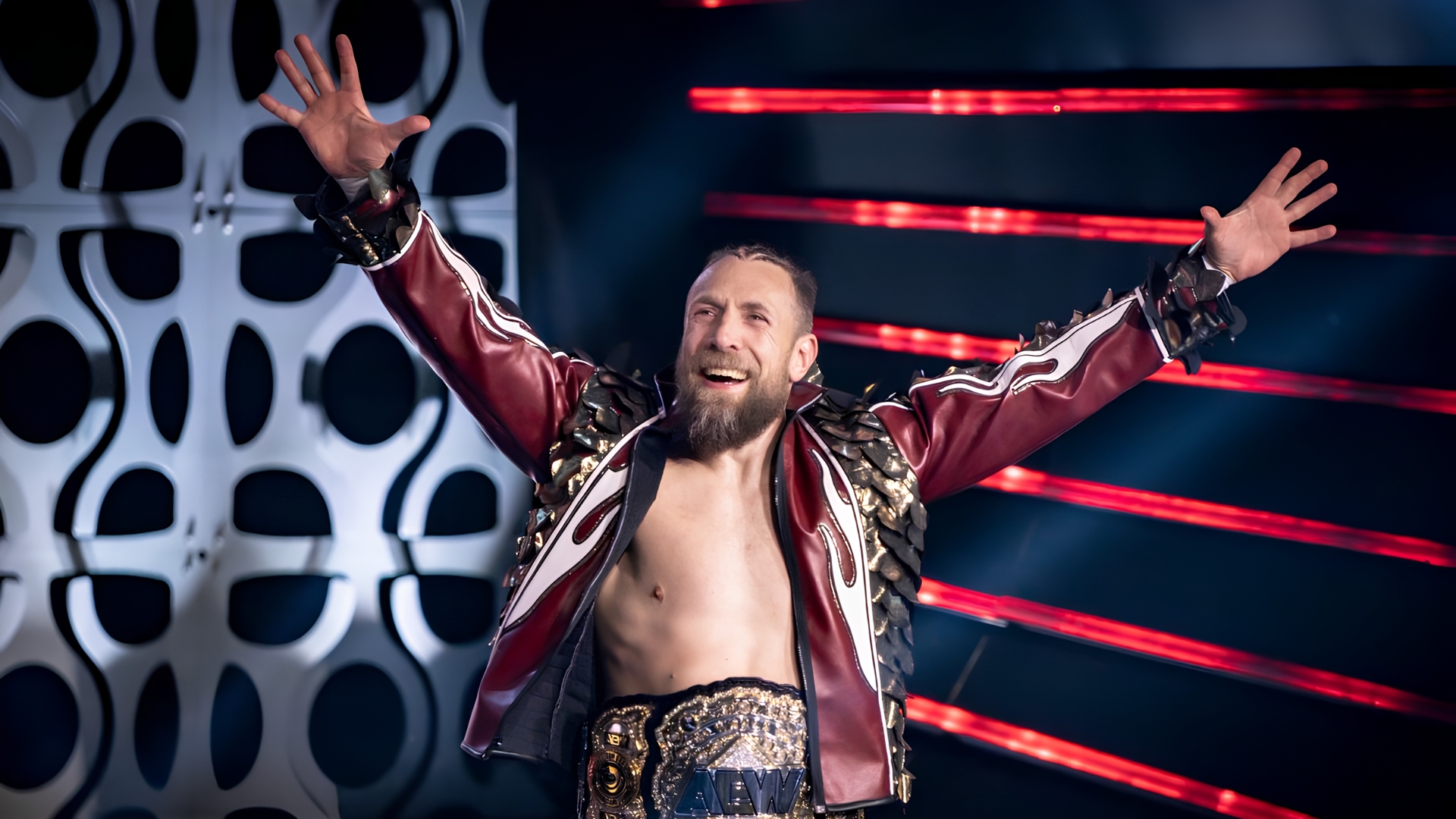
Bryan Danielson's physical toll signals a shift for his AEW role
13 hours ago
Top 10: Tony Khan’s Managing Style
1 day, 9 hours ago
Tony Khan keeps swinging: Media scrums, title bloat, and Goldberg’s signals
1 day, 9 hours agoMore Analysis
AEW's Dynasty go-home show proved Tony Khan has a massive video package problem
3 months, 3 weeks agoAEW Dynasty is the ultimate gut-check for Tony Khan
3 months, 3 weeks ago