AEW's Dynasty video dump proves they still struggle with live storytelling
The delayed reaction to a major event
Tony Khan has a timing problem. It was evident on March 30 in Kansas City during AEW Dynasty. It became glaringly obvious on April 12, when AEW quietly dumped a series of behind-the-scenes videos on their digital channels. The footage itself is spectacular. We see the raw emotion, the exhausted slumps against concrete walls, and the immediate medical evaluations. It is gripping television.
The problem is that none of this made the actual pay-per-view broadcast. Instead of weaving these character moments into the live show, AEW relegated them to a Friday afternoon YouTube playlist. This is a recurring operational flaw for the company. They capture lightning in a bottle backstage, but fail to broadcast it when the audience is actually paying attention.
As PWInsider highlighted with the release of these videos, the supplementary material is rich. It gives matches context that was sorely missing on the night. But relying on post-event digital drops to explain your main event is like releasing the final chapter of a book two weeks after publication.
Missing the moment in Kansas City
Let us look at the structural pacing of Dynasty. The bell rang, the confetti dropped, and the broadcast rushed off the air to meet a hard satellite out. Fans in the arena saw a poignant moment of exhaustion and respect. Fans at home saw Excalibur talking at 200 words per minute over a wide shot of the ring, rushing through a final sign-off.
Now, nearly two weeks later, we get the cinematic cut of what actually happened in the immediate aftermath. We see the heavy breathing, the trainers rushing in, the slow walk back through the curtain. Why does a premium live event need a patch update a fortnight later? If the physical toll of a match is the story, that story needs to be told before the copyright graphic flashes on the screen.
Tony Khan often talks about the real-sports feel of his promotion. Real sports do not hide the post-game locker room reaction until two weeks later. When a team wins the Super Bowl, the cameras are in the locker room immediately. AEW has the production capability to do this live, yet they consistently choose to hoard the best character footage for digital extras.
The Will Ospreay presentation
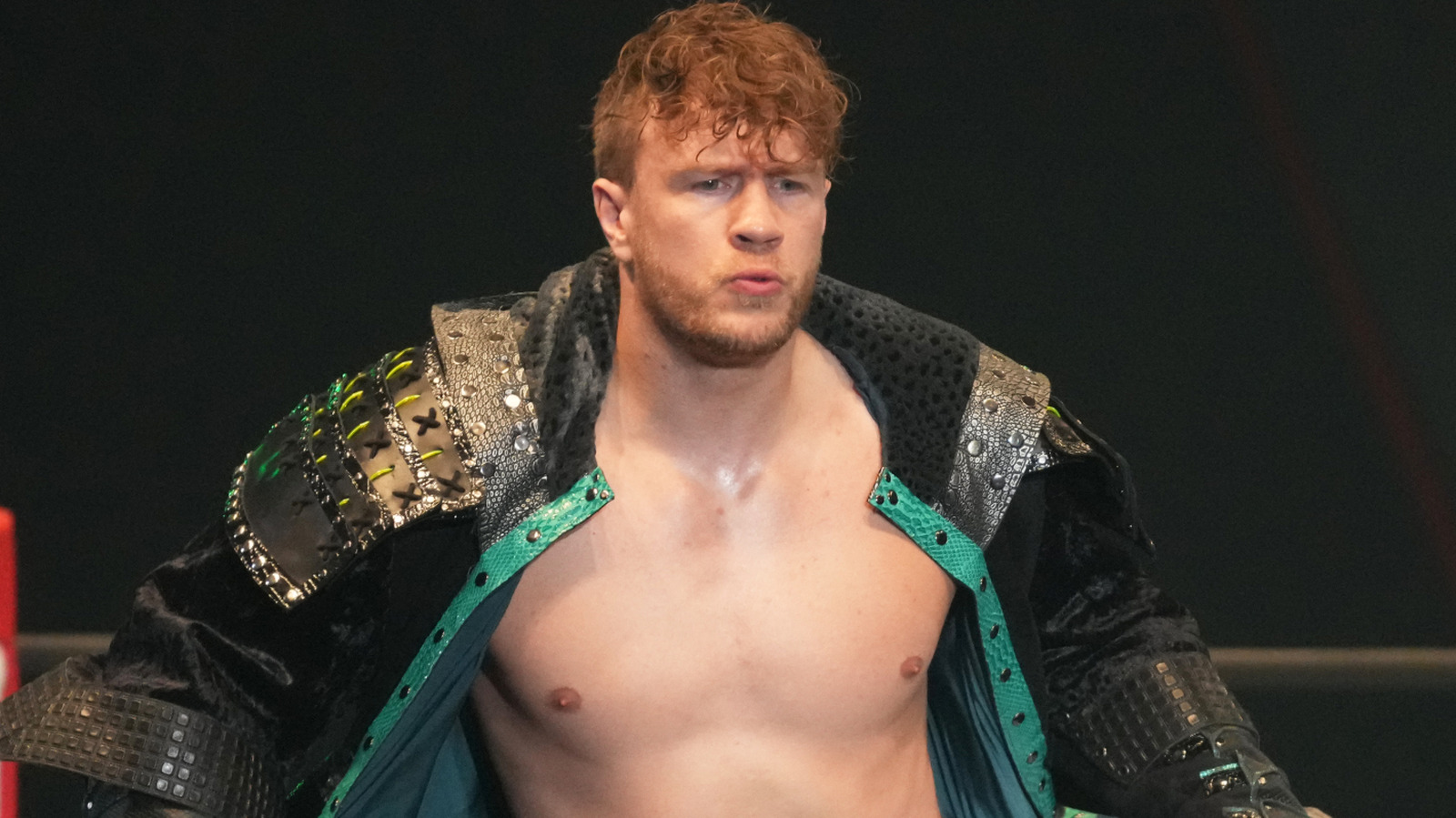
One of the focal points of the April 12 video dump is Will Ospreay. During the live broadcast in Kansas City, Ospreay looked like a superhero. He hit his spots with flawless precision, popped the crowd, and posed for the hard cam. He looked invincible.
The backstage footage tells a completely different story. It shows him draped over a road case, icing his neck, barely able to speak to the camera operator. This is the version of Ospreay that makes fans emotionally invest. A superhero who never bleeds or bruises is boring. A hyper-athletic star who destroys his own body to win is compelling.
By saving the footage of a broken, exhausted Ospreay for a random Friday digital release, AEW undercut the drama of his live match. If fans had seen that footage immediately following his victory on March 30, it would have framed his upcoming television appearances entirely differently. Instead, he walked out on the following Dynamite looking completely fresh, rendering the physical toll of Dynasty completely moot.
A critical look at the production desk
This brings us to a harsh reality about AEW's current television production. The live directing is frequently frantic. Camera cuts miss key impact moments. The production truck seems terrified of letting a shot breathe for more than four seconds. The digital team, conversely, understands pacing. They use static shots. They let the wrestlers catch their breath and find their words without rushing them along.
The disconnect between the live production truck and the digital post-production team is jarring. It feels like two different wrestling promotions operating under the same banner. The live broadcast is a frantic highlight reel. The digital footprint is a gritty, character-driven documentary.
Tony Khan needs to bridge this gap. You cannot charge viewers premium prices for a live event and then deliver the emotional payoff for free on social media weeks later. It trains your audience that the live broadcast is just the rough draft, and the real story will be uploaded to YouTube eventually.
The myth of the four-hour endurance test
Part of the reason these character moments get squeezed out of the live broadcast is the sheer length of the events. Dynasty was an absolute marathon. When you pack ten matches onto a main card, every segment has to hit its time cues perfectly. There is zero room for error, and more importantly, zero room for breathing.
If a match goes three minutes over its allotted time, the post-match angle gets rushed. The slow, dramatic walk up the ramp gets cut in favor of a frantic sprint to the back. The announcers have to speed-read through their transitions. This relentless pace exhausts the live crowd and suffocates the performers.
The April 12 videos show what happens when the time pressure is removed. Wrestlers are allowed to sit in the quiet of the backstage area and actually process what just happened to them. They can sell the injuries. They can articulate their motivations. If AEW trimmed just two matches from their pay-per-view cards, they could incorporate these digital-exclusive moments into the live show.
Selling the damage in the modern era
Professional wrestling has a selling problem across the board. The emphasis on high-workrate, high-impact matches means that wrestlers are taking more punishment than ever before, but selling it for a fraction of the time. A Canadian Destroyer on the apron gets a two-count, and both competitors are running the ropes thirty seconds later.
The Dynasty videos are a stark reminder of how effective selling can be. Watching a battered wrestler struggle to untape their wrists tells a better story than a contrived backstage interview with a microphone shoved in their face. It grounds the product in reality. It reminds the viewer that the canvas is hard and the ropes are made of steel cable.
But this selling only works if the audience actually sees it. Releasing it two weeks after the fact completely severs the emotional connection. When a wrestler takes a massive bump on Sunday, no-sells it on Wednesday's Dynamite, and then AEW releases a video on Friday showing how hurt they were on Sunday, the timeline is completely broken. It makes the television product look careless.
The Kazuchika Okada anomaly
Another fascinating aspect of the video release is the treatment of Kazuchika Okada. The Rainmaker has always carried an aura of aloof superiority. In the ring, he is untouchable. The digital footage, however, strips away some of that polish. We see him reacting naturally, dropping the stoic facade for a few fleeting moments as he navigates the backstage labyrinth of the arena.
This is exactly the kind of nuance the American audience needs to see. Okada's in-ring work speaks for itself, but establishing his character to a broader television audience requires more than just excellent dropkicks. It requires personality. The digital videos capture a wry, sarcastic side of Okada that rarely translates during a standard live promo segment.
Why is this side of his personality confined to supplemental content? AEW has a habit of protecting their top stars so much on television that they become one-dimensional. Letting Okada show some vulnerability or humor on Dynamite would go a long way in endearing him to the casual viewer who might not have followed his historic run in Japan.
The role of the commentary desk
The pacing issues are compounded by the commentary. Excalibur, Tony Schiavone, and Taz are undeniably knowledgeable, but they are often tasked with calling the action while simultaneously plugging upcoming dates, explaining convoluted ranking systems, and referencing obscure wrestling history. They rarely have a moment to lay out and let the visuals tell the story.
When you watch the April 12 footage, much of it is un-narrated. There is no broadcaster screaming over the footage. You just hear the ambient noise of the arena, the heavy breathing, the quiet conversations between producers and talent. It is incredibly effective.
Live television obviously requires commentary, but there is a lesson to be learned here. Silence can be a powerful tool. When a major angle happens, or a grueling match concludes, the best thing the broadcast team can do is stop talking. Let the crowd noise and the wrestler's body language do the heavy lifting.
Learning from the territory days
Ironically, this modern digital strategy mirrors a very old-school concept. Back in the territory days, promotions would routinely film locker room promos immediately following a big match. These promos were raw, unpolished, and dripping with real emotion because the adrenaline was still flowing.
Those promotions, however, aired that footage on their television shows the very next week to sell tickets for the rematch. They did not hold onto it for a random digital drop. They used it as the primary promotional vehicle. AEW is capturing that same raw energy, but they are deploying it incorrectly.
The television show should be the focal point of the promotion. Everything else should serve to drive viewers to Dynamite or the next pay-per-view. When the best character work and the most logical storytelling happens off-television, you are actively telling your audience that the live broadcasts are not essential viewing.
The path forward for AEW production
AEW is heading into a critical period. With major television rights negotiations looming, the company needs to present a cohesive, polished product. The in-ring action is rarely the issue. The roster is perhaps the most talented collection of wrestlers ever assembled in one company. The problem is entirely in the presentation.
Tony Khan must start treating his live broadcasts with the same narrative care as his digital post-production. The stories told in the ring need room to breathe. The aftermath of a match is often just as important as the finish itself. You cannot rush the ending of your biggest show of the month just to make a hard out, only to try and fix it with a YouTube video two weeks later.
The April 12 Dynasty videos are brilliant pieces of media. They show the passion, the pain, and the reality of professional wrestling. But until that level of storytelling makes it to the TBS broadcast on Wednesday nights, AEW will continue to feel like a promotion that gets in its own way.
Read Next
- Why the AEW media scrum remains wrestling's most unhinged late-night ritual
- Tony Khan's hyperbole cannot hide the real story of Kyle O'Reilly
- Tony Khan confirms Toni Storm was pulled from AEW Dynasty plans
- AEW Dynasty was a great show ruined by terrible main event booking
- ⚡ AEW Dynasty 2026 — Full Coverage Hub
WWE Roman Reigns "OTC" Original Tribal Chief Authentic T-Shirt
The hottest shirt in wrestling, marking the return of the Original Tribal Chief.
Frequently Asked Questions
Why did AEW release Dynasty backstage footage two weeks late?
What is the main criticism of Tony Khan's live television production?
How did the live broadcast of Will Ospreay differ from the backstage footage?
When did AEW Dynasty take place?
What happens at the end of AEW live broadcasts?
More Coverage
Will Ospreay grappling with lingering physical reality of his high-speed tenure
an hour ago
AEW's Redemption card is a mess of missing pieces and bad timing
12 hours ago
AEW medical department faces pressure as mid-card injury list expands
13 hours ago
AEW and TNA are fighting two very different data wars
13 hours ago
Bryan Danielson's physical toll signals a shift for his AEW role
16 hours ago
Will Ospreay’s role at AEW Redemption signals an uneasy transition
20 hours agoMore Analysis
AEW's Dynasty go-home show proved Tony Khan has a massive video package problem
3 months, 3 weeks agoOspreay vs MJF will steal Dynasty, but AEW's tag division is broken
3 months, 3 weeks agoAEW's Dynasty go-home show proves Tony Khan has a massive video package problem
3 months, 3 weeks ago
AEW is stalling while their top talent carries the weight
3 months ago